
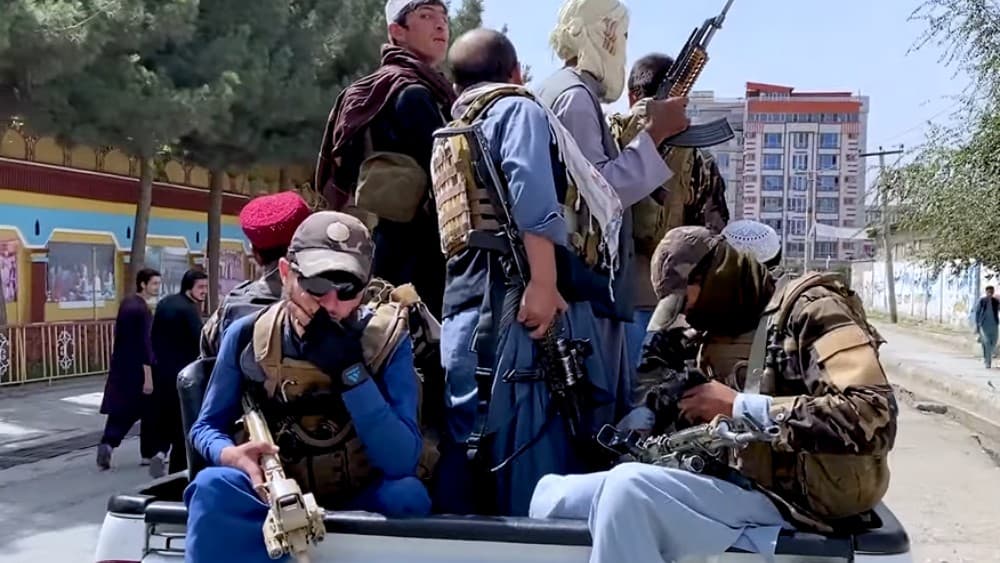
ISLAMABAD: An attack claimed by the Afghanistan Freedom Front (AFF) on a Taliban regime checkpoint in Kunar has highlighted the widening geographic reach of armed opposition groups nearly five years after the regime seized power in Afghanistan.
The reported operation in Kunar, an eastern Afghan province bordering Pakistan, marks an expansion beyond areas where anti-Taliban groups have traditionally been more active, particularly the northeastern provinces of Badakhshan, Takhar and Panjshir.
In a post on X, the AFF claimed it attacked a checkpoint along the Asadabad-Jalalabad road, killing one Taliban member and wounding two others. The claim could not be independently verified.
The development comes amid growing claims by several armed groups of attacks against Taliban forces in different parts of Afghanistan, although the scale and military capabilities of many of these organizations remain difficult to independently establish.
AFF expands operations
The AFF was formed in March 2022 and is led by former Afghan army chief General Yasin Zia. The group is primarily composed of veterans of the former Afghan National Defense and Security Forces, including former commandos and intelligence personnel.
The group has claimed attacks against Taliban personnel and positions in Kabul, Kandahar, Baghlan, Parwan and other provinces.
In late June, AFF fighters also claimed a midnight attack on a Taliban checkpoint in Shewa district along the Jalalabad-Kunar highway in Nangarhar, killing three Taliban fighters and wounding others.
The Kunar operation nevertheless suggests a further expansion of the group's reported activity along Afghanistan's eastern corridor.
Growing discontent
Pakistan TV Digital spoke to experts on Afghanistan to assess the expanding opposition to the Taliban regime.
“On the ground, we are seeing people stand up against the Taliban,” said Zahir Shah Sherazi, an expert on Afghan political history.
Sherazi said armed opposition had previously been particularly visible in Badakhshan but was now being reported in other areas, including Nimroz, Farah and Kapisa.
“What was an opposition once has now become a rebellion,” he said.
Sherazi argued that years of political and social grievances had contributed to the shift from dissent toward armed resistance. He said protests and demands by Uzbek, Tajik and other communities for greater inclusion had failed to produce meaningful changes under Taliban rule.
“This fire is gradually spreading across all these regions like Faryab, Nimroz, Farah,” said Defense Analyst Abdullah Gul. “And day by day, we are seeing an increase in this.”
Gul attributed the growing resentment to what he described as ethnic favoritism, restrictions on women and girls, and the exclusion of sections of Afghan society from political life.
“The people do not accept this,” he said. “Afghans are very freedom-loving... they do not bow before any oppressor for long.”
Gul said some Afghans had initially hoped political engagement could produce changes under the Taliban regime.
“People tried not to pick up weapons,” he said. “People hoped for justice, they hoped for a better economic system, and they hoped to see an end to oppressive policies. But that did not happen.”
Key resistance theater
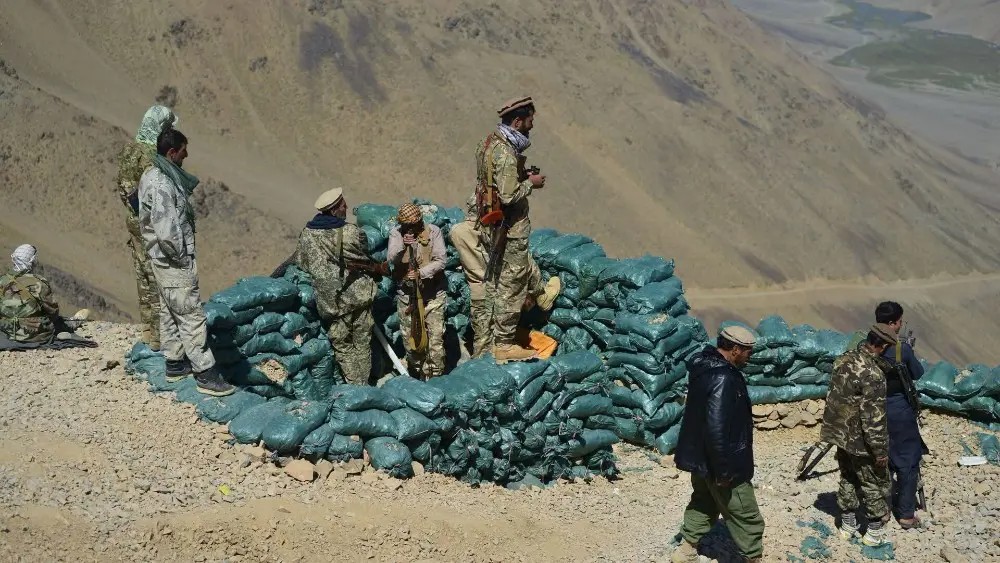
The expansion of armed opposition follows renewed activity in Badakhshan, a mountainous province in northeastern Afghanistan bordering China, Tajikistan and Pakistan.
In July, the AFF and allied anti-Taliban forces claimed to have temporarily taken control of the Yaftal-e-Payeen district center. KabulNow described the development as the first reported loss of a district center by the Taliban regime since its return to power in August 2021.
The claim, however, should be distinguished from independently verified changes in territorial control.
Other armed groups have also reported operations in Badakhshan, including the National Resistance Front (NRF), led by Ahmad Massoud, and the recently emerged Sepah-e Mihan.
The NRF remains one of the most prominent organized armed opposition movements. It has periodically claimed attacks on Taliban checkpoints, patrols and military positions, although many battlefield claims remain difficult to independently verify.
Sherazi said the opposition had initially been driven by political and humanitarian demands, including calls for inclusive governance and greater civil freedoms, but had “now entered the battlefield in the form of organized resistance.”
He also pointed to General Sami Sadat, leader of the Afghanistan United Front, who has called for an armed campaign against the Taliban and sought to mobilize former personnel of Afghanistan's former security forces.
Sherazi further argued that younger Afghans were increasingly dissatisfied with Taliban rule, saying even Afghanistan's Generation Z had “started rising against the Taliban.”
New groups, uncertain capabilities
The AFF is not alone in claiming operations against the regime.
Several lesser-known groups have emerged or publicized their activities in recent months, often through social media statements and videos. Their claims have drawn attention because of their reported presence across multiple provinces.
However, security researchers have cautioned that little is publicly known about the leadership, manpower, financing or logistical networks of many of these newer organizations.
The lack of independent verification makes it difficult to determine whether the growing number of announcements represents a substantial expansion of armed resistance or a proliferation of groups with limited operational capabilities.
Claims of Taliban internal divisions
The analysts also pointed to what they described as internal tensions within the Taliban regime.
“The control is slipping out of the Taliban's [hands],” Sherazi said, referring to what he described as internal rifts and differences between local Taliban figures and hardliners surrounding the regime's supreme leader, Hibatullah Akhundzada.
Gul similarly alleged that dissent exists within the Taliban's Shura. He claimed that “around 70 percent” of its members disagreed with Akhundzada, although he did not provide evidence for the estimate.
He also pointed to changes in Akhundzada's security circle, which he interpreted as a possible indication of growing internal concerns.
These claims remain assessments by the analysts and could not be independently verified.
Multiple security challenges
The Taliban regime also faces a separate armed threat from Daesh-Khorasan, a transnational terrorist organization that opposes the Taliban and has carried out attacks inside Afghanistan.
Unlike political and armed opposition fronts seeking an alternative to Taliban rule, Daesh-K has its own extremist agenda and should not be treated as part of the broader anti-Taliban political resistance.
Taliban spokesman Zabihullah Mujahid has acknowledged opposition groups but said they had operated previously and were now largely based outside Afghanistan. He has said the regime would not allow them to expand their activities inside the country.
What can the resistance achieve?
The growing number of armed groups, their claims of operations across different provinces and the emergence of new resistance organizations point to continuing opposition to Taliban rule. But the evidence does not yet demonstrate that these groups have the military strength to seriously threaten the regime's nationwide control.
The resistance also remains fragmented, with organizations differing in leadership, geographic bases, political objectives and operational capabilities.
At the same time, some groups are presenting political alternatives alongside military activities. The AFF published a political manifesto in late 2024 outlining what it described as a democratic governance framework and commitments to human rights, positioning itself as an alternative to Taliban rule.