


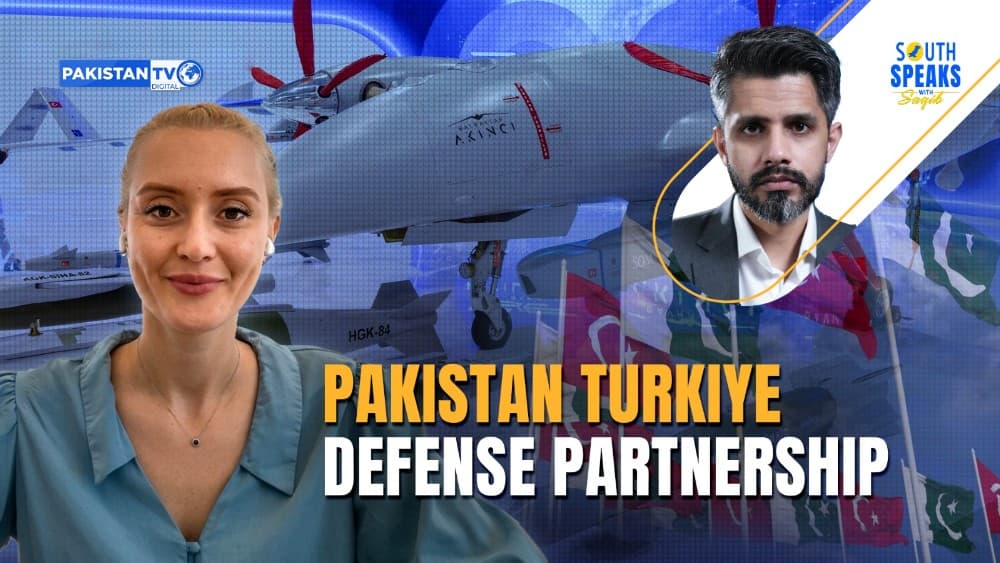
ISLAMABAD: Deeper defense cooperation between Pakistan and Türkiye could strengthen strategic autonomy for both countries and reduce reliance on outside powers, a Turkish defense researcher has said.
Speaking on Pakistan TV Digital's South Speaks with Saqib, SETA Foundation Researcher Dr Gloria Shkurti Özdemir said the Makkah Joint Defence Agreement with Saudi Arabia could provide a broader framework for Islamabad and Ankara to expand technology sharing, industrial cooperation and joint production, building on their existing defense ties.
“The cooperation between both of the countries would mean increasing the strategic autonomy of both countries,” she said.
Özdemir said greater domestic production could help Pakistan reduce the long-term costs and vulnerabilities associated with reliance on foreign defense systems.
“If we focus on the domestic production, if we focus on the strategic autonomy, that would help both of the countries develop further,” she said.
She pointed to Türkiye's own experience as an example, saying Ankara spent more than a decade seeking armed and unarmed drones from the United States while fighting the Kurdistan Workers' Party, or PKK.
“The process from the United States lasted for more than 10 years,” she said.
Özdemir said the delays reflected differences in the priorities of the two NATO allies.
“The national interest of Türkiye did not align with the US national interest,” she said.
Türkiye subsequently drew a lesson from the experience by developing its own defense capabilities, she said.
“Türkiye learned this the hard way. They had to produce their own drones. They had to strengthen their own defense security,” she said.
She said the resulting expansion of Türkiye's domestic defense industry helped Ankara reduce its dependence on external suppliers.
“By strengthening its own defense sector, it has been possible for Türkiye to increase its own strategic autonomy,” she said.
Türkiye’s ‘hard lesson’ in building its own drones
Pakistan and Türkiye have already expanded defense ties across several areas, including unmanned systems, naval platforms and aviation.
Özdemir said the partnership could now move beyond equipment transfers toward deeper technological and industrial collaboration.
“We will see this going even further, maybe in terms of technological sharing between each other, or in terms of industrial cooperation,” she said.
The researcher said Türkiye's operational experience with unmanned systems could complement Pakistan's own defense expertise and growing drone manufacturing capabilities.
The two countries' respective experience could create opportunities for cooperation in research, production and technology development, rather than limiting the relationship to the purchase and sale of defense equipment, she said.
Özdemir said Türkiye's combat experience had also helped shape its defense industry, with Turkish drones used in conflicts including Ukraine and across the Middle East.
For Pakistan, she said, deeper cooperation with Türkiye could provide an opportunity to build on its own operational experience and domestic manufacturing capabilities while developing greater capacity to produce and maintain advanced defense systems locally.