


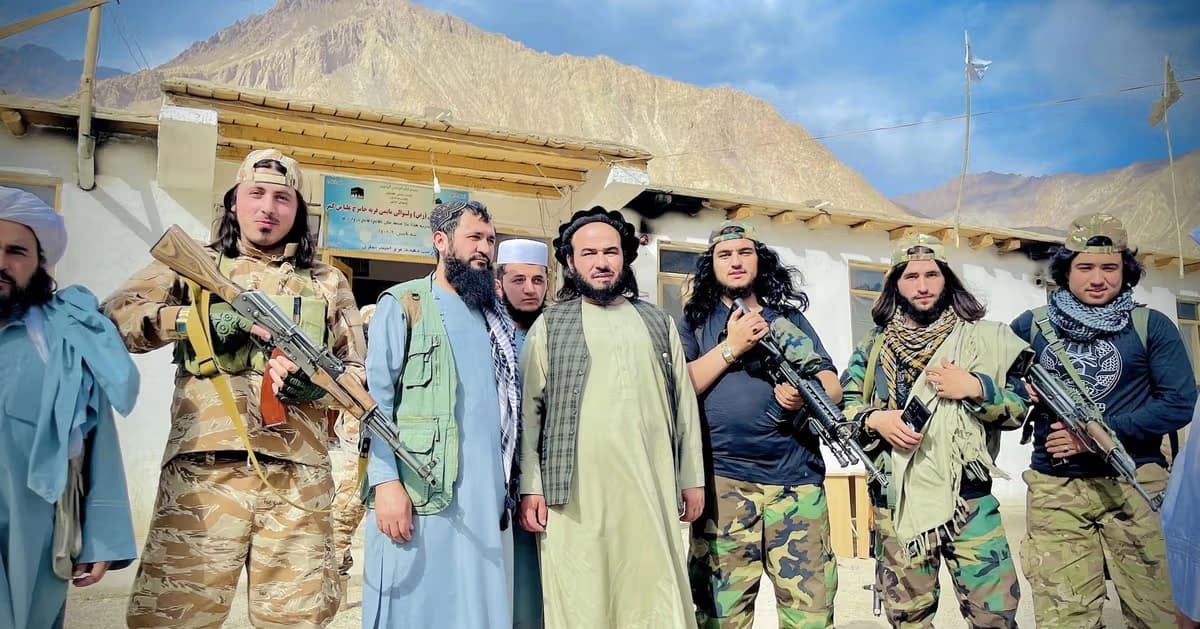
ISLAMABAD: A top Taliban delegation's attempt to disarm a regional commander ended in failure and arrest, exposing deepening fissures within the group that now governs Afghanistan.
The five-hour negotiations between Taliban leadership and Juma Khan Fateh, a Tajik commander in Badakhshan province, concluded without agreement on July 1, according to the Hasht-e Subh Daily. Juma Khan rejected an ultimatum from Supreme Leader Hibatullah Akhundzada to surrender his fighters.
The Taliban delegation included Intelligence Director Abdul Haq Wasiq, Army Chief of Staff Qari Fasihuddin Fitrat, Economy Minister Din Mohammad, and Helmand Governor Amanuddin Mansoori. Intelligence forces moved swiftly after the impasse. Fateh was arrested in Kuran wa Munjan district and transferred to Kabul under tight security, with his current condition remaining unconfirmed, as reported by South Asia Terrorism Portal.
Juma Khan commanded thousands of armed fighters and controlled mines and extraction revenues across the Darwaz region. His resistance centered on a core grievance: the Kandahar-led leadership's effort to seize control of local gold and lapis lazuli deposits while sidelining non-Pashtun commanders. "I am in my own home. I do not want a position," Fateh stated publicly, according to Afghanistan International. "I will not fire the first shot."
He had refused alternative government posts offered by Defense Minister Mullah Yaqoob before his arrest.
Increasing rifts
The confrontation reflects broader ethnic and political rifts tearing through Taliban ranks. Out of 1,137 high-ranking Taliban officials, fewer than 8% are non-Pashtun, as per an independent study by the Middle East Research Institute. The disparity fuels resentment among Tajik and Uzbek commanders who say Kandahar concentrates power within Pashtun circles.
The Afghan Taliban supreme leader issued a decree in June appointing a committee to audit the personal assets and economic activities of all local commanders in Badakhshan, according to the Hasht-e Subh Daily. The audit targets what the Taliban authorities call "illegal extraction of resources."
The mining disputes triggered factional clashes across Badakhshan. In October 2025, intense gunfire erupted in Yaftal District when local Tajik Taliban fighters attacked southern units over a seized gold mine, killing eight Taliban members, DID Press Agency reported. Additional clashes occurred in Yawan and Jurm districts, displacing hundreds of civilians.
Juma Khan’s brother, Musa Kaka, was similarly arrested over gold mining disputes weeks before, signaling an accelerated push by Kabul to strip non-Pashtun commanders of economic autonomy, Zarin TV reported.
The arrest reflects fractures between the Taliban's Kandahar-based faction and the Kabul interim administration. The tensions surfaced openly in late 2025 when the Kabul governance wing overturned Akhundzada's internet shutdown decree within three days, an act described by insiders as near-rebellion within a movement historically built on absolute obedience, according to Afghanistan International.
The Taliban took power in August 2021. UN monitoring teams have documented that Akhundzada's decrees remain unevenly implemented across the country, with regional power-brokers like the Haqqani Network operating independently in their strongholds.