


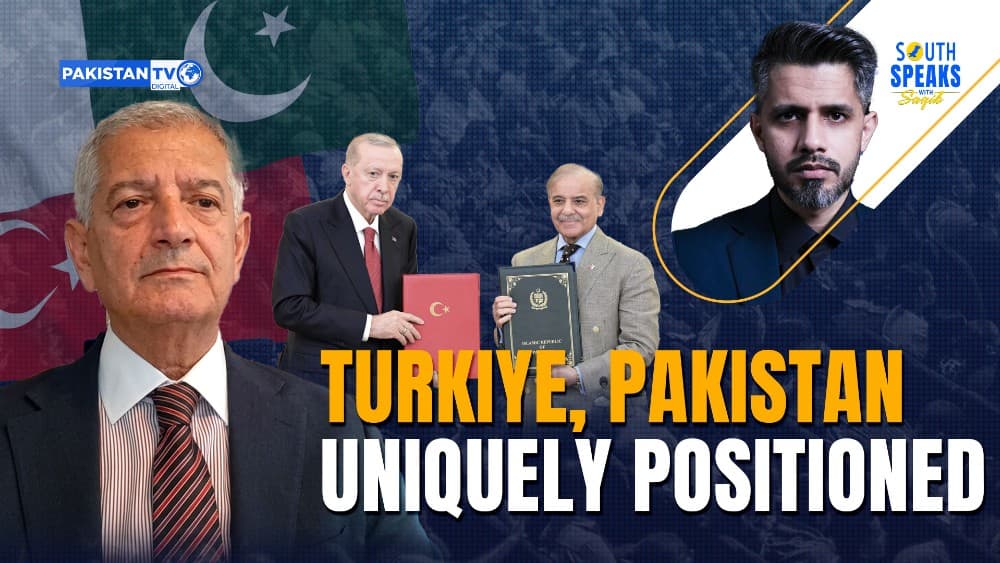
Former Consul General of Turkiye Cemal Sangu says the Islamabad MoU "raised hopes for de-escalation" and helped ease tensions in the Middle East, but warned that recent hostilities have dealt "a very serious blow" to those expectations.
Speaking to Pakistan TV Digital, Sangu said, "The real task is to transform fragile understandings into a comprehensive, inclusive and sustainable regional architecture," adding that "the Middle East does not simply need another period of de-escalation. It requires a long-term political vision built on dialogue, mutual confidence and regional cooperation."
In the interview, Sangu said the region was passing through an "extremely sensitive and critical period" following renewed hostilities witnessed in recent days which have dealt a very serious blow to expectations established under the Islamabad Memorandum of Understanding and cast fresh doubt on the prospects for lasting peace and stability in the Middle East.
"The agreements and mutual understanding reached between Washington and Tehran under the Islamabad Memorandum of Understanding initially raised hopes for de-escalation and contributed to easing tensions across the region," he said.
However, he said that core issues remained unresolved, including Iran's nuclear programme, sanctions relief, regional security arrangements, the status of the Strait of Hormuz and the activities of state and non-state actors.
"The unfortunate developments and renewed hostilities witnessed in recent days have regrettably dealt a very serious blow to those expectations and cast fresh doubt on the prospects for lasting peace and stability in the Middle East," he said.
Turkiye and Pakistan "uniquely positioned"
Sangu said both Turkiye and Pakistan were "uniquely positioned" to play constructive diplomatic roles in the current environment.
"Pakistan maintains important relations with Iran, Gulf countries, China and the United States, which enables Islamabad to serve as a valuable channel for communication," he said.
He said Turkiye's strategic ties with NATO and its longstanding relations with the United States, Iran and other regional actors gave Ankara significant diplomatic leverage.
"Neither Turkey nor Pakistan seeks to replace existing international mechanisms. Rather, both countries can contribute by facilitating communication, reducing mistrust and encouraging regional ownership of peace initiatives,"
Return to Islamabad MoU
Asked whether stakeholders should return to the 14-point Islamabad MoU framework, Sangu described diplomacy as the only viable path forward.
"Islamabad and Ankara can intervene and open communication channels between the parties, reduce misunderstandings and mistrust, and try to mobilize all powers to bring them together for an understanding and an agreement," Sangu said.
"I think this is the only diplomatic way to do that," he added.
Economic and global risks
The former diplomat also warned that the current status quo was difficult to sustain because of the Middle East's strategic importance for energy markets, maritime routes and international trade.
"Even limited tension can lead to fluctuations in oil prices, increase shipping and insurance costs and undermine investor confidence,"
He cautioned that prolonged instability could contribute to geopolitical fragmentation and divert international attention from other pressing global challenges.
"The world cannot afford an endless cycle of escalation in the Middle East. Lasting global stability will depend not on military deterrence alone, but on the ability of diplomacy," he said.
"Diplomacy remains the only sustainable path toward a more stable and peaceful Middle East."