


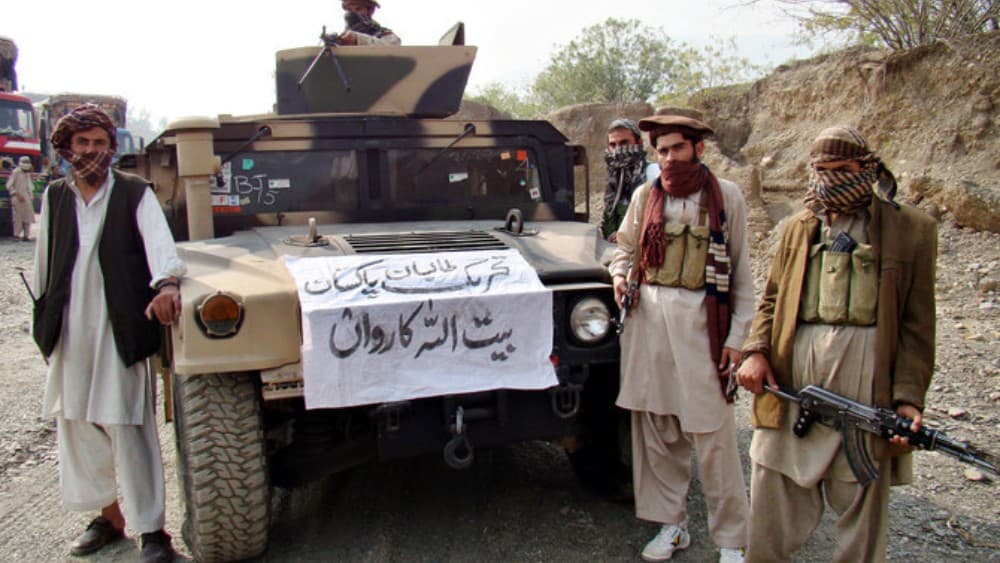
ISLAMABAD: The Russian-led Collective Security Treaty Organization (CSTO) is conducting its “Rubezh (Frontier) 2026” military exercises in Kazakhstan as security concerns linked to terrorist groups operating in Afghanistan continue to draw greater attention from Russia and Central Asian states.
The exercises are being held from Sept 12-19 at the Koktal training ground in southeastern Kazakhstan’s Zhetysu Province, with the active phase focused on responding to cross-border threats and illegal armed formations, according to the CSTO.
The Times of Central Asia reported that the exercises were designed “with Afghanistan in mind,” describing Afghanistan as a country the CSTO has discussed frequently in 2026 and where terrorist groups pose a shared threat to its members.
The CSTO’s official description does not specifically identify Afghanistan as the source of the simulated attack. However, participating forces are practicing operations in mountain and desert terrain, including measures to repel illegal armed formations that enter the territory of a member state.
About 1,500 personnel from Kazakhstan, Kyrgyzstan, Russia and Tajikistan are participating in the exercise, alongside more than 300 pieces of military and special equipment, including 115 unmanned aerial vehicles, according to the CSTO.
Afghanistan’s terrorism threat
The exercises come as concerns about terrorist infiltration from Afghanistan into Commonwealth of Independent States (CIS) territory and beyond continue to increase, particularly along Tajikistan’s southern border.
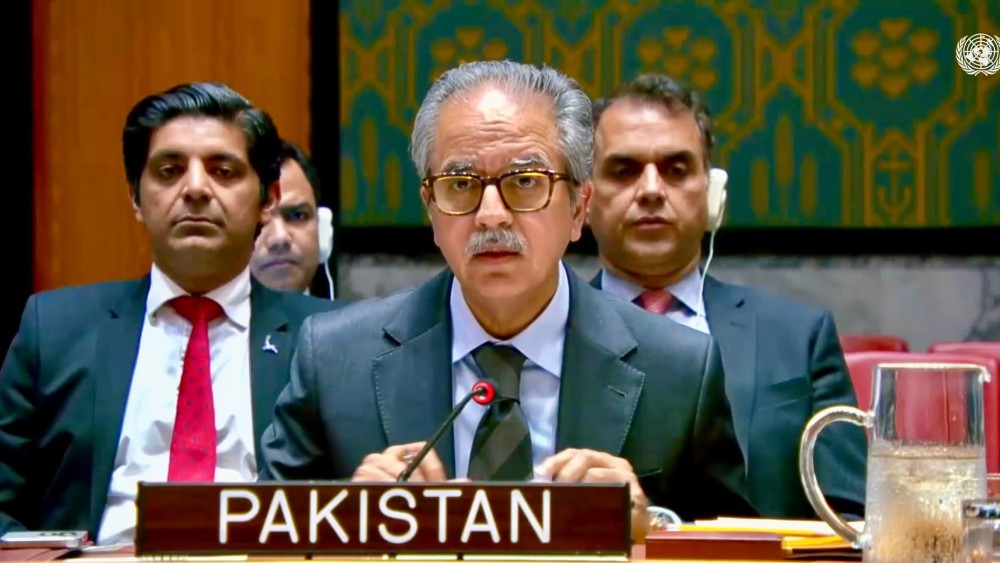

Speaking to Pakistan TV Digital, journalist and expert on transnational terrorist groups Arshad Mohmand said several localized and transnational terrorist organizations operating in Afghanistan pose a threat to countries across the region.
He described Afghanistan as a “black hole” where terrorist groups remain “active,” while some organizations, including Al-Qaeda, are seeking to rejuvenate, according to his assessment.
“Afghanistan is a black hole where all the terrorist groups are active,” Mohmand said, adding that some groups, including Al-Qaeda, are attempting to rebuild their capabilities.
According to Mohmand, the threat is particularly significant for Central Asian states because some terrorist organizations have developed regional propaganda networks and continue to target governments beyond Afghanistan.
He said the Daesh-Khorasan Province, the regional branch of the Daesh, represents a security threat to CSTO member states.
“In the past few months, the propaganda dissemination by Daesh-Khorasan has witnessed an upsurge where a majority of its content, published in Tajik and Uzbeki, is directed against the government of Central Asian states,” Mohmand said.
He said countering this “menace” would be increasingly difficult as the nature of terrorism has evolved from traditional forms of organized attacks toward the possibility of “lone-wolf” attacks.
A lone-wolf terrorist attack generally refers to an act carried out by an individual without direct operational support from a terrorist organization or government.
Daesh-Khorasan claimed responsibility for the March 2024 attack on Moscow’s Crocus City Hall, which killed more than 140 people.
Russia focuses on Tajik-Afghan border
The military exercises are taking place alongside renewed Russian and Tajik focus on securing Tajikistan’s border with Afghanistan.
Russian Defense Minister Andrey Belousov said last week that strengthening security along Tajikistan’s border with Afghanistan has become one of Moscow’s regional defense priorities.
Belousov made the remarks during a ceremony in Moscow marking Tajikistan’s 35th anniversary of independence, where he described Tajikistan as one of Russia’s key strategic security partners in Central Asia, Khaama Press reported.
“We are actively expanding collective security formats within the Collective Security Treaty Organization, the Shanghai Cooperation Organization and the Commonwealth of Independent States, while paying particular attention to strengthening Tajikistan’s border with Afghanistan,” Belousov said.
The renewed focus follows a series of deadly attacks in late 2025 that Tajik authorities linked to threats originating from Afghan territory.
In November 2025, an attack in southern Tajikistan killed five Chinese workers, while a subsequent attack in December killed two Tajik border guards.
The incidents added to longstanding concerns in Dushanbe over security along its 1,357-kilometer border with Afghanistan.
Tajikistan has repeatedly called for additional international assistance to strengthen its border forces and has urged regional organizations to pay greater attention to security threats emanating from Afghanistan.
The concerns of Central Asian states, for Mohmand, are “valid” and require a coordinated regional response.
He said countries operating under the same security umbrella should develop an institutionalized mechanism to prevent cross-border terrorism emanating from Afghanistan.
CSTO strengthens Tajikistan’s defenses
The security concerns have also prompted the CSTO to strengthen Tajikistan’s border capabilities.
CSTO Secretary General Taalatbek Masadykov said in late August that the first shipment of weapons and equipment to strengthen Tajikistan’s border with Afghanistan would be sent this autumn.
The planned assistance comes as the CSTO seeks to enhance the capabilities of its members along the organization’s southern security frontier.
The CSTO was established through the Collective Security Treaty signed in Tashkent in 1992 by Armenia, Kazakhstan, Kyrgyzstan, Russia, Tajikistan and Uzbekistan. Uzbekistan later left the organization, while Belarus joined in 1993. The current CSTO members are Armenia, Belarus, Kazakhstan, Kyrgyzstan, Russia and Tajikistan.
Under its collective security framework, member states can request assistance from other members in the event of external aggression.
For Central Asian states, however, the threat from Afghanistan is not limited to a conventional cross-border attack.
The spread of terrorist propaganda, movement of terrorist operatives, narcotics trafficking and the possibility of attacks inspired or directed by transnational terrorist organizations add to security concerns along Afghanistan’s northern frontier.
The reported rise in Daesh-Khorasan propaganda targeting Central Asian governments has further heightened concerns over the possibility that terrorism could extend beyond Afghanistan through both organized networks and individuals acting independently.