


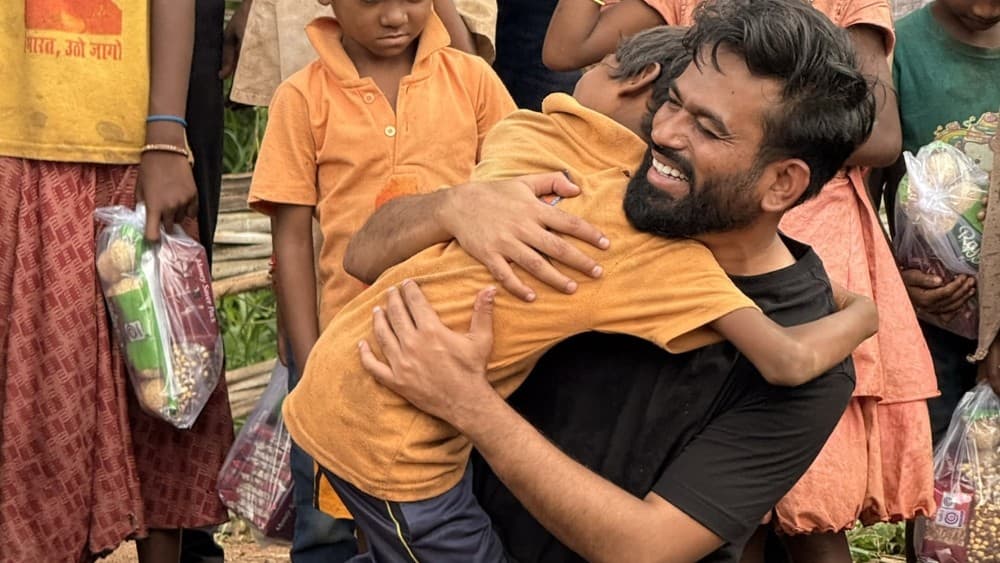
ISLAMABAD: Cockroach Janta Party (CJP) founder Abhijeet Dipke has mocked the government in India’s Madhya Pradesh after more than 30 tribal children died in Balaghat district in recent months, submitting a symbolic “resignation” as chief minister and accusing authorities of failing to provide basic healthcare, drinking water and education.
Dipke, who founded the CJP after Chief Justice Surya Kant compared the country’s unemployed youth to cockroaches, led protests in Delhi that culminated in the resignation of India’s education minister over alleged examination irregularities.
Last week, Dipke said he was in Balaghat meeting families of the children who had died, and claimed the actual death toll was much higher than the number being officially reported.
In a post on X, Dipke said he was submitting his “resignation” as chief minister, stating that his conscience did not allow him to continue “occupying this chair after the deaths of more than 30 Tribal children in Balaghat.”
“As Chief Minister, I accept responsibility for failing to provide them with the timely medical care and support they needed,” he said in his statement, adding that many of the “lives could possibly have been saved,” but that he could not “escape responsibility for that failure.”
He also criticised what he described as insensitivity towards the deaths, saying the announced compensation of Indian Rs200,000 — or Rs2.4 million after the government increased it following protests by the community — reflected “how little value we have placed on the lives of tribal children.”
“It forces me to ask an uncomfortable question: would we have considered 24 lakh adequate had these been the children of Ministers or MLAs?” he questioned.
“Despite the gravity of this tragedy, we have also failed to hold health officials accountable,” he said, adding that the deaths of innocent children demanded accountability at the highest level.
Targeting Prime Minister Narendra Modi, Dipke said the government had declared success under the “Har Ghar Nal Yojna” (Water in every home), while tribal families continued to depend on river water for drinking, putting their health at risk.
“Our failures go beyond healthcare,” he said.
He said the education situation in the country was “equally disturbing,” adding that schools in several villages were in conditions worse than animal shelters.
“In one Balaghat village, around 75 children, from Anganwadi to Class 5, study in a single classroom. Despite repeated requests from the local tribal community, we have failed to provide them with a proper school building,” he said.
“Today, I hang my head in shame that even after nearly 21 years of BJP governments in Madhya Pradesh since 2003, we have not been able to guarantee many Tribal families the basic dignity of safe drinking water, adequate healthcare and quality education,” he added.
Figures expose government’s failure
Dipke said several figures further exposed what he described as government failures towards tribal communities.
“55,795 tribal households in Madhya Pradesh remain without electricity, according to our own government’s data,” he said.
“32% of India’s crimes against Scheduled Tribes were recorded in Madhya Pradesh, according to NCRB data,” he added.
He said more than 541,000 children in the state were classified as underweight and more than 136,000 children were registered as malnourished, citing government data.
“I have failed the tribals of not just Balaghat but entire state, and after the loss of so many innocent children, I do not believe I have the moral right to continue in this office,” he said.
“I therefore tender my resignation as the Chief Minister of Madhya Pradesh with immediate effect,” he concluded, thanking the Indian prime minister for giving him the opportunity to “serve the people of Madhya Pradesh.”