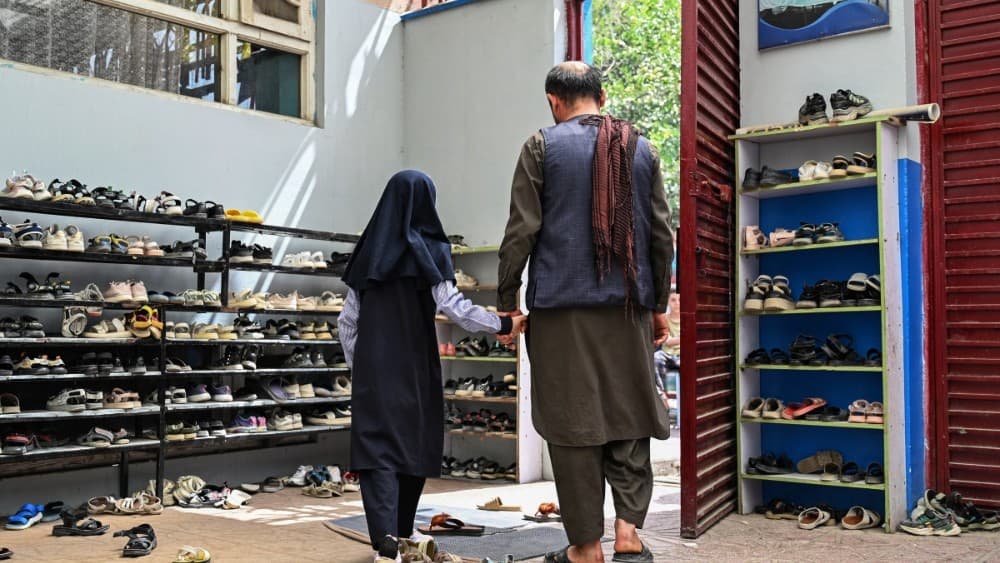
ISLAMABAD: Taliban restrictions have left Afghan women increasingly isolated, with more than half saying they leave their homes only once or twice a month, according to a United Nations Women report released Wednesday.
The findings come five years after the Taliban returned to power in August 2021, imposing more than 100 decrees affecting women and girls, the agency said.
UN Women described Afghanistan as the only country in the world where girls are barred from secondary education and women are prohibited from attending universities. It said the restrictions have institutionalized discrimination and created the world’s most severe women’s rights crisis.
The limits on movement have also affected women’s sense of security. Nearly three-quarters of those surveyed said they felt unsafe leaving home without a male guardian.
The restrictions have coincided with worsening mental health among women. Seven in 10 surveyed described their mental health as “bad” or “very bad,” citing isolation, lost opportunities and reduced access to support networks.
Women’s legal protections have also weakened. Measures introduced this year abolished legal equality between men and women before the law and increased men’s authority within marriage, making it harder for women to seek divorce, according to the report.
Economic participation remains sharply unequal. Only 7% of women are employed, compared with 84% of men, the report said.
The United Nations Educational, Scientific and Cultural Organization said Tuesday that an estimated 2.4 million Afghan girls have been barred from secondary education since the Taliban takeover.
The interim Taliban administration say they respect women’s rights in accordance with their interpretation of religious law and Afghan culture.
UN Women based its findings on a door-to-door survey of 2,190 people conducted in February and March 2025 and telephone surveys of 2,811 people conducted in April and May 2026.
The agency said the findings showed the broad impact of policies that have progressively restricted women’s access to education, employment, legal protections and public life.




.jpg&w=3840&q=75)