


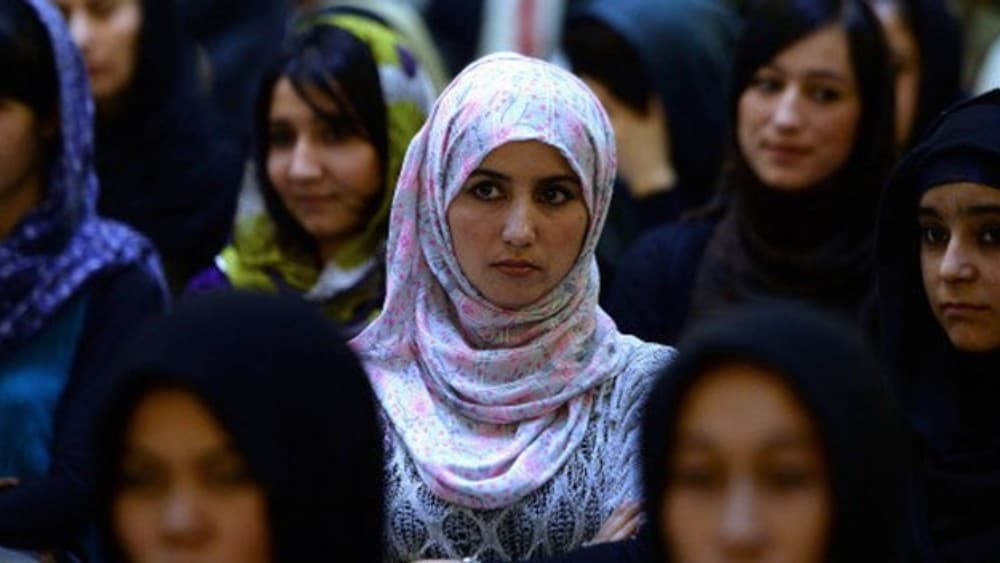
ISLAMABAD: More than 50 prominent international law and human rights experts are calling for “gender apartheid” to be recognized as a crime under international law, highlighting what they describe as systematic discrimination against Afghan women and girls under Taliban rule.
The demand comes through an “International Declaration on Gender Apartheid and Its Destructive Consequences” document due to be formally launched on August 13 in a virtual event hosted by the University of Michigan Law School.
The declaration is being presented as a major international legal initiative aimed at strengthening efforts to confront gender-based discrimination and support Afghan women’s rights.
Organizers say the document follows an 18-month consultation process, involving international lawyers and Afghan women’s rights advocates.
The declaration calls for an explicit prohibition of gender apartheid to be incorporated into the forthcoming Convention on Crimes Against Humanity. It also urges the international community to use existing international law mechanisms to address systems of institutionalized gender discrimination.
According to the organizers, more than 50 leading figures have signed the declaration, including Nobel laureates, former United Nations officials, former judges of national and international court, and Afghan and South African human rights advocates.
The initiative comes as Afghanistan approaches the fifth anniversary of the Taliban’s return to power on August 15, 2021.
The University of Michigan Law School says, “The Taliban’s system of gender-based discrimination has intensified since the takeover. Girls are barred from continuing education beyond the sixth grade, while women face restrictions on employment and participation in public life.”
The declaration also condemns restrictions affecting women’s freedom and access to public spaces.
Experts say that Afghan women and girls bear the greatest burden of the country’s continuing political, economic, security, and humanitarian crises. They point to restrictions on education, employment, and public participation as evidence of a broader system of gender discrimination.
The declaration also highlights recent detentions of women in Herat over alleged violations of dress regulations and the suppression of protests that followed.
Its signatories are calling for accountability for those responsible for what they describe as gender apartheid, as well as remedies and reparations for victims and survivors. They also criticize moves by some international actors to normalize relations with the Taliban without addressing women’s rights.
The August 13 online launch features Afghan women’s rights activists, international legal experts, and other prominent figures. Speakers include Afghan civil society activist Zubaida Akbar, Ambassador Manizha Bakhtari, women’s rights advocate Zarqa Yaftali, Afghan Institute for Strategic Studies Director Davood Moradian, and Michigan Law professor Karima Bennoune.
The event is being organized in solidarity with Afghan women and girls and seeks to turn growing international concern over their rights into stronger legal and accountability mechanisms.