


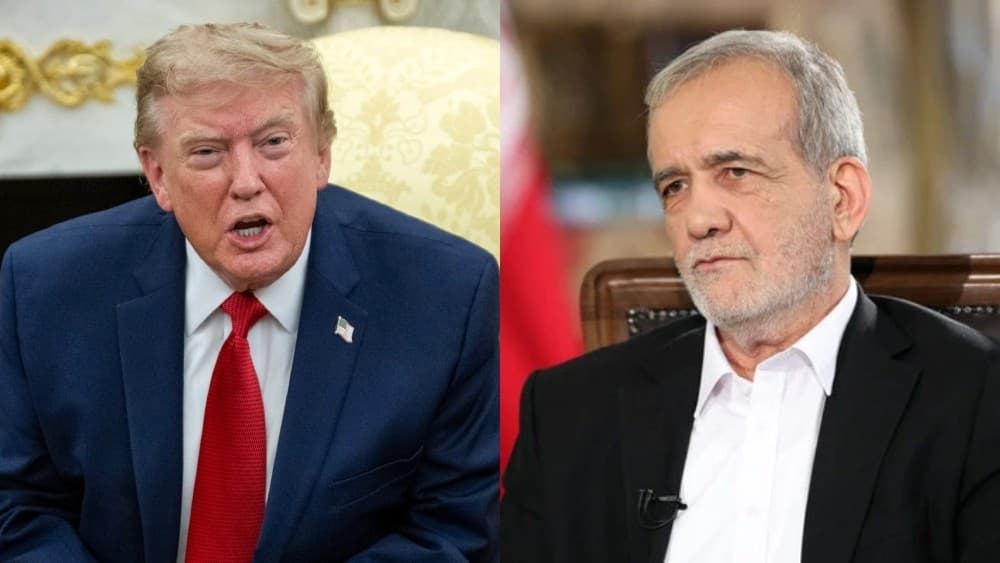
ISLAMABAD: Prospects of a direct meeting between US President Donald Trump and Iranian President Masoud Pezeshkian may have entered New York's diplomatic agenda. The development comes as world leaders gather for the 81st session of the United Nations General Assembly (UNGA).
Iranian President Masoud Pezeshkian is expected to address the General Assembly on Wednesday, a day after Trump's address. Iran's Foreign Minister Abbas Araghchi also reached New York.
Trump, in a telephonic interview with Fox News reporter Trey Yingst on Sunday, said he was “open” to meeting Pezeshkian on the sidelines of the UNGA session this week.
Though Iranian authorities have not confirmed the possibility of a meeting between the two presidents, commentators believe President Trump's remarks are an important gesture toward such a meeting.
Ambassador Abdul Basit, who has served in many countries as Pakistani envoy during his diplomatic career, remarked that such a meeting, if it takes place, between President Trump and his Iranian counterpart may lead to a breakthrough.
“It would be an encouraging breakthrough should a meeting take place,” said Abdul Basit, while talking to Pakistan TV Digital.
He added that such a meeting would also allow the US and Iran to speak directly about their differences rather than relying on mediators.
“Given the complexities of the issues involved, the best one could hope for is that the meeting would be able to put an irreversible bilateral engagement process in motion, enabling the two countries to settle their differences directly rather than through painstaking mediation,” he added.
.jpg)
Theo Wold, former acting assistant attorney general and White House domestic policy adviser, hoped the two leaders would have a real discussion.
“Everyone's hope, especially from State Department leadership, is that there'll be an opportunity to have a fulsome, sort of meaningful discussion with the Iranians,” Wold told Fox News Digital.
"There's a hope that there'll be an opportunity for closed-door private discussions between the United States and Iranians and really try to hammer out some kind of agreement about what a cessation of hostilities will look like."
According to Gulf News, a Trump-Pezeshkian meeting in New York would not necessarily require a separate summit to be arranged in advance.
“The two presidents will be in the same city for the UN gathering, creating an opportunity for direct contact at a time when Washington and Tehran have been communicating indirectly through intermediaries,” Gulf News’ Senior Assistant Editor Jay Hilotin wrote in an article published on Sept. 21.
Economic consequences mounting
The United States and Iran remain locked in a conflict that has entered its seventh month.
At the same time, Washington and Tehran are facing mounting economic and regional consequences, including disruption around the Strait of Hormuz, a vital route for global energy supplies.
The UN gathering therefore offers something that normal bilateral diplomacy does not: both presidents are in the same city, surrounded by dozens of world leaders and potential mediators.
Gap remains wide
Many commentators still believe a meeting itself would not necessarily mean a breakthrough.
Abdul Basit believes that in a single meeting, the two leaders may not resolve all their differences, as these are complicated.
“We must not pin high expectations on this ice-breaking meeting,” Abdul Basit told Pakistan TV Digital.
Iran has communicated conditions for restarting negotiations, including an end to the fighting, the release of frozen Iranian funds and an end to the US naval blockade. Tehran has also linked the reopening of the Strait of Hormuz to broader demands concerning sanctions and compensation for war damage.
Washington, meanwhile, continues to demand major concessions from Tehran while maintaining military and economic pressure.
Abdul Basit said both countries have put forward ceasefire conditions that are almost impossible to meet.
The Pakistan angle
For Pakistan, the stakes are particularly high.
Islamabad has an immediate interest in de-escalation because of its geographic proximity to Iran and the wider economic consequences of the conflict, particularly energy prices, shipping and regional security.
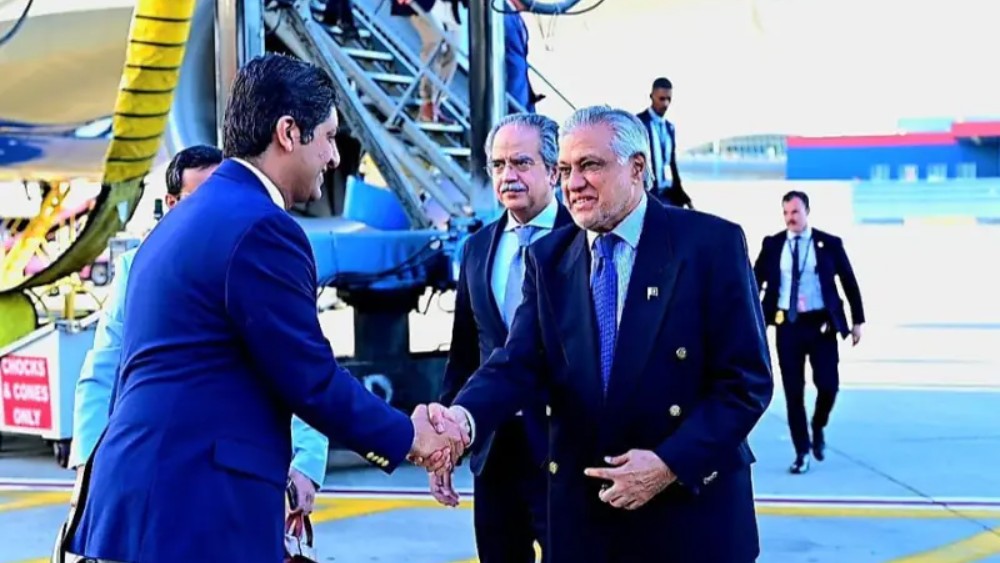
Pakistan has also maintained diplomatic contacts with Iran and other countries involved in efforts to end the war. The presence of Pezeshkian and Araghchi in New York could therefore provide additional space for Islamabad's diplomatic engagement.
The key question in New York may therefore not simply be whether Trump meets Pezeshkian, but whether such a meeting can turn months of indirect communication into direct negotiations capable of producing a ceasefire and eventually a political settlement.