


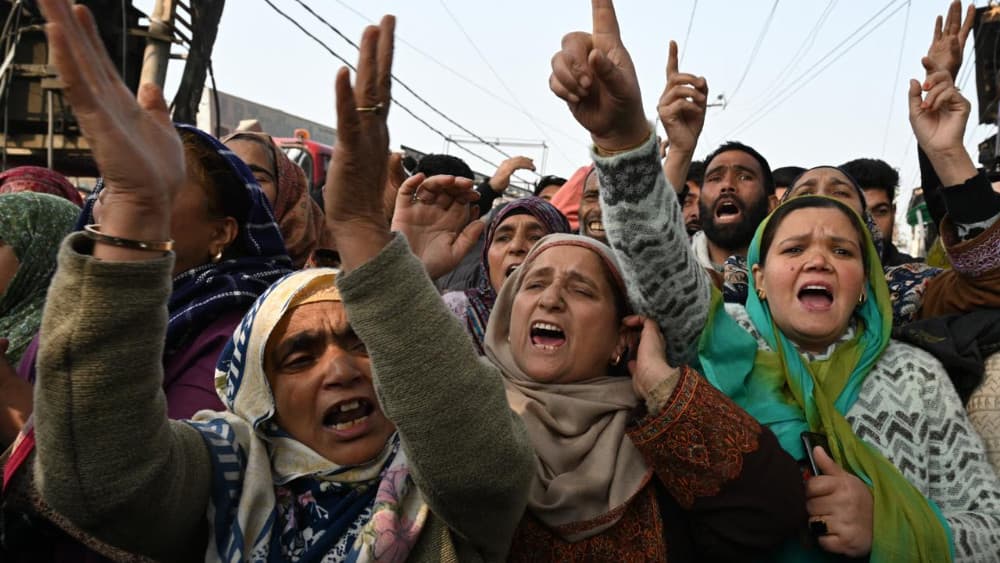
ISLAMABAD: Pakistan’s political and military leadership on Wednesday reaffirmed unwavering solidarity with the people of Indian Illegally Occupied Jammu and Kashmir (IIOJK), pledging continued support for their right to self-determination and calling for a just settlement of the Kashmir dispute in accordance with relevant United Nations Security Council resolutions.
In separate messages marking Youm-e-Istehsal Kashmir, President Asif Ali Zardari, Prime Minister Shehbaz Sharif, Deputy Prime Minister and Foreign Minister Ishaq Dar and the armed forces leadership condemned India’s unilateral actions of August 5, 2019, saying they could neither change the disputed status of Jammu and Kashmir nor undermine the resolve of its people.
President Zardari's message
President Zardari said Pakistan would continue to raise the Kashmir issue at every international forum, urging the international community, particularly the United Nations, to address the human rights situation in IIOJK.
“To my Kashmiri brothers and sisters, I say: Pakistan stands firmly with you. You are not alone,” the president said.
Prime Minister's message
Prime Minister Shehbaz Sharif said seven years after the August 5, 2019 measures, the legitimate aspirations of the Kashmiri people remained unshaken, while restrictions on civil liberties and political activity continued in the occupied territory.
“The Jammu and Kashmir dispute remains the principal unresolved issue affecting peace and stability in South Asia,” he said, stressing that lasting peace could only be achieved through a peaceful settlement in accordance with the aspirations of Kashmiris and relevant UN resolutions.
PM Sharif also said India's actions since August 5, 2019 had not changed Jammu and Kashmir's internationally recognized disputed status. He stated that "no amount of rhetoric" could alter the territory's legal position or the rights of its people under United Nations Security Council resolutions.
The prime minister said that India was using a prolonged military presence and restrictive laws to change the region's Muslim-majority demographic and suppress Kashmiri identity.
He rejected Indian claims of development in the disputed territory. PM Sharif stated that such claims could not replace the Kashmiri people's right to decide their future through a UN-mandated plebiscite.
Armed forces
The armed forces leadership — Chief of Defense Forces Field Marshal Syed Asim Munir, Chief of the Naval Staff Admiral Naveed Ashraf, and Chief of the Air Staff Air Chief Marshal Zaheer Ahmed Baber Sidhu — also reaffirmed their solidarity with Kashmiris.
In a statement, the Inter-Services Public Relations (ISPR) said the armed forces remained committed to supporting the Kashmiri people in their struggle for self-determination and expressed concern over what it described as continued military siege, human rights violations and attempts to alter the demographic composition of IIOJK.
The armed forces leadership said lasting peace and stability in South Asia were intrinsically linked to a just and peaceful settlement of the Jammu and Kashmir dispute.
Black Day
Meanwhile, the All Parties Hurriyat Conference (APHC) has called for a Black Day on August 5, urging Kashmiris to convey to the international community their rejection of India’s actions of August 5, 2019.
According to the Kashmir Media Service (KMS), APHC leaders said the day was being observed to highlight what they described as continued repression and human rights violations in IIOJK.
They urged the international community to take notice of the situation in the UN-recognized disputed territory and play its role in ensuring a peaceful resolution of the Kashmir dispute in line with the aspirations of the Kashmiri people and relevant UN resolutions.
Ishaq Dar's message
Pakistan's foreign minister said Wednesday that India's 2019 actions in Jammu and Kashmir remain illegal and continue to harm the territory's people.
In the statement, issued by the Ministry of Foreign Affairs, the foreign minister referred to India's August 5, 2019 decision to revoke the special status of Jammu and Kashmir.
The foreign minister called the move a violation of international law that has worsened conditions for Kashmiris in Indian-Illegally Occupied Jammu and Kashmir.
Marking Youm-e-Istehsal, the foreign minister said India's August 2019 changes to Jammu and Kashmir's constitutional standing disregarded the territory's internationally recognized status as disputed and ignored the wishes of its population.
Citing the UN Charter and Security Council resolutions on Kashmir, the foreign minister said Islamabad backs the population's right to self-determination and described the 2019 measures as an ongoing source of regional instability.
Dar pressed India to reverse policies that cemented its hold on the territory and urged New Delhi to help create conditions for negotiations, according to the statement. He said that a durable peace in South Asia depends on settling the Kashmir dispute through terms acceptable to its residents and consistent with UN resolutions, with Pakistan pledging to keep pressing the issue internationally.
The foreign minister praised Kashmiris for enduring “years of hardship.” He reaffirmed continued Pakistani backing on diplomatic and political fronts, while pressing the United Nations to take a more active role in resolving the dispute.
Solidarity walk held in Islamabad
Pakistan’s foreign ministry officials took part in a solidarity walk in Islamabad to mark the seventh anniversary of Youm-e-Istehsal, the ministry said Wednesday.
In a post on X, the ministry stated that the walk was held on Constitution Avenue. It was led by the foreign secretary. Officials from the Ministry of Foreign Affairs took part to “express support for the Kashmiri people.”
Addressing the gathering, Federal Minister for Kashmir Affairs, Gilgit-Baltistan and SAFRON Amir Muqam said Pakistan would continue its political, diplomatic and moral support for the Kashmiri people’s struggle and their right to self-determination.
He stated that Pakistan’s position was based on relevant United Nations Security Council and Organisation of Islamic Cooperation resolutions.