


ISLAMABAD: With Pakistan gaining significant legal and diplomatic leverage from the Permanent Court of Arbitration (PCA) 's ruling on the Indus Waters Treaty (IWT), experts suggest that Islamabad should now focus on building international support and using global forums to pressure New Delhi to fully implement the treaty.
The Hague-based tribunal’s ruling that the Indus Waters Treaty remains fully in force has dealt a legal and diplomatic setback to India while strengthening Pakistan’s position in its long-running water dispute with New Delhi.
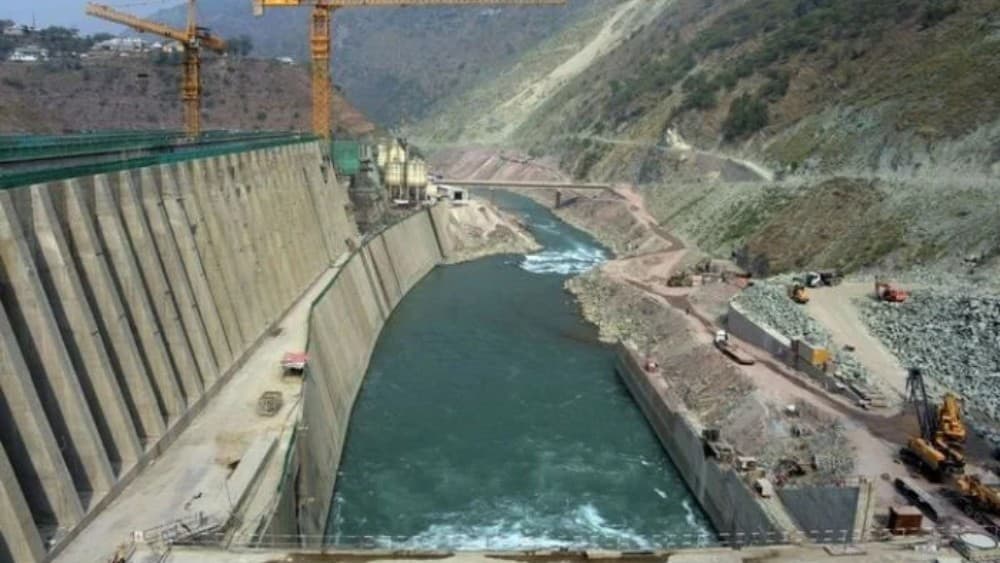
The PCA unanimously rejected India’s attempt to place the 1960 treaty in “abeyance,” ruling that New Delhi has no valid grounds under the treaty or international law to suspend or terminate it. The court also imposed interim restrictions on construction at India’s Ratle hydropower project on the Chenab River.
India, however, has refused to accept the PCA's judgment, maintaining that the tribunal has no jurisdiction and that its ruling is not binding on New Delhi.
Pakistan’s next move
For Pakistan, the decision provides a stronger legal basis to oppose Indian actions affecting the western rivers, the Indus, Jhelum and Chenab, which are allocated primarily to Pakistan under the treaty.
The PCA ordered India to refrain from concreting portions of the Ratle dam wall and power intake structure above specified levels until 90 days after the World Bank-appointed neutral expert issues a final decision, expected in July 2027. It also imposed reporting requirements concerning the project’s construction schedule.
Talking to Pakistan TV Digital by telephone, international law and treaty expert Ahmer Bilal Soofi said the PCA ruling had provided judicial support to Pakistan’s position on the Indus Waters Treaty.
“A decision by the world’s oldest and very respectable court, where top lawyers sit as judges, provided judicial support to Pakistan’s position on the Indus Waters Treaty,” Soofi said.
“The decision not only vindicates Pakistan’s stand but also identifies the red line Islamabad had drawn regarding the treaty,” he said.
No grounds for suspending treaty
The PCA had examined India’s arguments relating to terrorism, sovereignty, demographic changes, clean-energy requirements, changes in dam technology, climate change and armed conflict.
“The court found that none provided sufficient grounds for suspending or terminating the treaty,” explained Soofi, who also served as federal law minister in the 2010s.
He said the court had also made it clear that the treaty contains no provision allowing either side to unilaterally place it in “abeyance.”
He suggested that Pakistan should now consider taking India’s refusal to accept the PCA decision before the United Nations Security Council (UNSC) to exert further pressure on New Delhi.
UNSC can be approached
Soofi explained that Chapter VI of the UN Charter allows member states to bring any dispute or situation that may lead to international friction to the attention of the Security Council.
However, he stressed that Islamabad should first approach New Delhi through diplomatic channels to discuss the PCA decision and the future of the IWT before moving the matter to the UNSC.
Pakistan had already approached the UNSC on the issue in April earlier this year, when its Permanent Representative to the UN delivered a formal letter from the foreign minister to the council president.
Soofi said the situation has changed significantly following the PCA ruling and that the decision has strengthened Pakistan’s position.
International lobbying
Pakistan’s former Indus Water Commissioner Syed Mehar Ali Shah said Islamabad should launch an international diplomatic campaign to build support over the IWT issue.
“Now when the PCA decision is there, and it’s in our favor, Pakistan must approach different nations of the world to gather support against India,” the former commissioner told Pakistan TV Digital.
He also suggested that Pakistan should ask the World Bank and its primary lending arm, the International Bank for Reconstruction and Development, to press India to comply with the IWT.
“It’s a moral obligation for these world forums, which signed the IWT as guarantors,” he added.
According to Shah, the PCA decision allows Pakistan to strengthen its diplomatic case by engaging countries that have an interest in regional stability and international treaty compliance.
The former commissioner also warned that continued Indian disregard for international rulings could further destabilize relations between the two nuclear-armed neighbors.
Diplomatic setback for India
Hassan Akbar, a Pakistan Fellow at the Wilson Center, writing on X, said that a detailed reading of the award “destroys all of India’s spurious and disingenuous reasons for holding the IWT in abeyance.”
He said the verdict not only required India to halt non-compliant projects but also exposed it before the international community as a state failing to abide by binding bilateral and multilateral treaties.
The observation is significant for Pakistan as Islamabad can now frame the dispute not merely as a bilateral disagreement with India, but as an issue concerning the sanctity of international agreements and compliance with international law.
Treaty remains legally binding
In his comment, former foreign minister Jalil Abbas Jillani said the decision reaffirmed that the treaty “remains legally binding and cannot be unilaterally suspended.”
He urged India to respect the ruling, fulfil its treaty obligations and reverse its decision to place the agreement in abeyance, stressing: “No politics on water.”
International relations expert Dr Ishtiaq Ahmed said New Delhi’s attempt to use water as an instrument of strategic coercion was “morally indefensible and unlawful.”
He argued that even if India rejected the PCA’s jurisdiction, such a rejection could not extinguish Pakistan’s treaty rights.