


Dark energy, the mysterious force believed to account for roughly 70% of the universe and drive its accelerating expansion, remains the best explanation for cosmic observations despite a high-profile challenge from a South Korean team, according to a British cosmologist speaking to Pakistan TV Digital.
Dr Phil Wiseman, an astrophysicist and senior research fellow at the University of Southampton, said his team examined the data behind last year's claim by a team of South Korean scientists from Yonsei University that dark energy might not exist, or may have changed dramatically over cosmic history, and found discrepancies. The dispute, he said, hinges on how astronomers correct for the properties of exploding stars used to measure distances across the universe.
"The most simple explanation is that dark energy is a property of the vacuum," Wiseman said.
"That vacuum actually doesn't have zero energy. It has some energy."

Dark energy was inferred in the 1990s from measurements of distant Type Ia supernovae, exploding stars that reach a predictable peak brightness and are sometimes called "standard candles." Those observations showed that the universe's expansion was accelerating, not slowing as it would if gravity alone acted on matter. Something else, such as a form of negative pressure, appeared to be pushing galaxies apart.
"The explosion gets brighter, reaches a peak brightness and then declines, gets fainter again," Wiseman explained. "It's this peak brightness that we use to measure the distance, and you need to be measuring this peak brightness very precisely."
Since then, astronomers have refined their use of supernovae as cosmic yardsticks. They found that bluer, longer-lived supernovae appear brighter, while redder, shorter-lived ones appear fainter. They also discovered that supernovae in bigger, more massive, older galaxies are slightly brighter than those in smaller, younger galaxies. For 15 years, dark energy measurements have included a correction for galaxy mass.
Age, not mass?
Wiseman said that the Yonsei team took a different approach: "Instead of measuring the mass of galaxies and using that for the correction, they measure the age of galaxies."
They found that supernovae in older galaxies are brighter, and then predicted that because galaxies in the distant past were younger, supernovae exploding back then should have been slightly fainter than those exploding now. If that correction is applied, the dark energy inferred from supernova data does not vanish entirely, but it appears to have been strong in the distant past and very weak today.
That claim sent ripples through the scientific world and generated newspaper headlines. But Wiseman said the galaxy mass correction already accounts for the proposed age correction.
"Once you do the mass correction, you don't need to do the age correction, or if you do the age correction it's just a very small extra thing," he said.
Debate continues
The two sides met in Seoul in June, with Yonsei inviting Wiseman, his team and several other prominent cosmologists who use supernovae. Wiseman described the meeting as generous and productive, but the disagreement remains: "What we still sort of disagree on is whether you need and how much you need the extra correction based on the age."
The debate matters because dark energy is thought to dominate the universe. Together with dark matter, it makes up about 95% of the known universe. Yet neither has been directly detected.
Wiseman said dark matter research is gradually ruling out possibilities and constraining how massive a dark matter particle could be, but experiments have yet to see a positive signal.
"We're just never getting any sort of positive signal," he said. "Particle physics experiments are trying really, really hard, as are the direct detection measurements, to try and actually see a dark matter particle."
For dark energy, he said cosmology is the best angle.
"If we can find a measurement precise enough in the next five years to say that we do have this cosmological constant, then a vacuum energy theory should kind of be ruled in," he said.
"How that actually happens is something for theory to figure out."
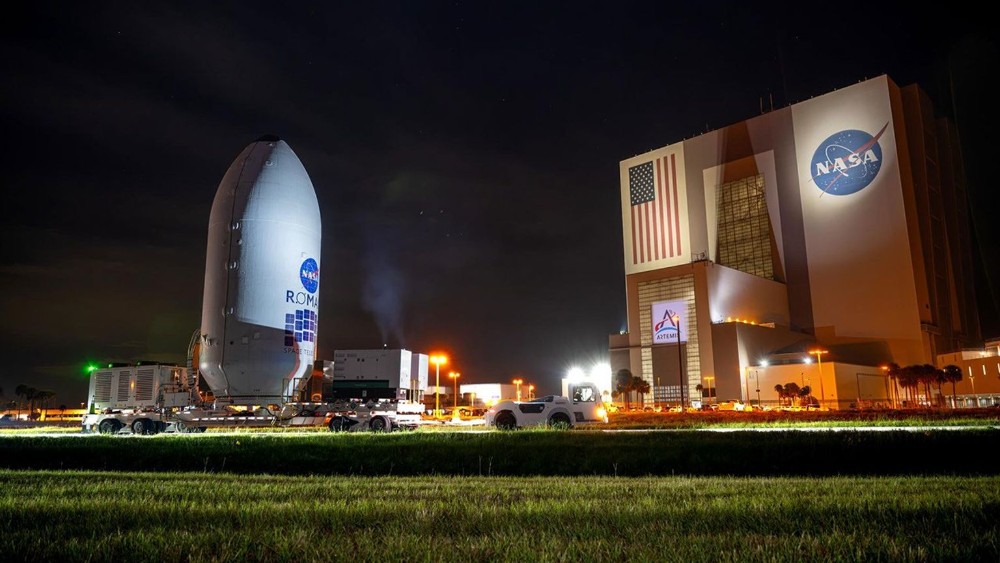
New data should help. Wiseman said the Rubin Observatory and its Legacy Survey of Space and Time, now beginning, and the Roman Space Telescope, launched on Aug 30, will measure supernovae much closer to the age of the star that exploded. That will allow scientists to test the Yonsei predictions and whether the mass correction is truly valid.
For now, dark energy remains unexplained, but not yet dethroned.