


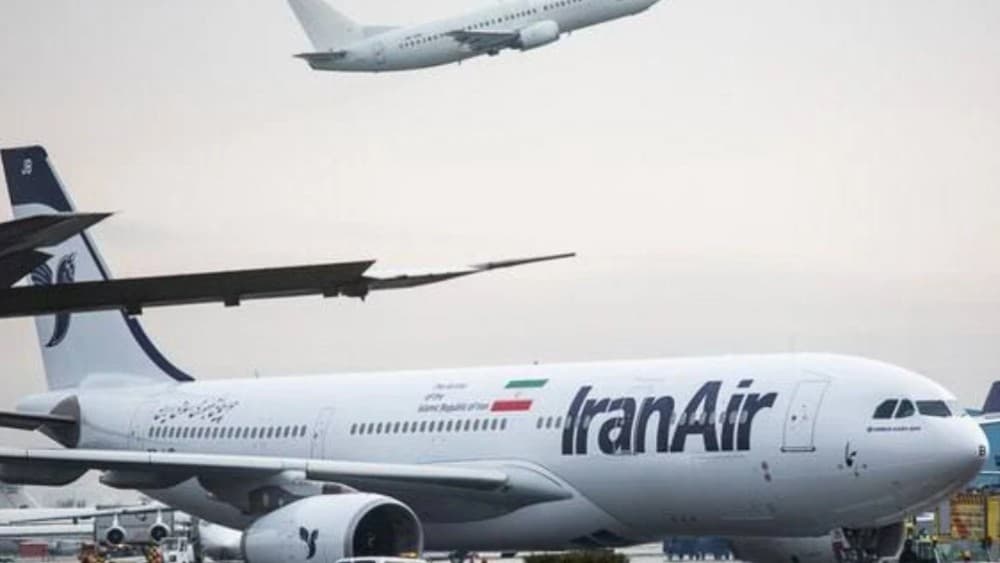
ISLAMABAD: The United States' restrictions on Iran’s aviation sector take effect today (Sept 23), requiring foreign companies to refuse services to Iranian airlines.
US Treasury Secretary Scott Bessent said on Monday that Iranian airlines would effectively be “shut down around the world” from Wednesday.
Experts believe that Washington is not physically banning Iranian aircraft from foreign airspace, but pressing other countries to stop facilitating Iranian airlines at their airports.
Former aviation pilot retired Major Sajid Majeed Chaudhary said that airlines not only fly aircraft; they need to undertake dozens of operations to run the business.
“Fleet and supply chain management, spare parts replacements and pilots' certifications are some of the crucial tasks an airline has to take care of every day. Without these chores, it cannot fly its planes,” explained Chaudhary, who also holds a Bar-at-Law degree.
He said that if the US restrictions continue for long, Iranian airlines would be unable to obtain new spares once the current crucial parts of their aircraft reach their expiration dates.
“When an airline doesn’t replace expired spare parts, its planes cannot get airborne and become grounded junk,” Chaudhary added, saying that this would happen to Iranian airlines in the event of prolonged restrictions, and they would have to be closed down.


International flights canceled
The impact of the US ban is already visible. According to Iranian media reports, flights to Baghdad and Muscat have been canceled.
Iran’s Civil Aviation Organization said it was negotiating with Iraq to redirect Baghdad-bound flights to Najaf, and that discussions with Oman were also underway.
A Middle Eastern TV channel quoted Iranian officials as saying that other international services, including flights to Istanbul, would continue where possible.
According to Al Arabia, Iraq has also moved to suspend flights operated by Iranian airlines affected by the US measures.
The Financial Times reported that Iranian airline Mahan Air had already suspended services to Istanbul, Ankara and Muscat as US pressure intensified.
The restrictions are particularly significant because Iranian carriers depend heavily on foreign airports for refueling, maintenance, ground handling and passenger services.
China rejects the US position
The dispute is also becoming a test of how far Washington can extend its sanctions beyond its own borders.
China said Tuesday that it opposed the US sanctions, describing them as lacking a basis in international law or UN authorization.
Having rejected the US restrictions, experts believe Beijing may help Iran not only by offering its airports but also by providing spares and other support to Iranian airlines to continue their operations.
They say that the Chinese position also poses a potential challenge to Washington's efforts to persuade foreign companies and governments to comply with the new restrictions.
What does it mean for passengers?
Fewer international routes, canceled flights, and reduced access to foreign airports could make travel significantly more complicated for passengers, who will have to switch to alternative carriers and transit hubs outside Iran.
Flight schedules and access to individual airports can change rapidly as governments assess the risks associated with Washington's secondary-sanctions threat.
Pakistan angle
The developments also have implications for Pakistan because Iranian carriers have operated routes between the two countries.
Current flight information shows that direct Iran-Pakistan services remain part of the wider regional aviation network, although schedules are changing rapidly.
Flight-tracking and schedules indicate that routes between Islamabad and Tehran have been operated by Iranian carriers, including Mahan Air and Iran Airtour.
However, the available Islamabad airport schedule does not by itself establish whether a particular Iranian flight will operate after the US deadline. Travelers therefore need to confirm individual flights directly with their airline or airport before traveling.
Sajid Majeed Chaudhary said that once Iranian airlines stop operating between Iran and Pakistan, Islamabad will have to take additional measures to accommodate Pakistani pilgrims, including those currently in India, as no one else will be able to transport them.
“Our flight capacity is very limited, so we will have to make special arrangements for travel between the two countries,” he added.