


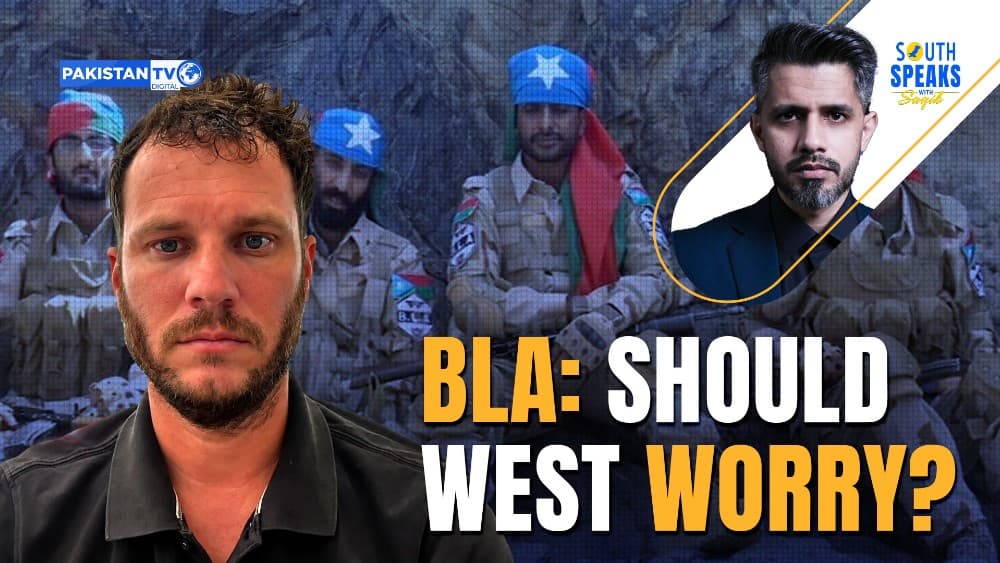
ISLAMABAD: International Expert on terrorism Jacob Zenn on Tuesday said that it would not be surprising if India were leveraging the Baloch Liberation Army, also called Fitna al-Hindustan, to cause instability inside Pakistan.
Zenn, who is an editor of Terrorism Monitor and Militant Leadership Monitor at the Jamestown Foundation, made those remarks during an interview on Pakistan TV Digital’s show South Speaks with Saqib.
Speaking from Ho Chi Minh City, Vietnam, the Georgetown University adjunct professor noted that while ties between external actors and BLA remained clandestine, state-sponsored destabilization was plausible given the historical precedent and rivalry between New Delhi and Islamabad.
"Given India's rivalry with Pakistan, it wouldn't be surprising for India to try to leverage the BLA to cause instability with Pakistan," Zenn said.
Islamabad's top civil and military leadership has continuously in the past called out the terrorist outfit for being funded by India; hence the term Fitna al-Hindustan was coined to describe the banned organization.
Zenn explained that the growing operational sophistication of BLA attacks, including coordinated assaults involving hundreds of terrorists, strongly pointed to outside funding, training, or weapons smuggling networks.
Earlier this month, Pakistan's Army, along with Frontier Corps (FC) Balochistan and Police, initiated 'Operation Shaban' against the organization in Balochistan following a rise in militant attacks, with Prime Minister Shehbaz Sharif vowing total extermination of the Indian-backed terrorists in the province.
The expert highlighted that BLA operatives are generally secular, distinguishing them from so-called religious networks like Tehreek-e-Taliban Pakistan (TTP) or Fitna al-Khawarij that are active along the Afghan border.
Zenn stressed that maintaining stability in Pakistan remained vital to US strategic interests due to broader regional security, economic development, and nuclear deterrence.