


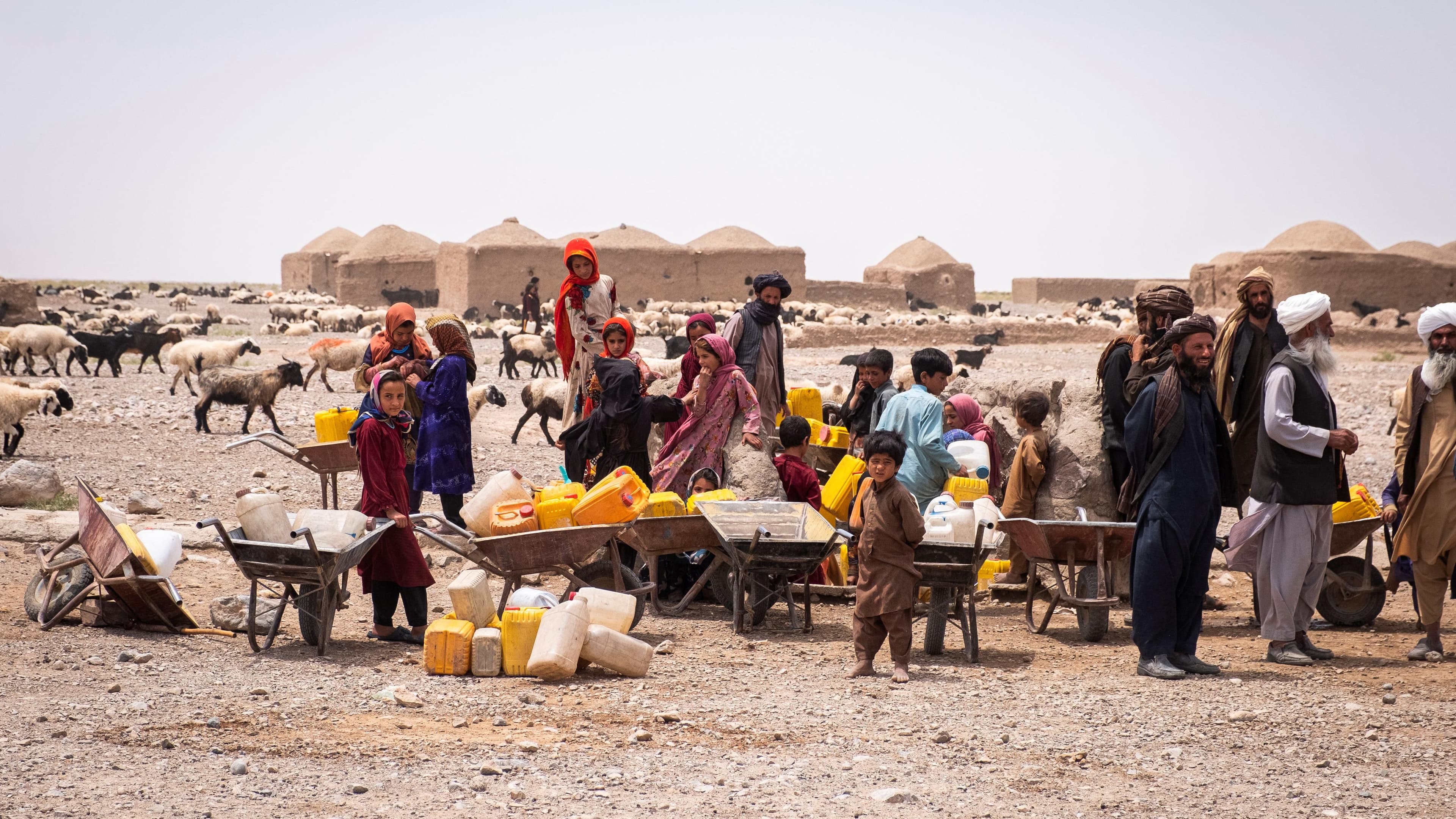
ISLAMABAD: As Afghanistan marked World Environment Day on Friday, growing climate and environmental challenges continued to weigh heavily on communities across the country, causing serious risks to livelihoods, food security, and long-term social stability, according to a report by United Nations Assistance Mission in Afghanistan (UNAMA).
Years of drought, worsening water scarcity and extreme weather events have left millions vulnerable, particularly in rural areas where agriculture remains the primary source of income.
More than half of Afghanistan’s population is affected by prolonged dry periods, according to local assessments, with farmers reporting repeated crop failures and shrinking access to water.
In the eastern province of Nangarhar, residents say increasingly unpredictable weather patterns are disrupting traditional farming practices and deepening economic hardship.
“Our river has become unpredictable. Last year, it dried when we needed it most; this year it flooded and destroyed half of our crops,” said a farmer in Goshta district, describing the uncertainty facing rural communities.
The situation is especially severe in Afghanistan’s southern provinces, including Kandahar, Helmand, Nimroz, Zabul and Uruzgan, where recurrent drought, declining rainfall and unregulated groundwater extraction have pushed water systems toward collapse.
Rivers are drying up, traditional irrigation systems have deteriorated, and many communities are drilling deeper wells in search of water, often with limited success.
The consequences have been far-reaching, reducing agricultural production, limiting access to safe drinking water and forcing some families to leave their homes in search of reliable water sources.
Increasingly scarce resources
Competition over increasingly scarce resources has become a tension in some areas.
Experts warn that without urgent intervention, parts of the region could become difficult to inhabit. Proposed solutions include expanding water-efficient irrigation systems, improving water management practices and investing in groundwater recharge projects.
Elsewhere in Afghanistan, communities are confronting a different set of climate-related challenges.
In western provinces such as Ghor and Farah, prolonged drought has coincided with destructive flash floods caused by intense rainfall.
Residents have struggled to cope with water shortages while rebuilding homes, farmland and infrastructure damaged by flooding.
Floods are also becoming more frequent and unpredictable in central and eastern provinces, including Logar, Parwan and Kapisa.
In the south, strong winds and dust storms have damaged crops and contributed to respiratory illnesses, adding to humanitarian needs.
Environmental degradation
Environmental degradation is further intensifying the crisis.
Deforestation in Kunar, Nuristan and Logar has lessened natural protection against floods and landslides, while overgrazing in mountainous regions such as Badakhshan has accelerated ecosystem degradation and biodiversity loss. Unregulated mining activities have also damaged landscapes and polluted water sources.
Urban areas face their own environmental challenges. In Kabul, air pollution remains a serious public health concern, particularly during winter months when many households rely on low-quality fuels for heating. Poor waste management continues to exacerbate the problem.
In provinces known for their natural beauty, including Panjshir, Kapisa and Maidan Wardak, growing tourism has increased pressure on local ecosystems, with waste accumulating in rivers and valleys.
World Environment Day, observed annually on June 5, seeks to raise awareness about environmental issues and encourage action to protect ecosystems and promote sustainable development worldwide.