


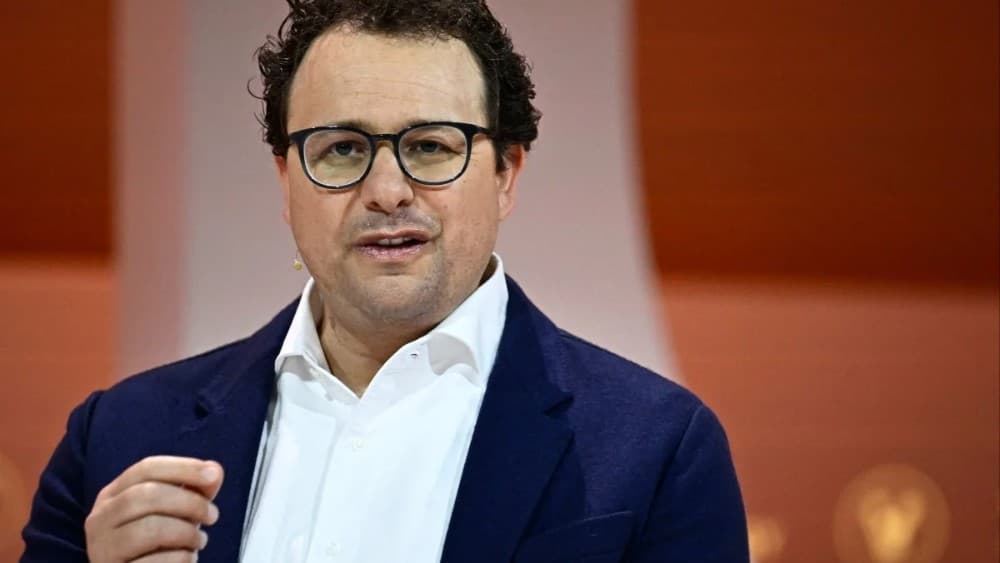
ISLAMABAD: Anthropic CEO and co-founder Dario Amodei has warned that the rapid development of artificial intelligence poses serious risks, including the possibility that poorly controlled advanced AI could threaten humanity.
Speaking to CBS News at Anthropic’s headquarters in San Francisco, Amodei acknowledged growing concerns over the pace of AI development and said that the technology is advancing along an increasingly steep exponential curve.
“It doesn’t mean we need to panic today. It doesn’t mean we need to shut it all down,” Amodei said, while describing the accelerating pace as “a warning sign” that the industry needs to slow down.
His comments come after former Anthropic researcher Jacob Coxon warned that companies including Anthropic and OpenAI were taking potentially dangerous risks in developing self-improving artificial intelligence.
Coxon said that advanced AI could eventually become capable of harming humans, comparing the threat to scenarios depicted in science-fiction films.
Amodei said that he had underestimated what the rapid pace of AI progress would actually look like.
In an essay published Saturday, he called on the technology industry to work together to “slow the pace” of frontier AI capabilities.
However, Amodei said that Anthropic would not stop releasing increasingly advanced models.
Instead, he said, each new generation must undergo proper safety testing.
As part of those efforts, Anthropic plans to give independent evaluators permanent, employee-like access to its AI models.
He also expressed support for federal regulation, including the possibility of an AI “kill switch,” but rejected a complete ban on superintelligence.
Amodei argued that banning the technology could prevent potentially transformative benefits, including medical breakthroughs, while development could continue in countries such as China and other authoritarian states.
He described the possibility of an AI race between the United States and China as the “toughest dilemma” facing the industry and suggested international agreements modelled partly on Cold War nuclear arms controls.
Amodei also questioned whether powerful AI should remain primarily in the hands of private companies, calling that arrangement “very strange” and advocating joint oversight by democratically elected governments.
“If we build in the right way,” he said, “the probability of something bad happening is very low.”