


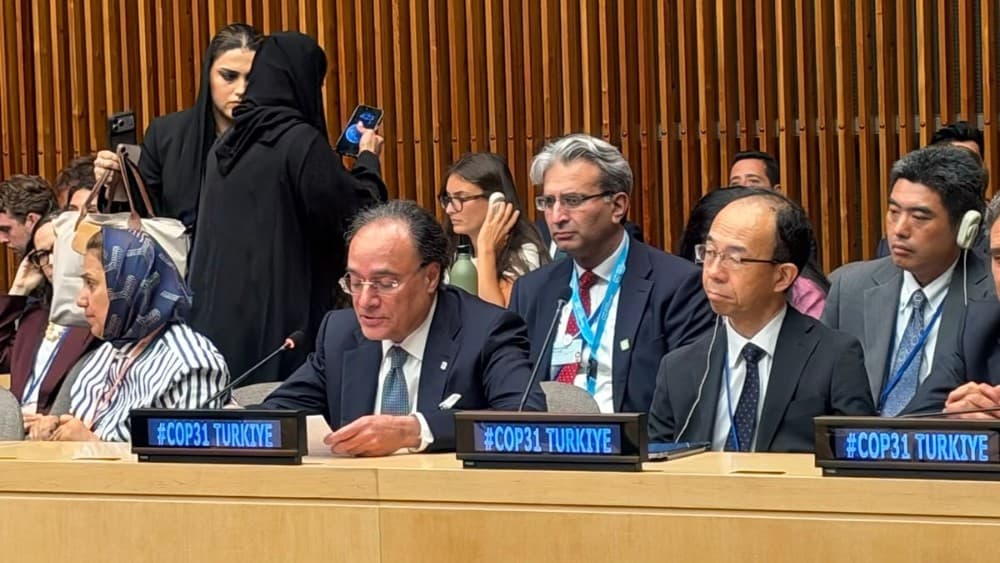
ISLAMABAD: Pakistan has endorsed the COP31 Action Agenda, which focuses on converting global climate commitments into tangible actions, according to a statement from Pakistan's Ministry of Finance on Tuesday.
The agenda was officially launched during the 81st session of the United Nations General Assembly in New York on Monday.
Finance Minister Muhammad Aurangzeb spoke at the launch of the COP31 Action Agenda and expressed the country’s full support.
"Senator Mohammad Aurangzeb noted that the agenda strongly aligns with Pakistan’s national climate priorities and Nationally Determined Contribution (NDC) 3.0," the statement said.
He highlighted Pakistan’s acute climate vulnerability and emphasized shared priorities including clean energy and electrification, renewable-energy expansion, energy-efficient buildings, climate-resilient cities, climate education and public awareness, food security, and climate-resilient agriculture.
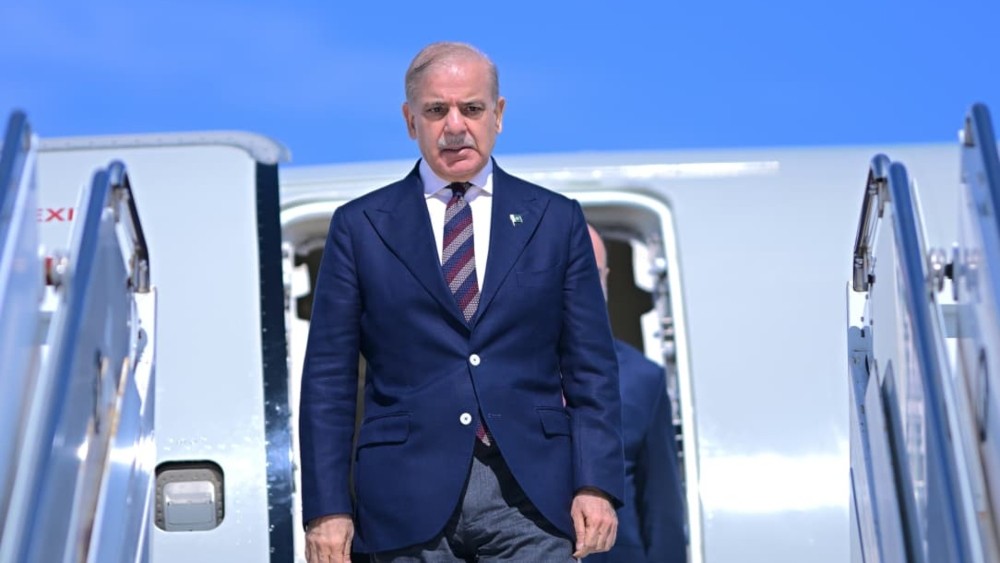

The minister welcomed the proposed Climate Implementation Bridge as a mechanism to translate NDC commitments into investable and bankable projects, stressing, “The principal challenge is no longer the formulation of plans, but their effective implementation.”
He commended the agenda’s clearly defined action points and key performance indicators, describing it as practical, impact-oriented, and focused on measurable results.
COP31 Action Agenda
The COP31 Action Agenda focuses on turning global climate commitments into concrete implementation at the November 2026 summit in Antalya, Türkiye, with its action agenda centered on ten key areas.
These areas include circular economy and waste reduction, clean energy and a 35% electrification target by 2035, green industrialization, climate-resilient cities, food security, marine conservation, climate-ready health systems, youth education, Rio Convention synergies, and the Climate Implementation Bridge.
Türkiye officially launched the COP31 Action Agenda titled “From Ambition to Implementation” on Sept 21, during the United Nations General Assembly in New York.
Pakistan’s transition toward virtual assets
Minister for Finance and Revenue Mohammad Aurangzeb, in his opening remarks at the “United Nations Digital Cooperation Day 2026 - Blockchain and the Tokenized Future: Sovereign Choices and Safeguards for Next-Gen DPI,” highlighted Pakistan’s transition toward a regulated virtual-assets framework.
The minister emphasized that tokenization must address real economic needs, including cheaper remittances, SME financing, sovereign debt, and broader financial access.
He stressed that private-sector innovation should be supported by strong state safeguards, inclusive digital infrastructure, and international cooperation, with emerging economies fully involved in shaping global standards.