


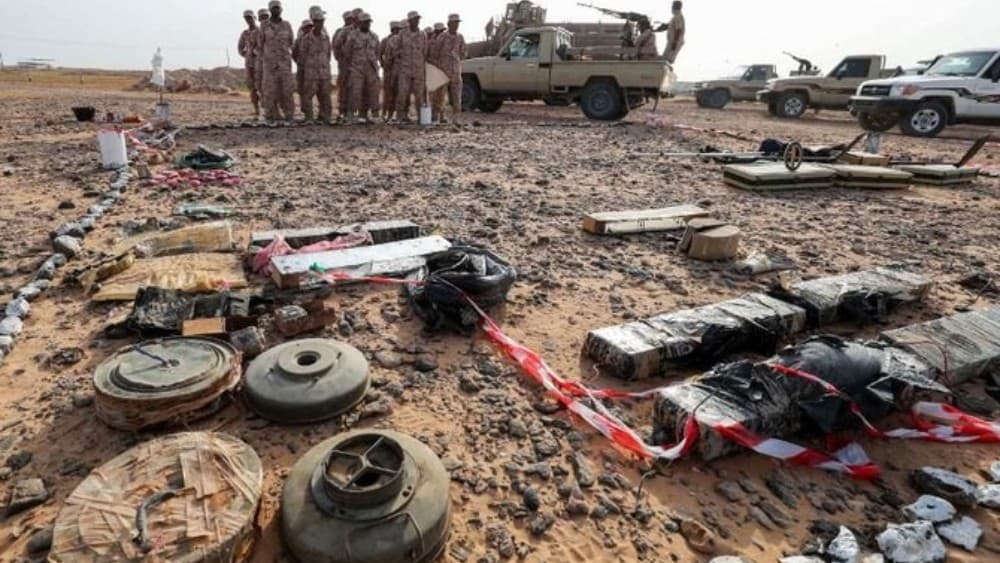
ISLAMABAD: Heavy rains and flash floods continue to batter central, eastern, and southeastern Afghanistan, raising concerns that landslides and floodwaters could expose buried landmines and unexploded ordnance, according to the UN Office for the Coordination of Humanitarian Affairs (OCHA).
According to an OCHA report released on Wednesday, recent floods have affected Laghman, Nuristan, Nangarhar, Ghazni, Kapisa, Logar, Paktia, Paktika, and Parwan provinces.
Afghanistan remains one of the world's most heavily contaminated countries with landmines and unexploded ordnance, a legacy of more than four decades of conflict.
The explosives continue to endanger civilians, particularly children, who often mistake them for harmless objects while playing or collecting scrap metal.
The International Committee of the Red Cross (ICRC) recorded 217 landmine and unexploded ordnance incidents in Afghanistan in 2025, resulting in 92 deaths and 375 injuries.
Children accounted for 66% of all casualties.
Although millions of explosive devices have been cleared since 1989, thousands of hazardous areas remain.
Humanitarian situation
The World Health Organization said that flash floods between July 20-25 caused widespread destruction across eastern, central, and southeastern Afghanistan, damaging homes, roads, health facilities, and agricultural land.
The worst-hit area was Parun, the capital of Nuristan province, where at least 23 people were killed, five remain missing, and 125 were injured.
Hundreds of families in Kabul and neighboring provinces were also affected, while major damage was reported in Mohammad Agha district of Logar, Ghorband district of Parwan, and several parts of Kabul.
In the south-east, floods killed two people in Paktika and two children in Paktia, while at least 26 houses were destroyed.
Extensive damage to farmland, roads, and water supply systems was also reported in Khost and Ghazni.
WHO warned that damaged infrastructure has disrupted access to healthcare, safe drinking water and other essential services, increasing the risk of waterborne diseases and food insecurity.
The agency has activated its emergency response, conducting rapid assessments and distributing relief supplies, but warned that continued rainfall could further worsen the humanitarian situation.