


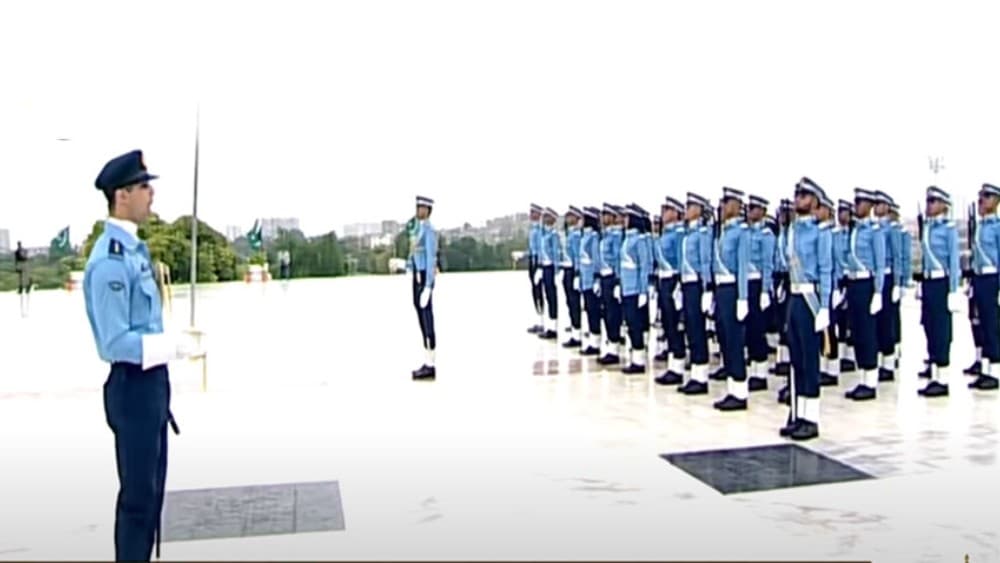
ISLAMABAD: Pakistan observed Defense and Martyrs’ Day on Sunday, paying tribute to the country’s martyrs and veterans. The political and military leadership recalled the 1965 war with India and reaffirmed the nation’s resolve to safeguard sovereignty, territorial integrity, and national security.
Every year, Pakistan observes Sept 6 to commemorate the country’s defense during the 1965 war with India and the sacrifices of those Pakistani soldiers who fought and died in the conflict.
On Sept 6, 1965, Indian forces crossed the border, prompting the Armed Forces and the nation to mobilize in defense of the country.
President, PM’s messages to the nation
President Asif Ali Zardari and Prime Minister Shehbaz Sharif paid tribute to the martyrs, veterans and their families in separate messages, while the military leadership honored those who had sacrificed their lives in the country’s defense.
The observance featured ceremonial change-of-guard duties at the mausoleums of Pakistan’s founding leaders. The ceremonies formed part of a wider commemoration in which the nation remembered the "unparalleled resolve, unity and sacrifices" demonstrated by the armed forces and people during the 1965 war.
The Armed Forces reaffirmed their readiness to defend Pakistan while stressing the country’s commitment to peace, stability, prosperity and peaceful coexistence.
"From the battlefields of 1965 to the resounding success of Marka-e-Haq and Operation Bunyanum Marsoos, our Armed Forces have demonstrated that the spirit of 6 September remains undiminished," read a statement from the military's media wing, Inter-Services Public Relations.
The military leadership said Pakistan continues to seek peace and peaceful coexistence, but maintained that its preparedness to defend the country was non-negotiable.
Remembering the 1965 war
President Zardari, in his message, said the day remains a defining chapter in Pakistan’s history, and recalled the "unity and spirit of faith" demonstrated by the nation and Armed Forces during the war.
He said the sacrifices of the martyrs and veterans had become lasting examples of courage and patriotism.
The president linked the spirit of Sept 6 to the success of Operation Bunyanum Marsoos, saying it had added another chapter to the country’s military history.
Prime Minister Shehbaz Sharif, in his message, said that Sept 6 is 'a glorious chapter in our national history.' He recalled the sacrifices of 1965 and linked the spirit of the day to Pakistan’s contemporary defense and national development.
He emphasized the connection between national defense and economic stability, development, unity, and institutional strength.
From sacrifice to defense preparedness, since 1965
The Defence and Martyrs’ Day messages also linked the memory of 1965 to Pakistan’s contemporary defense posture.
On Aug 7, Pakistan, Saudi Arabia and Türkiye signed the Makkah Joint Defence Agreement, committing to strengthen collective security and defense cooperation. The agreement states that an armed attack on any one of the three countries would be regarded as an attack on all three.
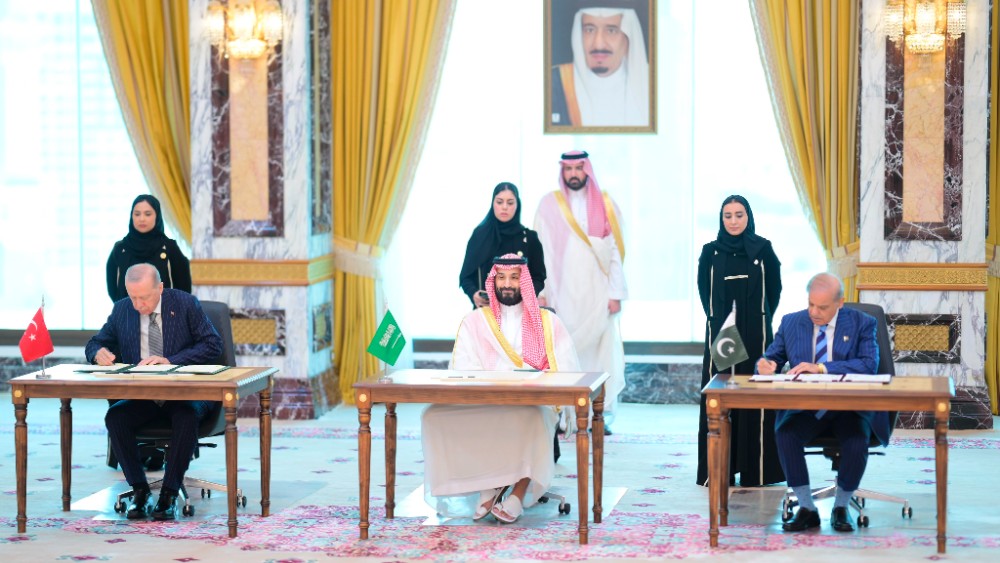

The agreement subsequently moved into an institutional phase. On Aug 31, the three countries agreed to establish a secretariat in Saudi Arabia and to strengthen defense capabilities through cooperation in the defense industry, joint technology development and production. The secretariat is to be headed by a secretary-general from Pakistan for three years.
The day’s commemoration connected three strands of Pakistan’s defense narrative: the sacrifices made in the 1965 war, the Armed Forces’ stated readiness to protect the country and a broader emphasis on peace, regional stability and defense cooperation.
Defence Day and Pakistan Army Museum war exhibits
The artifacts preserved at the Pakistan Army Museum in Rawalpindi, from war trophies and armored vehicles to newspapers and music, provide tangible reminders of the conflict commemorated on Sept 6 and of the many dimensions of Pakistan’s wartime experience.
The museum preserves one of the more distinctive physical reminders of the conflict: an Indian Army Willys jeep displayed as a war trophy.
According to an account presented in a previous Pakistan TV Digital report, the jeep was abandoned during the fighting on the Lahore front in September 1965, along with military documents, before being taken into Pakistani custody.
The vehicle provides a tangible link to the battlefield events commemorated on Defence and Martyrs’ Day and offers a glimpse of the equipment and material associated with the conflict.
The museum’s outdoor armor display offers another perspective on the war.
Pakistan TV Digital documented three tanks associated with Pakistani armored formations during the conflict: the M48 Patton, M47 Patton and M24 Chaffee.
The report examined their association with different battles and sectors of the war, including the fighting around Gadgor and Khem Karan.
The Army Museum’s 1965-war material also covers the Lahore, Sialkot, Khem Karan and Rajasthan sectors and documents the roles of Pakistan’s Army, Air Force, Air Defense and Navy.
When ink, music became Pakistan's weapons
Another report by Pakistan TV Digital presented the museum’s account of 1965, which extended beyond battlefield equipment.
This included the roles of newspapers, writers, and musicians in sustaining public morale during the war. Newspaper headlines and wartime writing reflected the national response to the conflict, while patriotic music became an important part of the period’s public messaging.