


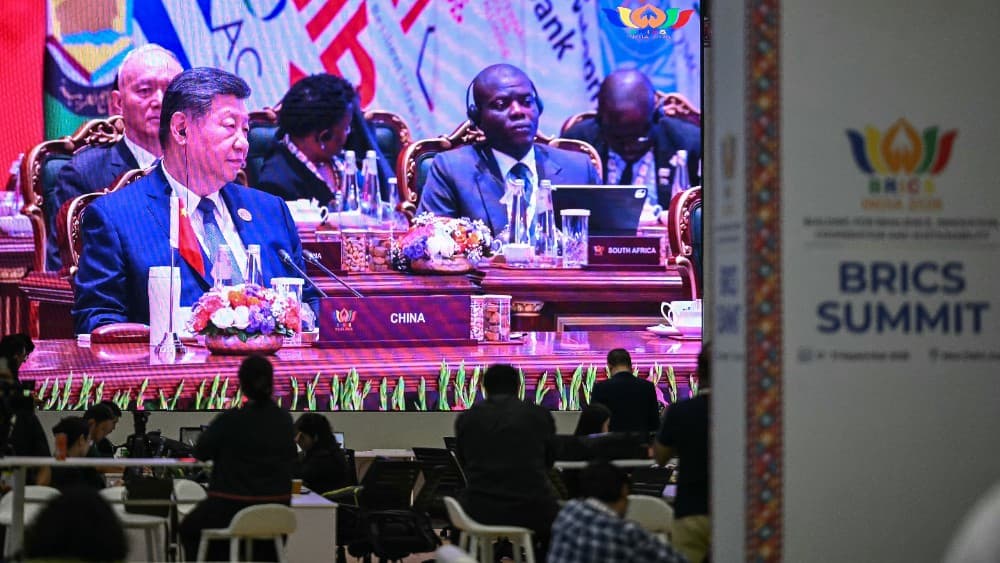
ISLAMABAD: An all-vegetarian menu served to visiting heads of state at last week's BRICS summit has drawn accusations from opposition politicians that the Indian government used the diplomatic showcase to project a narrow, majoritarian version of national identity that sidelines the country's Muslim and other non-vegetarian communities, the first of three food-related episodes that came to overshadow the gathering's official agenda.
The gala dinner, hosted by Prime Minister Narendra Modi at the Bharat Mandapam convention center, offered dishes built around indigenous grains and vegetarian staples, as reported by ThePrint.
The menu featured items including khandvi mille-feuille, a steamed chickpea-flour dish, and paneer lababdar, a cottage cheese dish in tomato and cashew gravy. Its centerpiece was Gucchi Marmik, made with wild Himalayan morel mushrooms that sell for up to 40,000 Indian rupees($480) per kilogram, according to Business Today.
Organizers said the menu was designed to promote "Shree Anna," a government initiative encouraging the use of coarse grains such as pearl millet and sorghum. Bharat Mandapam's in-house catering rules restrict the venue to vegetarian food, as reported by the New Indian Express.

Waris Pathan, national spokesperson for the All India Majlis-e-Ittehadul Muslimeen party, criticized the choice on Sept 13, saying it erased India's food diversity, as reported by NDTV. Pathan said mutton, chicken and fish are just as important to India's culinary identity as vegetarian food.
Congress party leader Rahul Gandhi responded by posting an image of chole bhature, a North Indian dish, and stating that 80% of Indians eat meat, according to India Today. Gandhi cited data from the National Family Health Survey, which found that about 83.4% of men and 70.6% of women aged 15 to 49 eat fish, chicken or meat at least occasionally.
Congress spokesperson Pawan Khera said the governing Bharatiya Janata Party was imposing its dietary choices on foreign dignitaries. Trinamool Congress lawmaker Mahua Moitra suggested on social media that visiting leaders send security to a nearby Mughlai restaurant for kebabs.
Shiv Sena (UBT) lawmaker Priyanka Chaturvedi said hosts should offer guests dietary options, recalling her own difficulty finding vegetarian meals while traveling abroad, according to the Hindustan Times.
The government rejected the criticism. Union Minister Kiren Rijiju said visiting leaders enjoyed the vegetarian meal and accused the opposition of politicizing the summit, as reported by the New Indian Express.
Organizers said foreign delegations were served non-vegetarian food at their hotels throughout the summit, and that the vegetarian gala was meant to showcase Indian plant-based cooking. Celebrity chef Sanjeev Kapoor called the controversy a non-issue during a television interview, as per NDTV.
Former Icelandic President Olafur Ragnar Grimsson said Iceland served an all-vegetarian state banquet in 2005 to then-Indian President Abdul Kalam, despite Iceland's largely meat-and-fish-based diet, according to India Today. Grimsson said governments hosting state dinners retain the right to design menus reflecting their own values, per the same report.
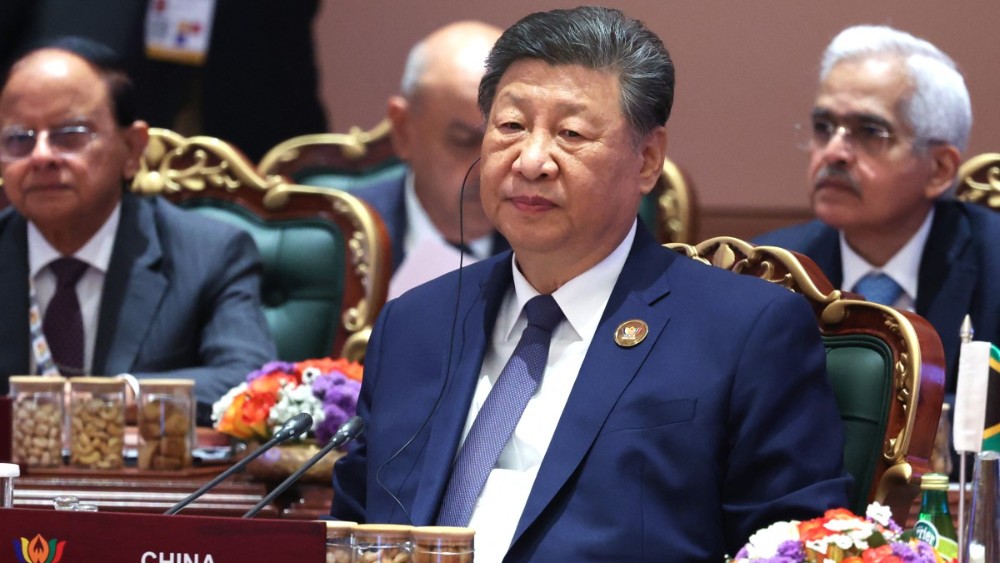
The menu dispute followed the absence of Chinese President Xi Jinping from the same gala dinner. Xi attended the summit's plenary sessions and held bilateral talks with Modi earlier that day but did not attend the evening banquet, sending Foreign Minister Wang Yi in his place, according to the Times of India.
Some Congress spokespeople quipped online that Xi skipped the dinner to eat meat elsewhere. Diplomatic sources cited by the Hindustan Times said Xi's absence was due to travel fatigue following his same-day arrival from Beijing and a packed schedule ahead of the summit's second day.
A separate video from the same summit added to online debate around food at the gathering. Footage showed Ministry of External Affairs spokesperson Randhir Jaiswal and National Security Adviser Ajit Doval eating from snack boxes while seated behind Iranian President Masoud Pezeshkian during a plenary address.
The original broadcast feed, produced by Doordarshan, India's public broadcaster, showed both officials eating intermittently over an extended session.
A version of the video went viral online, with the clip cropped to focus on the two officials. Social media user Mario Nawfal shared the clip, describing the officials as "absolutely demolishing a box of nuts."
Taken together, the three episodes: a menu about political exclusion, a leader's absence who goes off in search of kebabs, and a snack turned into spectacle, illustrate how closely diplomatic hospitality is scrutinized at major summits, and how easily its details can be pulled into unrelated domestic political and online narratives.