


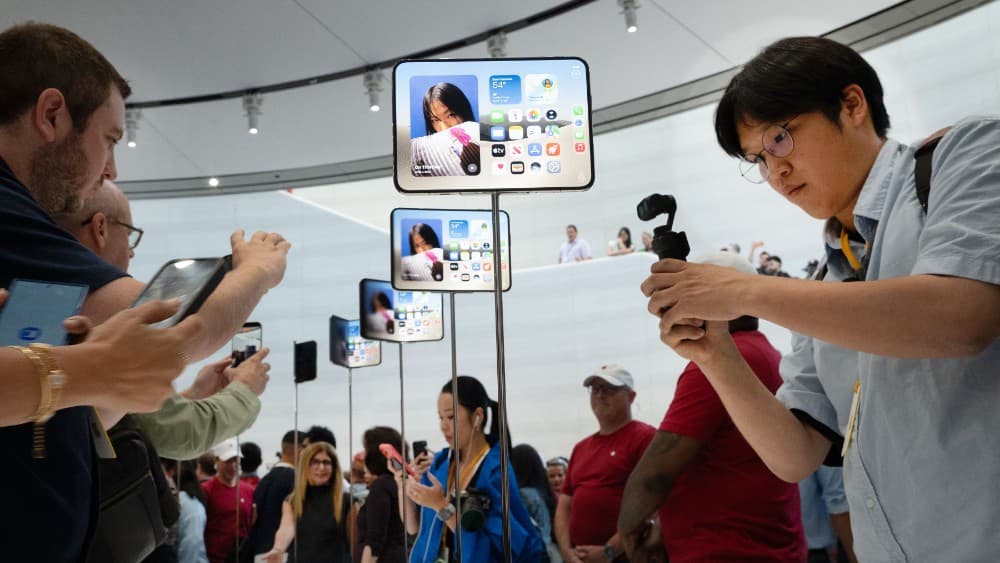
Apple has finally made a foldable iPhone. Samsung, which has been folding phones for years, was never going to let that moment pass quietly.
Within minutes of Apple unveiling its $1,999 iPhone Duo on Wednesday, Samsung took to X with a series of jokes aimed at its longtime rival, reminding everyone that it had already spent years turning foldable phones from a novelty into a smartphone category.
“It's feeling very familiar. Is this a Sims sequel…” Samsung posted during Apple's event.
Then came the sharper jab: “Let us know when you're done reheating our leftovers.”
Samsung has a point. Apple did not invent the foldable phone. It did not invent the book-style design. And it certainly did not invent the idea of turning a phone into a small tablet with a hinge in the middle.
Samsung has been doing all of that since 2019.
But here is where the joke gets interesting: being first and being best are two very different things.
Apple's strategy has rarely been about being first. The company often waits for a technology to mature, watches consumers decide what works and what doesn't, and then enters with its own interpretation.
That is essentially what has happened with the iPhone Duo.
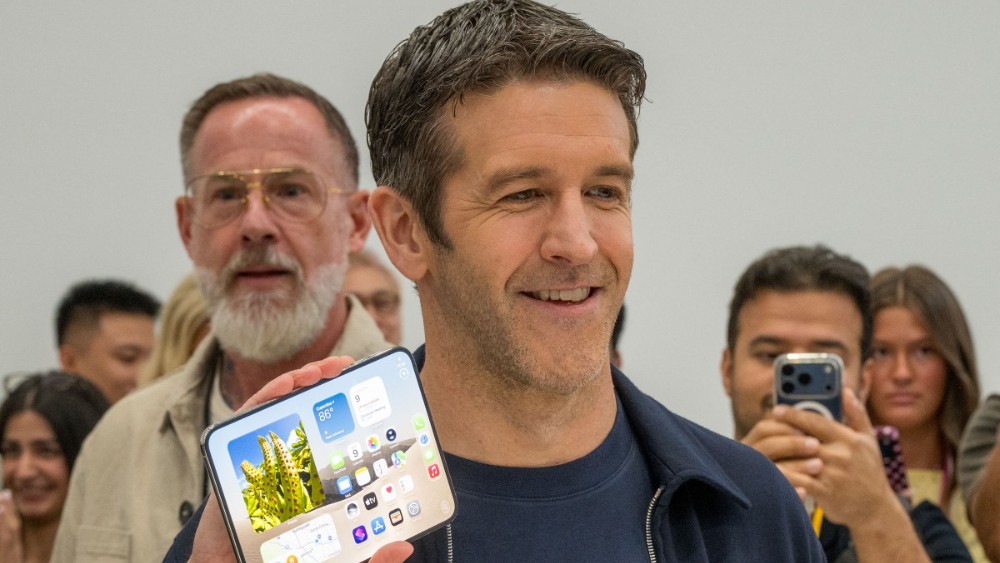
The $1,999 device folds like a book, with a 5.4-inch outer display that opens into a 7.6-inch screen. Apple says its hinge and display design virtually eliminate the crease. One of the most persistent complaints about foldable phones.
Let us know when you’re done reheating our leftovers.
Samsung Mobile US
During the launch, Apple CEO John Ternus took aim at existing foldables, saying many feel like “two phones awkwardly stuck together.”
Samsung, naturally, did not let that one slide.
“Making us wait? Fine. We'll be over here, folding 3 ways,” Samsung posted, referring to its own tri-fold technology.
And that is probably the most revealing part of this whole exchange.
Samsung has the experience. Apple has the luxury of hindsight.
The Galaxy Z Fold line has gone through multiple generations. Samsung has learned what works, what frustrates users and what people actually want from a folding phone. Apple has had the opportunity to watch all of that from the sidelines.
So perhaps the more interesting question is not whether Apple copied Samsung.
Of course it borrowed from an established category. Every smartphone maker builds on what came before.
The question is whether Apple can take a product Samsung spent years developing and make the average iPhone user suddenly want one.
That is a much bigger challenge.
But there is another part of the Samsung story that often gets lost in the Apple-versus-Samsung rivalry: Samsung does not make just one kind of phone.
That matters enormously in markets such as Pakistan.
I've used Samsung phones across the price spectrum, from affordable Galaxy models to its high-end devices. That experience is probably why Samsung's “leftovers” joke is more amusing to me than insulting.
Samsung's real strength is not simply that it got to foldables first. It is that someone walking into a mobile market with a limited budget can still find a Samsung, and someone willing to spend heavily can find one at the other end of the range too.
There are entry-level Galaxy phones, mid-range models and premium flagships, along with foldables and other specialised devices.
That breadth gives Samsung something Apple does not really offer: a clear upgrade path within the same brand.


A customer can start with an inexpensive Galaxy, move to a better mid-range model, eventually buy a flagship and, if they want to experiment, step into a foldable. The brand can follow the customer as their budget and needs change.
Apple's approach is different. It has built an extraordinarily successful premium ecosystem, but its phones occupy a much narrower price range.
And in countries where purchasing power varies dramatically, that difference matters.
A smartphone is no longer simply a luxury gadget. For many people, it is their camera, banking device, navigation system, entertainment screen, work tool and primary connection to the internet.
So affordability and choice are not minor selling points. They can determine which brand becomes part of people's everyday lives.
That does not automatically make Samsung better than Apple. Samsung's cheaper phones are not necessarily the best option in every price bracket, and fierce competition from Chinese manufacturers has made the budget and mid-range markets far more difficult.
But Samsung's ability to compete from relatively affordable devices to $1,000-plus flagships is a powerful advantage.
And it makes the foldable debate more interesting.
Samsung can legitimately say Apple arrived late. But Apple can legitimately argue that arriving later allowed it to refine the technology.
Early reviews suggest that may be exactly what Apple is trying to do. TechRadar contributor Lance Ulanoff said he was “seriously impressed” with the Duo and singled out its hinge, saying the crease was effectively invisible.
That could ultimately matter more than Samsung's jokes.
Consumers do not necessarily care who invented the foldable phone. They care whether the device feels good in the hand, whether the screen works as promised, whether the hinge survives years of use and whether the price makes sense.
At $1,999, Apple has certainly given consumers plenty to debate on that last point.
Samsung has the head start. Apple has the opportunity to learn from it.
Counterpoint expects Apple to capture about 25% of the global foldable-phone market in 2026, compared with 38% for Samsung. If those projections hold, Apple's arrival could quickly turn foldables from a relatively specialised category into a much bigger mainstream market.
That is why Samsung's mockery is funny. But also a little defensive.
Apple does not need to prove that it invented foldable phones. It needs to prove that it can make people who never wanted one suddenly believe they need one.
And Samsung does not need to prove that it got there first. Everyone already knows that.
Its bigger challenge is making sure that experience, variety and value continue to matter once Apple finally decides to enter the race.
So yes, Samsung can call the iPhone Duo “leftovers.”
It can point out that it was folding phones while Apple was still watching.
But the smartphone market has never been decided simply by who arrived first.
Samsung may have invented the dinner. Apple has just shown up hungry.