


ISLAMABAD: The Organization of Islamic Cooperation (OIC) has reaffirmed its unwavering support for the Kashmiri people's inalienable right to self-determination, as enshrined in UN Security Council and OIC resolutions.
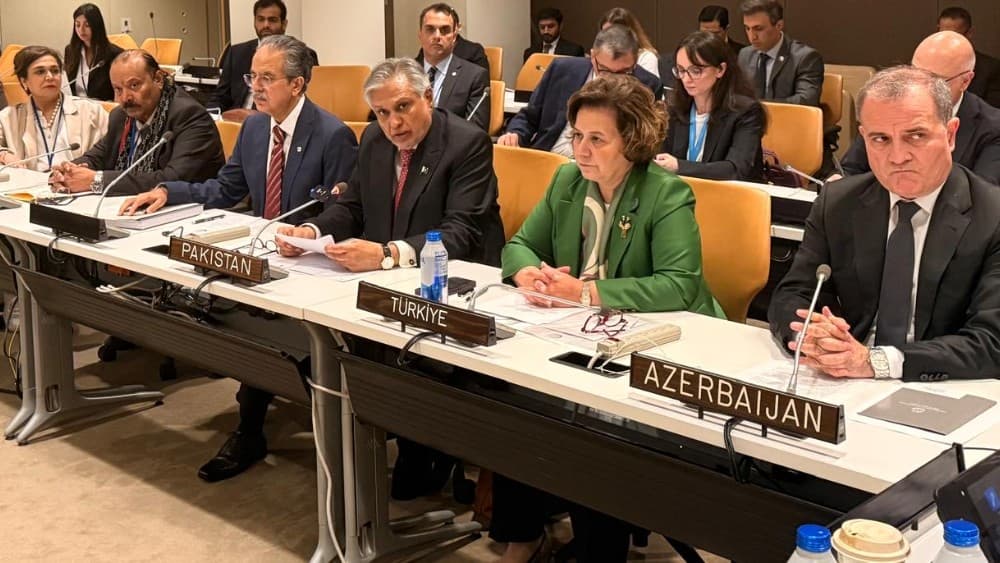
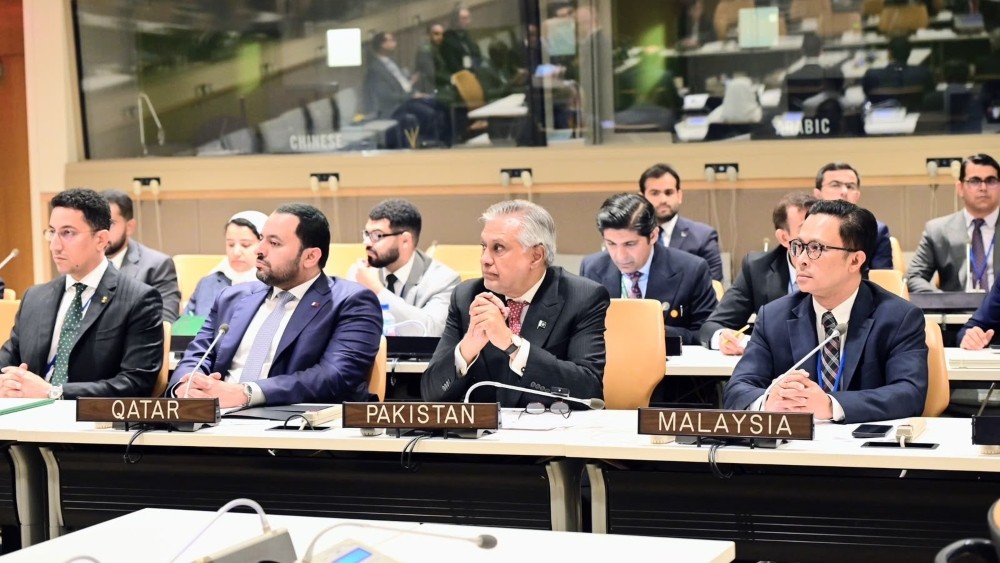
This was stated in a joint communique following a meeting of the OIC Contact Group on Jammu and Kashmir, held on the sidelines of the 81st UN General Assembly session in New York on Tuesday.
Members of the OIC Contact Group on Jammu and Kashmir include Azerbaijan, Türkiye, Saudi Arabia, Niger and Pakistan.
According to the joint communique, shared on X by Pakistan's Ministry of Foreign Affairs, the Contact Group expressed solidarity with the government and people of Pakistan, and indicated its deep concern over military escalation in the South Asian region in May 2025, including the unlawful and unwarranted strikes carried out on multiple locations in Pakistan and Azad Jammu and Kashmir. It stressed the need to exercise maximum restraint and avoid actions that would destabilize the region.
“The meeting welcomed the ceasefire between the two sides following the military escalation and appreciated the constructive efforts made by all countries to mediate and bring the two parties together to reach this agreement,” added the communique.
It underscored that these developments have once again shown that durable peace and stability in South Asia will remain contingent upon the final settlement of the Jammu and Kashmir dispute in accordance with the relevant UN Security Council resolutions and aspirations of the Kashmiri people.
It further said that the meeting emphasized that some of the Indian leaders' unwarranted claims and irresponsible statements about Azad Jammu & Kashmir and Gilgit-Baltistan constitute a threat to regional peace.
“The meeting expressed concern regarding the crackdown launched by the Indian authorities in the Indian Illegally Occupied Jammu & Kashmir (IIOJK), as a reprisal for the Pahalgam attack, including the arrest of around 2,800 persons and the demolition of about 3 dozen houses,” said the communique.
The Contact Group denounced the continued issuance of domicile certificates in Indian Illegally Occupied Jammu and Kashmir (IIOJK), noting that over 3.4 million such certificates have been issued since 2019.
It expressed serious concerns over continued detention and denial of bail to prominent Kashmiri leaders, Yasin Malik, Asiya Andrabi, and Shabbir Ahmed Shah, who has been diagnosed with cancer.
The group condemned the prolonged detention of thousands of Kashmiri political workers, dissenters and human rights defenders; the banning of several Kashmiri political parties; and the ongoing campaign to confiscate the properties of Kashmiri activists.
According to the joint communique, the Contact Group denounced the curbs on religious congregations at Srinagar's historic Jamia Masjid and Eidgah on important religious occasions such as Eid al-Adha and Eid al-Fitr, besides reiterating its rejection of illegal and unilateral actions taken by India on August 5, 2019, as well as the subsequent steps aimed at undermining the internationally recognized disputed status of IIOJK and altering its demographic structure and political landscape.
The meeting stressed that the electoral exercise in IIOJK, pursuant to the Indian Constitution, cannot substitute for granting the people of Jammu & Kashmir the right to self-determination.
The group underscored that the unresolved Jammu and Kashmir dispute remains the core issue affecting peace and security in South Asia. It expressed satisfaction with the declaration made by the OIC Contact Group on Jammu and Kashmir, which met on June 22, 2025, on the sidelines of the 51st Session of the OIC Council of Foreign Ministers in Istanbul, calling for a peaceful settlement of the Jammu and Kashmir dispute in accordance with relevant UN Security Council resolutions.
According to the joint communique, the Contact Group requested the Secretary-General and OIC member states to highlight the plight of the Kashmiri people at various international fora, including the United Nations.
The Contact Group also requested the OIC-Independent Permanent Human Rights Commission to dispatch a fact-finding mission to Azad Jammu and Kashmir and the Line of Control to obtain first-hand information about the situation on the ground.
The joint communique added that the group urged India to improve the human rights situation in IIOJK, release all Kashmir political prisoners, lift the ban on the outlawed Kashmiri political parties, repeal all restrictive and draconian laws, and implement the relevant UN Security Council Resolutions on Jammu and Kashmir.