


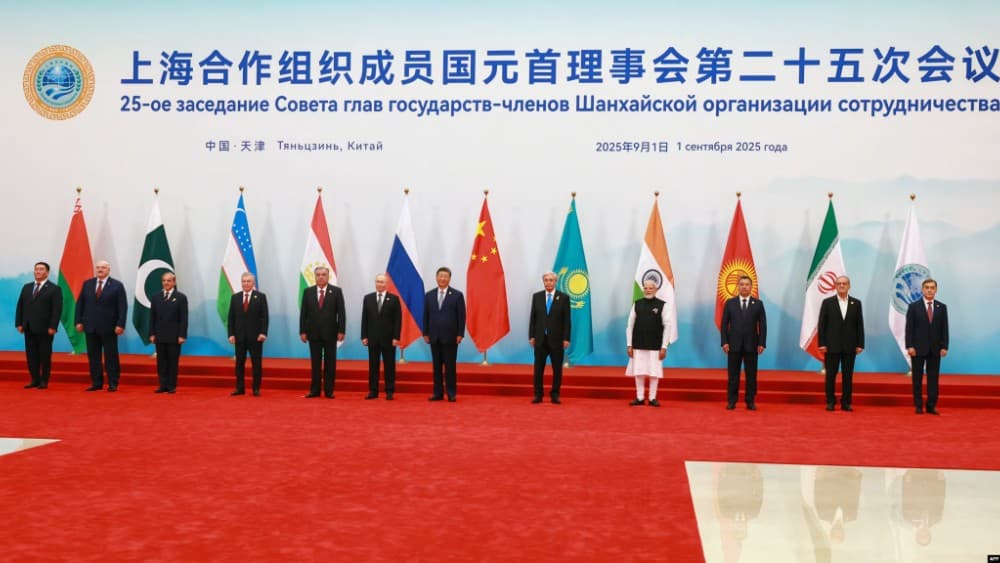
ISLAMABAD: Pakistan enters the Shanghai Cooperation Organization (SCO) Summit, which begins in Bishkek on Monday, with ambitions that extend beyond this year's gathering. The summit marks the start of Pakistan's yearlong leadership of the Eurasian bloc, culminating in the 2027 SCO Heads of State Summit in Islamabad.
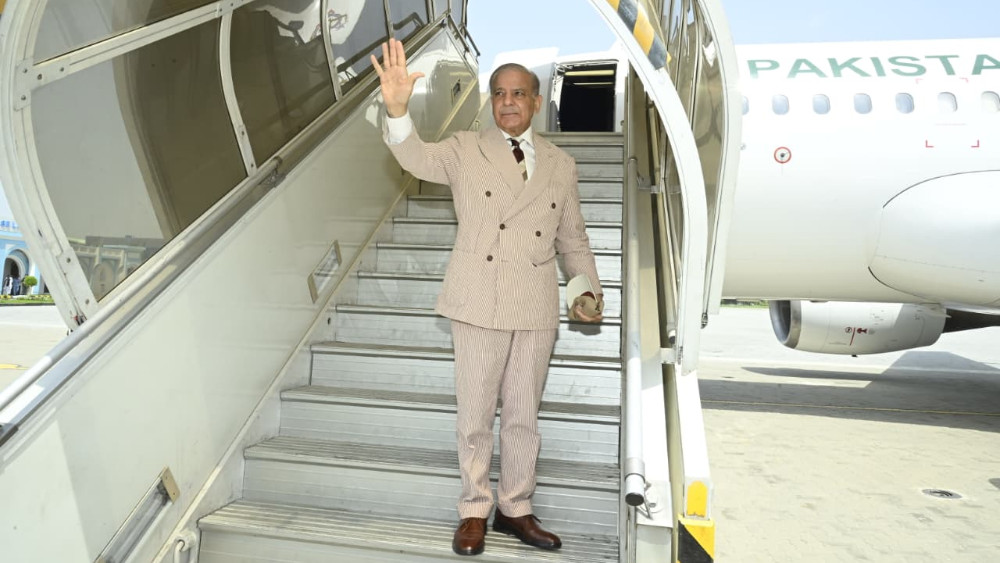
According to the Prime Minister’s Office, Prime Minister Shehbaz Sharif arrived in Kyrgyzstan’s capital, Bishkek, Monday afternoon to represent the country at the 26th SCO summit.
Leaders from China, Russia, India, Iran and Central Asian states are discussing regional security, economic cooperation and connectivity.
At the conclusion of the two-day summit, Kyrgyzstan will hand over the SCO chairmanship to Pakistan for 2026-27.
Pakistan prepares to chair the SCO
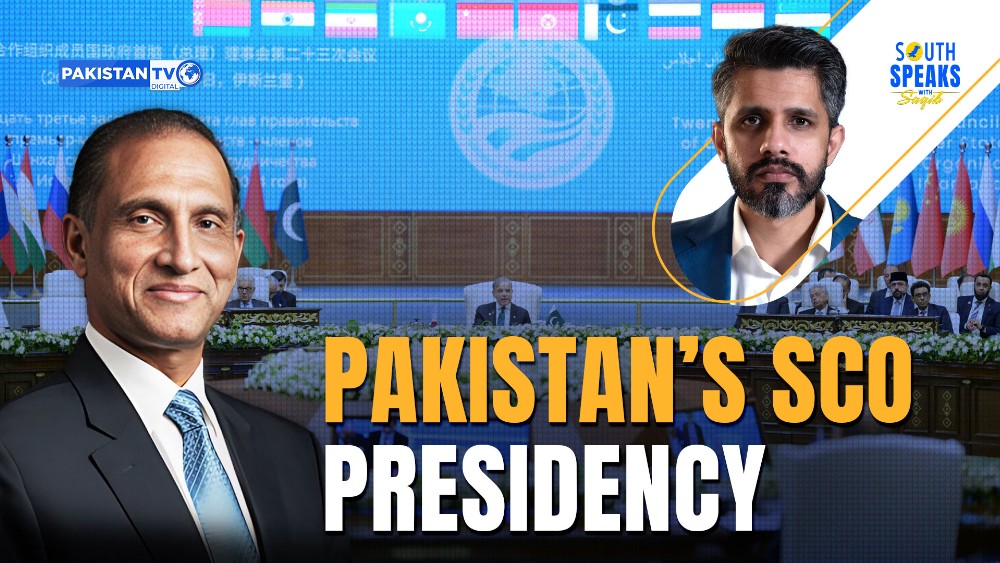
Pakistan’s former ambassador to India, Abdul Basit Khan, believes that the summit is important for Pakistan in light of its assuming the chair of this regional forum for 2026-27.
“The work for the SCO Islamabad summit has to begin in Bishkek,” he told Pakistan TV Digital.
Pakistan will need to ensure that all the SCO leaders attend the heads of state meeting in Islamabad next year, he said.
Pakistan has already begun preparations to host next year's summit in Islamabad.
Deputy Prime Minister and Foreign Minister Ishaq Dar chaired a high-level review meeting in May, directing ministries and government agencies to begin comprehensive planning for Pakistan's SCO presidency and the 2027 leaders' summit.
According to the Foreign Office, Pakistan’s chairmanship will prioritize regional peace, connectivity, trade, energy cooperation, digital transformation and cultural exchanges across the SCO region.
Economic connectivity through CPEC
Pakistan hopes its presidency will place regional connectivity at the center of the SCO agenda.
It aims to promote the China-Pakistan Economic Corridor (CPEC) as a gateway linking Central Asia to the Arabian Sea via Gwadar Port.
Mohammad Ali Baig, an Islamabad-based expert on regional and international politics, said that for Pakistan, the SCO has always provided excellent opportunities for connectivity with regional countries.
“Pakistan can use the current SCO summit to achieve its connectivity objective, like CASA-1000 and TAPI, particularly with Central Asian States,” he told Pakistan TV Digital.
He pointed out that China is very important in the SCO, while Russia plays a major role in BRICS, and that both organizations share a broader objective.
“Pakistan can seek help from these two countries and the two organizations in promoting multilateralism, strengthening trade and connectivity, and increasing confidence-building among member states through cooperation,” Baig added.
Regional economic integration
According to security analyst Kamal Alam, a non-resident Senior Fellow at the Atlantic Council South Asia Center, Pakistan sees the SCO as a vehicle for regional economic integration.
"Iran and Pakistan continue to push for a regional economic model that would circumvent the respective sanctions and restrictions," he wrote in an article published on the Atlantic Council website.
Pakistan's geography, he says, offers an opportunity to connect Central Asian economies to maritime trade routes and to expand regional infrastructure cooperation.
Security cooperation remains Pakistan's core objective
Pakistan has already begun leading several SCO security mechanisms ahead of its assumption of the chairmanship.
In July, Islamabad hosted the SCO Meeting of Heads of Border Services, where member states approved plans for joint border operations and discussed coordinated responses to emerging security threats.
The Foreign Office said that Pakistan wants deeper cooperation against terrorism, extremism, organized crime, cybercrime and drug trafficking under the SCO framework.
A forum where rivals still engage
The SCO remains one of the few international organizations where Pakistan and India participate as full members.
According to Dinakar Peri, a security fellow at Carnegie India, SCO allows regional powers to remain engaged despite geopolitical rivalries.
"The SCO gives India a seat at the table in a region increasingly shaped by competition among the larger powers," he wrote in an article published by US-based news agency Associated Press.
The same regional platform also provides Pakistan with opportunities for dialogue and diplomatic engagement with neighboring states during multilateral meetings.
Pakistan's opportunity over the next year
As Pakistan assumes the SCO chairmanship, experts say Islamabad has an opportunity to shape discussions on regional connectivity, Afghanistan, counterterrorism and economic cooperation while strengthening partnerships with China, Russia and Central Asian countries.
The year-long presidency will allow Pakistan to host dozens of ministerial meetings before welcoming world leaders to Islamabad in 2027, making the Bishkek summit not only a diplomatic gathering but the starting point of Pakistan's most significant multilateral leadership role since becoming a full SCO member in 2017.