


ISLAMABAD: 12 Western nations announced Tuesday that they intend to impose or support restrictions on trade with Israeli settlements in the occupied West Bank, widening international pressure over settlement expansion, settler violence, and the threat to a two-state solution.
Canada, Denmark, Finland, France, Iceland, Ireland, Norway, Poland, Portugal, Spain, Sweden and the United Kingdom said in a joint ministerial declaration that they would introduce national measures, support European restrictions, or consider other steps to restrict trade in goods from settlements they regard as illegal under international law.
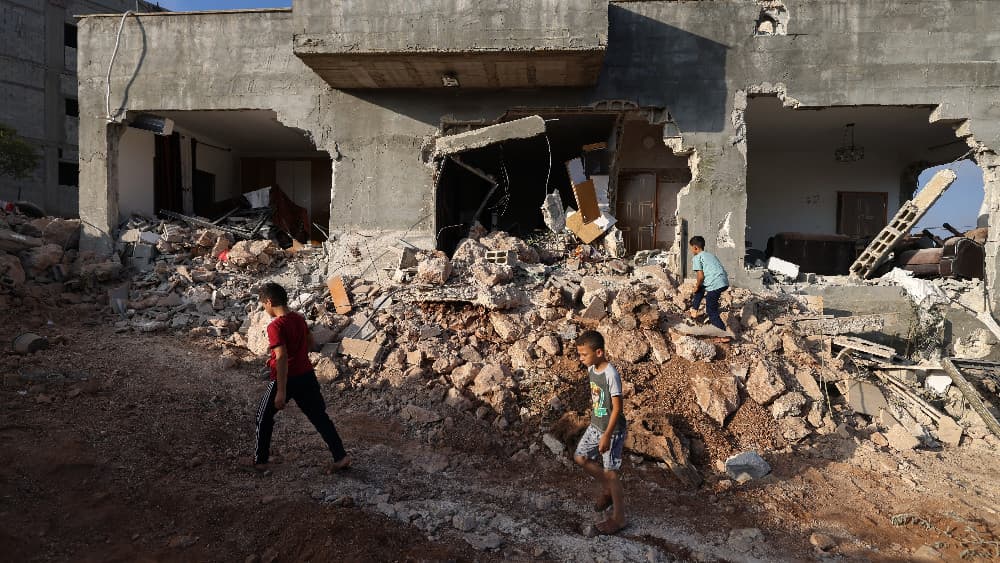
The announcement came amid worsening conditions in the West Bank, where more than 1,800 incidents of settler violence were documented during the first half of 2026, according to the United Nations Office for the Coordination of Humanitarian Affairs. The incidents resulted in civilian casualties and property damage.
Amnesty International and Human Rights Watch have reported that more than 3,200 Palestinians were displaced in 2026 as a result of settler attacks and home demolitions.
Human Rights Watch also reported that Israeli security forces had armed settlers with assault rifles and tactical equipment, while about 5,500 West Bank settlers had been deployed in military units operating in areas targeted for expansion. The organization stated that Israeli authorities have failed to adequately investigate or prosecute settler violence.
The legal basis cited by supporters of the restrictions stems in part from a July 2024 advisory opinion by the International Court of Justice, which found Israel's continued presence in the occupied Palestinian territory unlawful under international law. The court said third-party states had obligations not to recognize the situation as legal, not to provide assistance in maintaining it and to take steps to prevent trade or investment relations that help sustain the situation.

The 12 governments specifically criticized plans to publish tenders for the E1 settlement project, saying settlement expansion and rising settler violence were undermining the prospects for a two-state solution. The project, east of Jerusalem, has long drawn international opposition because of concerns that development there would divide the West Bank and further complicate the creation of a contiguous Palestinian state.
Several countries had already taken measures targeting settlement activity. The joint declaration cited action by Ireland, Spain, the Netherlands, Norway, and Belgium, while Britain, France, and Canada said they would bring forward national measures to ban trade in settlement goods.
Spain imposed an arms embargo through Royal Decree-Law in September 2025, the Spanish government said at the time, banning defense materials and dual-use goods and canceling a 700 million-euro defense contract. Spain's Social Rights Ministry also said it had removed 138 vacation-rental advertisements for properties in West Bank settlements from international platforms.
Ireland's parliament advanced the Occupied Territories Bill in July 2026. Foreign Affairs Minister Simon Harris said the legislation would give customs officials authority to seize restricted settlement goods at the border.
Britain said it would ban imports of goods produced in settlements and impose sanctions on companies involved in financing settlement activity, property promotion and other settlement-related activity. Foreign Secretary Yvette Cooper announced the measures in a statement issued by the Foreign, Commonwealth and Development Office, which also said 30 arms export licenses had been suspended.
Israel responded by closing the British consulate in East Jerusalem and expelling UK representatives from a joint military center monitoring the Gaza ceasefire, Foreign Minister Gideon Sa'ar said in a statement.
Finance Minister Bezalel Smotrich also canceled a financial indemnity waiver protecting Israeli correspondent banks. The Finance Ministry said the measure was intended to protect Israel's financial system, while Palestinian officials warned that it could disrupt Palestinian banking operations and the flow of essential imports.