


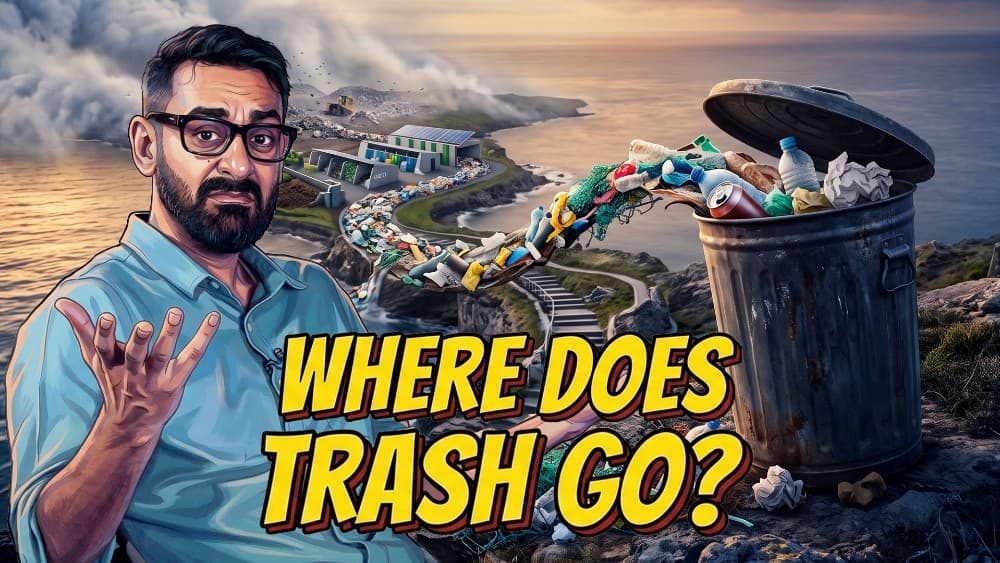
We throw things away every day, but where exactly is “away”?
On World Cleanup Day, Tell Me Why follows the journey of everyday waste after it leaves our hands, exploring where it goes and what happens when it is no longer in sight.
The fate of our trash depends largely on where we live and how waste is managed. Some waste is collected, sorted and recycled, while organic material can be composted. In some countries, waste is treated at controlled facilities, sometimes with energy recovered from the process.
But a significant amount still ends up in landfills and dumps, where poorly managed waste can create lasting environmental problems.
When food and other organic waste decomposes without enough oxygen in a landfill, it can produce methane, a potent greenhouse gas. Waste can also escape into the environment. Plastic and other debris can enter drains and waterways, travel through rivers and eventually reach the ocean.
The scale of the challenge is enormous. Humanity produces more than 2 billion tonnes of municipal waste every year, while the United Nations estimates that only around 60 percent is managed in controlled facilities.
That makes World Cleanup Day about more than simply picking up litter. It is also an opportunity to look at what happens to waste after it is collected and consider how much waste we generate in the first place.
Reducing consumption, reusing items, recycling where possible and ensuring unavoidable waste is properly managed can all help reduce its environmental impact.
Because there is no magical place called “away.”
Once you throw something into the bin, its journey has not ended. You have simply stopped seeing it.