


ISLAMABAD: Portugal sees growing numbers of Pakistani students and regular migration as important avenues for strengthening people-to-people ties, with its ambassador to Pakistan calling for deeper educational cooperation and better preparation and integration of Pakistanis moving abroad.
Pakistan and Portugal, which established diplomatic relations in November 1949, have maintained cordial and historically friendly ties, with cooperation expanding in trade, investment, education, culture, tourism and people-to-people contacts. The two countries marked 75 years of diplomatic relations in 2025, while their fourth round of Bilateral Political Consultations in Islamabad in July 2026 focused on labor mobility, education, tourism, culture and other areas of practical cooperation.
Portuguese Ambassador Paulo Miguel Guedes Domingues, who began his tenure in Pakistan this year, has identified stronger political dialogue, economic cooperation, education, science and technology, diaspora engagement and people-to-people contacts among his priorities for expanding bilateral relations.
Domingues was appointed Portugal's ambassador to Islamabad by Portuguese President Marcelo Rebelo de Sousa, on the proposal of the Portuguese government, in a decree issued in January 2026. He presented his credentials to President Asif Ali Zardari on April 7. During the credentials ceremony, Zardari highlighted opportunities for expanding cooperation in trade, investment, IT, agriculture and the blue economy, while also pointing to labor mobility and academic exchanges.
In an exclusive interview with the Associated Press of Pakistan’s Mudassar Iqbal, Ambassador Paulo said more than 600 Pakistani students are currently pursuing higher education in Portugal, particularly at the master's and doctoral levels, and called for stronger university partnerships, joint research projects, academic conferences and exchanges of scholars.
Portugal offers opportunities for Pakistani students in fields including technology, medicine, engineering and social sciences, he said, adding that Pakistani students are also benefiting from the Erasmus Mundus program as well as scholarship and mobility programmes offered by individual universities.
The ambassador said cooperation should go beyond scholarships and student mobility.
“We should work also in promoting partnerships between universities and having universities doing joint research projects, conferences, exchanges of scholars,” he said.
He said stronger academic links would contribute to cooperation in education, science and technology and help deepen contacts between the two societies.
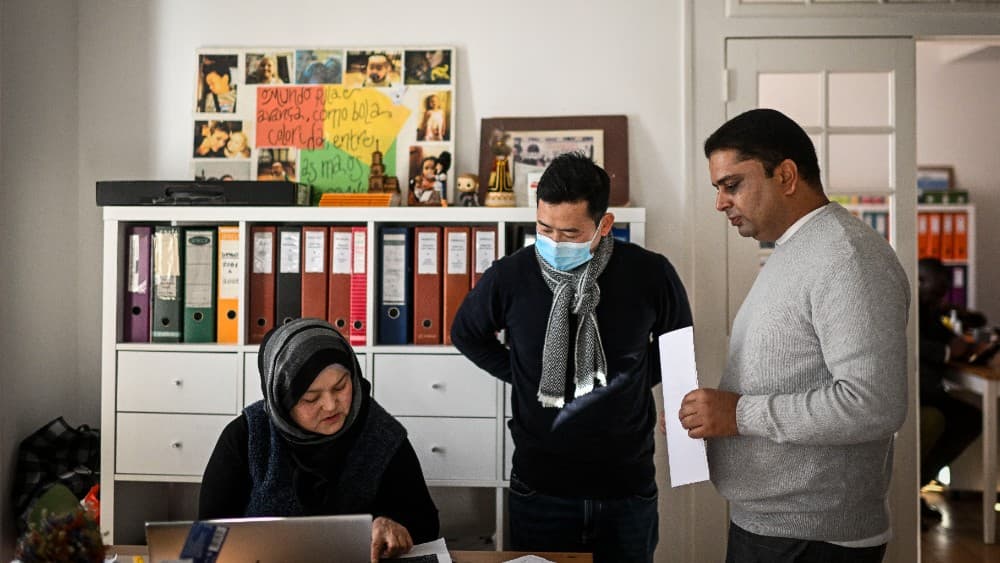
Turning to migration and the Pakistani diaspora, Ambassador Paulo said the Pakistani community in Portugal had grown significantly in recent years and now numbered close to 50,000.
He said Pakistanis were contributing actively to Portugal's economy while maintaining close links with Pakistan.
“These people are a big asset for the relations,” he said, noting that members of the community were finding business opportunities and promoting cultural exchanges between the two countries.
“They will be, I would say, the best ambassadors of these relations,” he added.
The ambassador also stressed the importance of regular migration, saying he had recently met Pakistan's minister for overseas Pakistanis, who was working on a new strategy for promoting regular migration and preparing Pakistanis travelling abroad.
He said Portugal could work with Pakistan, including through municipalities, to improve the preparation and integration of Pakistani communities.
“From the other end we could also use municipalities to work together and promote this better integration and preparation of these communities,” he said.
The comments come as labour mobility has emerged as one of the areas of practical cooperation between the two countries. During the fourth round of Pakistan-Portugal Bilateral Political Consultations in July, both sides discussed labour mobility alongside trade, investment, agriculture, renewable energy, IT, education, tourism, culture and people-to-people exchanges.
The ambassador said Portugal would continue developing initiatives in the cultural, economic and educational spheres to strengthen relations.
He said bilateral trade was “solid but again below its potential,” identifying renewable energy, textiles, information and communications technology, pharmaceuticals, construction, mining and the blue economy as areas offering opportunities for greater cooperation.
Portugal plans to organize a business forum and bring a business mission to Pakistan to strengthen contacts between companies from both countries, he said, adding that the two sides could also consider establishing a business council and organizing business missions in both directions.
Tourism is another area where Portugal sees room for greater cooperation.
Ambassador Paulo said Portugal could share its experience in tourism development, destination promotion and hospitality training, while Pakistan had significant tourism potential, particularly in its northern regions.
He said a Portuguese hospitality school was already collaborating with a Pakistani hospitality school on vocational training.
The ambassador also highlighted cultural cooperation, saying the Portuguese Embassy had been bringing musicians and writers to Pakistan and sought to take cultural activities beyond Islamabad.
He said Portuguese artists visiting Pakistan should engage with artists in other parts of the country and combine Portuguese and Pakistani cultural traditions.
The embassy is participating in the European Union Film Festival and plans several other initiatives, including Portuguese guitar performances in Islamabad, Lahore and Karachi in November, participation in the Karachi World Cultural Festival and collaboration with a Lahore festival.
An exhibition dedicated to Portuguese poet Luís de Camões is also planned, while discussions are underway on a cultural agreement between the two countries, he said.
Ambassador Paulo said his goal was “to make the relation more structural, broader and more visible.”
He said Portugal wanted to maintain regular political contacts with Pakistan, including through bilateral consultations and high-level visits, while expanding economic cooperation and strengthening collaboration in education, science, technology and higher education.
He also identified climate change, sustainable development, international peace and security, and reform of multilateral organizations as areas of common interest.
Portugal is expected to continue working with Pakistan in multilateral forums, with the ambassador noting that Lisbon's return to the United Nations Security Council would provide another avenue for cooperation.
The ambassador said continued engagement across political, economic, educational, cultural and people-to-people dimensions could help broaden and deepen Pakistan-Portugal relations in the years ahead.