


ISLAMABAD: Five years after the Taliban returned to power in Afghanistan, they have built a more centralized and administratively capable system while retaining the core political and ideological framework that defined their rule in the 1990s, according to a new South Asia Times study and assessments by the United Nations and other international bodies.
The study, “Taliban 2.0: The Five-Year Ledger,” examines governance, security, the economy, women and minorities, armed resistance, regional diplomacy and Pakistan-Afghanistan relations since the Taliban seized Kabul on Aug 15, 2021. It concludes that the movement has undergone “institutional evolution without ideological rupture.”
The findings point to a country no longer experiencing the nationwide conventional war that preceded the Taliban takeover, but still facing political exclusion, restrictions on fundamental rights, economic fragility, humanitarian needs and terrorism.
The distinction is important: criticism of Taliban policies concerns how the movement interprets and applies its stated religious and political framework, not Islam itself.
Pakistan TV Digital spoke to Islamic scholars last month about the use of religious concepts by armed groups and authorities. Islamic scholar Javed Ahmad Ghamidi said restrictions on women's education should not be presented as Islamic requirements.
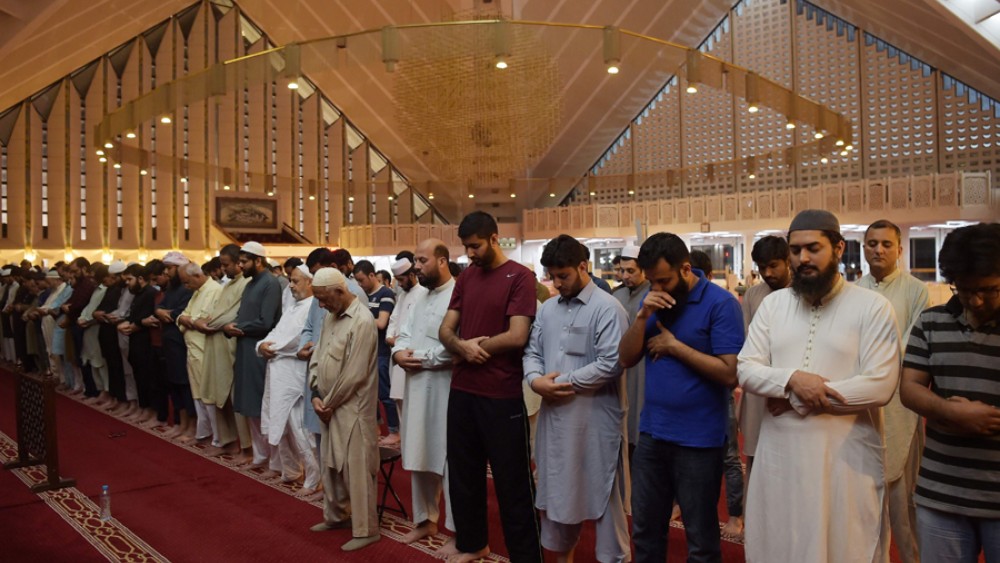
“No government has the right to make any decision about women's education. Women have to make this decision themselves. This is not a part of Islam at all,” Ghamidi told Pakistan TV Digital.
‘Showroom of terrorist organizations’
The Taliban inherited ministries, courts, provincial administrations, customs and revenue systems, infrastructure and a large civil service from the former Islamic Republic rather than building the post-2021 state from scratch.
They subsequently replaced or sidelined significant numbers of former officials with Taliban members and loyalists, according to SAT, creating what the study calls “institutional reconfiguration and ideological continuity.”
Supreme leader Hibatullah Akhundzada's office has become the center of political and religious authority, with major decisions on governance, appointments and national policy channeled through Kandahar. The study also identifies overlapping power centers associated with the Kandahar clerical establishment, Interior Minister Sirajuddin Haqqani and Defense Minister Mullah Mohammad Yaqoob.
The United Nations has similarly reported that Taliban de facto authorities continue implementing an Islamic-based governance system through decrees and instructions.
Salman Javed, co-author of the SAT study, told Pakistan TV Digital that five years should have provided sufficient time for any governing authority to demonstrate meaningful reforms.
Instead, he said, Afghanistan has seen deterioration in governance alongside the emergence of what he described as a potential “hub of terrorism.”
Javed described Afghanistan as a “showroom of terrorist organizations,” citing the presence of groups including TTP, Al-Qaeda, Daesh-Khorasan and the East Turkestan Islamic Movement. His assessment is consistent with the study's broader concern about Afghanistan's continuing terrorist ecosystem. SAT says the UN has identified more than 20 militant organizations and up to 13,000 foreign terrorist fighters in Afghanistan.
Doha commitments under scrutiny
Javed also highlighted the 2020 Doha Agreement as a key benchmark for assessing the Taliban's conduct since returning to power.
He identified three areas as particularly significant: the release of Taliban prisoners with an understanding that they would not return to the insurgency, the commitment to intra-Afghan dialogue involving political and ethnic stakeholders, and the commitment that Afghan territory would not be used to threaten or attack the United States, its allies or other countries.
Javed argued that the subsequent developments represented a failure to fulfill those commitments, particularly in relation to the continued presence of terrorist organizations and the absence of an inclusive political settlement.
The SAT study similarly examines the Doha Agreement as part of its assessment of the Taliban's political transition.
‘Extracting resources, weak economy’
The Taliban have strengthened domestic revenue collection despite the economic shock following the 2021 takeover. SAT says domestic revenue reached approximately AFN 241 billion (about $3.6 billion) in fiscal year 2024-25.
But revenue gains have not translated into broad-based recovery. UNDP said Afghanistan recorded 1.9% economic growth in 2024-25, below the rate needed to keep pace with population growth, while structural constraints, limited job creation, a widening trade deficit and reduced international assistance continued to weigh on the economy.
UNDP found that 74% of Afghans remained subsistence-insecure in 2025, while SAT cites World Bank estimates that 48% were living below the national poverty line.
“The state has become more effective at extracting resources from a weak economy; it has not demonstrated that those resources are being converted into broad-based development,” the SAT report says.
The humanitarian pressure remains severe. The World Food Programme estimates that 13.8 million people are projected to face acute food insecurity in 2026, while 4.9 million women and children will require treatment for malnutrition.
UNDP estimates that 2.9 million Afghans returned to the country in 2025, adding pressure to already overstretched services and livelihoods.
Women, girls remain excluded
Restrictions on women and girls remain among the most consequential features of Taliban rule.
SAT says 1.1 million secondary-age girls remain excluded from education, while roughly 100,000 female university students were affected by the higher-education ban introduced in December 2022.
In a Sept 16 briefing to the UN Security Council, UNAMA Deputy Special Representative Georgette Gagnon said there had been no progress on several issues of profound concern, including “the severe restrictions on women and girls, exclusionary governance, a human rights crisis, and the continued presence of terrorist groups.”
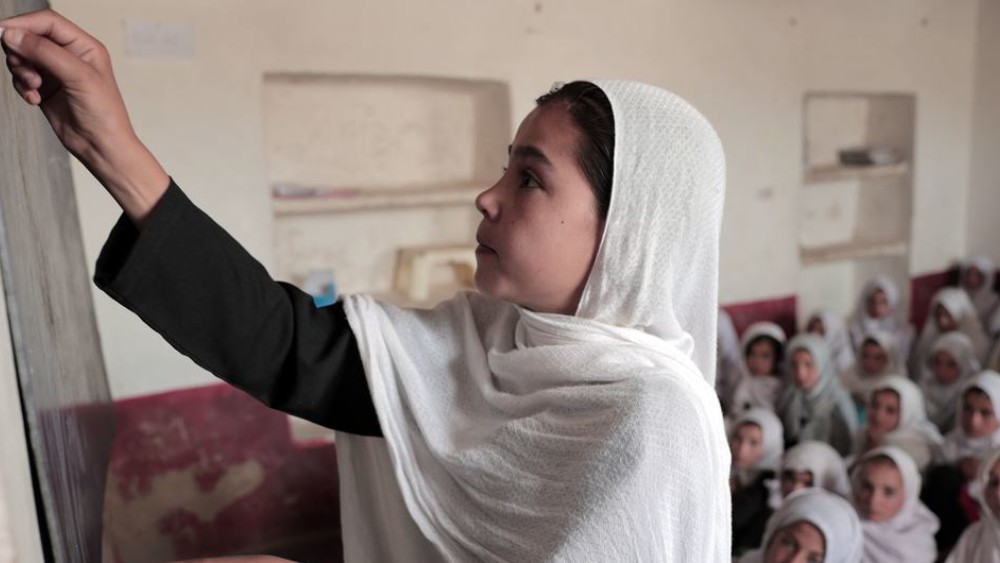
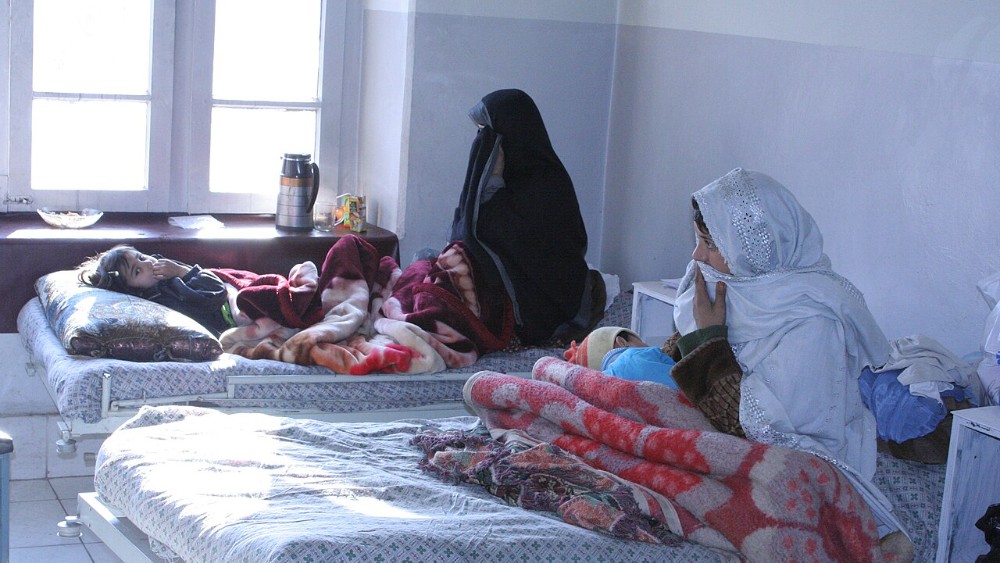
A UN event marking five years of Taliban rule said more than 2.6 million girls had been denied access to secondary education.
At the same time, SAT and separate research by the Hamrah Network point to an expansion of religious seminaries, with more than 23,000 madrassas reportedly registered by 2025 and more than 3.65 million students enrolled.
The issue is not religious education itself, but the expansion of that system alongside the continuing exclusion of girls from secondary and higher education.
Media, security under pressure
Afghanistan's media environment has contracted sharply. SAT says 219 of 547 media outlets operating before the Taliban takeover closed within the first year, while the number of journalists fell from 11,857 to 4,759.
Reporters Without Borders ranks Afghanistan 175th of 180 countries in its 2026 World Press Freedom Index and says more than 165 media professionals have been arrested since the Taliban returned to power.
Security has also changed rather than disappeared. SAT identifies more than 20 terrorist organizations operating in Afghanistan and cites UN estimates of up to 13,000 foreign terrorist fighters. It estimates TTP strength at 6,000-6,500 fighters.
The United Nations continues to identify terrorist groups in Afghanistan as a regional and international security concern.
“The end of one war did not create a comprehensive peace,” the SAT study says, describing the new environment as one of “terrorism, militant competition, localized resistance, border insecurity and transnational threats.”
Javed told Pakistan TV Digital that the security environment also has implications beyond Afghanistan's borders. He argued that Al-Qaeda's continued presence and the presence of other terrorist organizations mean Afghanistan's security trajectory remains relevant to regional and international counterterrorism efforts.
Islamabad faces immediate spillover
Pakistan remains the Taliban government's “most immediate external test,” according to SAT.
The study cites more than 600 TTP attacks in Pakistan during 2025 and estimates that more than 245 confirmed Afghan nationals were among terrorists neutralized that year. SAT separately estimates 6,000-6,500 TTP cadres are present in Afghanistan; these figures are from the study and are not independently verified.
Bilateral trade also fell from approximately $2.46 billion in 2024 to $1.77 billion in 2025, according to SAT, amid repeated border closures.
Pakistan has repeatedly raised serious concerns with the Afghan Taliban over the continued presence and operation of TTP and other terrorist groups from Afghan territory, stressing that Afghan soil must not be allowed to be used against Pakistan. Taliban officials have rejected the concerns.
Javed argued that the response should extend beyond individual security operations. He recommended stronger border management, intelligence coordination and verification mechanisms, while also pursuing economic diversification to reduce the impact of repeated border disruptions.
He also called for sustained diplomatic engagement with Afghan political stakeholders, the Afghan diaspora and regional countries, including China, Russia, Iran, Türkiye, Saudi Arabia and Qatar.
Javed said Islamabad should engage from a position of strength while keeping diplomatic channels open.
He argued that any future negotiations over terrorist groups should be tied to concrete measures, including disarmament, registration and the sharing of relevant information before confidence-building or peace arrangements are considered.
Resistance and diplomacy
The Taliban continue to face fragmented armed opposition from groups including the National Resistance Front and Afghanistan Freedom Front.
SAT says NRF-claimed operations increased from 40 in 2022 to around 380 in 2024, while UN reporting recorded 277 opposition attacks between August 2024 and July 2025. The study says the resistance remains fragmented and does not pose a nationwide challenge to Taliban territorial control.
Javed told Pakistan TV Digital that Badakhshan deserves particular attention, describing resistance there as rooted partly in local grievances and opposition among communities that feel excluded from the Taliban's governing structure.
He distinguished such armed resistance from transnational terrorist organizations, arguing that local opposition groups and foreign terrorist organizations should not automatically be treated as the same phenomenon.
Diplomatically, however, the Taliban's isolation has begun to shift. Russia formally recognized the Taliban government in July 2025, while China, Iran, Central Asian states, India and Gulf countries have maintained practical engagement with Kabul without necessarily extending formal recognition.
The European Union also held talks with Taliban officials in Brussels in June 2026 on issues including the return of Afghan nationals and consular matters.
‘Taliban 2.0’
Five years into Taliban rule, Afghanistan shows greater administrative consolidation without a corresponding political transformation.
The Taliban have strengthened revenue collection, provincial administration and internal control, but within a highly centralized system with limited political pluralism and sweeping restrictions on women and girls.
Javed summarized the study's assessment by saying: “Five years of Taliban rule have not resolved Afghanistan's core political, social or security problems… they have reorganized them under a more centralized system.”
The study concludes: “Taliban 2.0 is not a rebrand, and it is not reform. It is the same movement, now exercising control over an inherited state.”
“What has changed is not the movement's political project but the scale of the machinery available to enforce it.”