


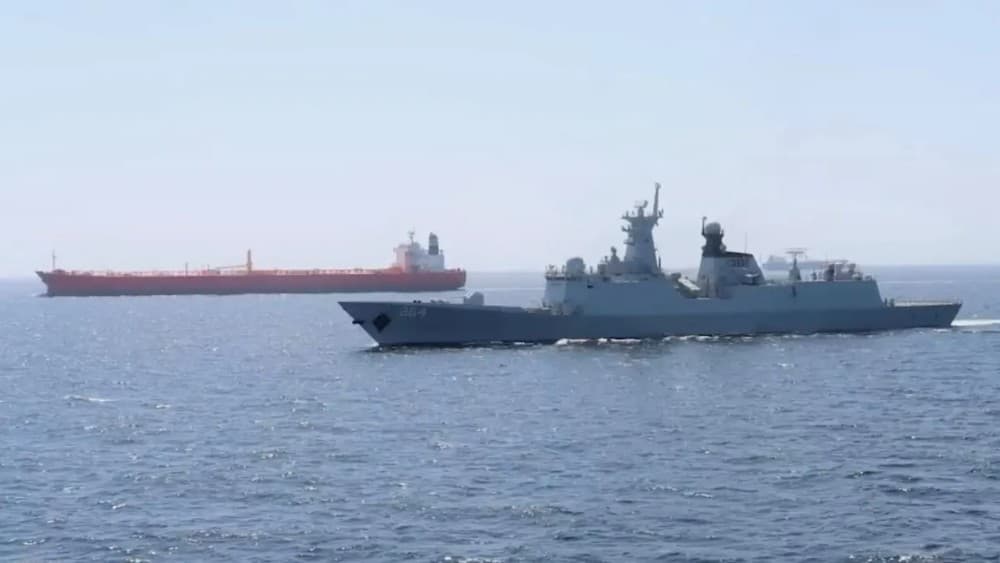
ISLAMABAD: Maritime experts have described the recent clash between Indian and Pakistani naval vessels in the Arabian Sea as a deliberate provocation, saying the incident further heightened tensions between the two nuclear-armed neighbors.
A collision between Pakistani and Indian ships in the northern Arabian Sea on Sept 15, during a period of already heightened tensions between the South Asian neighbors, triggered a diplomatic confrontation, with Islamabad and New Delhi offering sharply different accounts of what happened.
Neither side reported casualties, while both governments summoned each other’s diplomats and lodged protests over the incident.
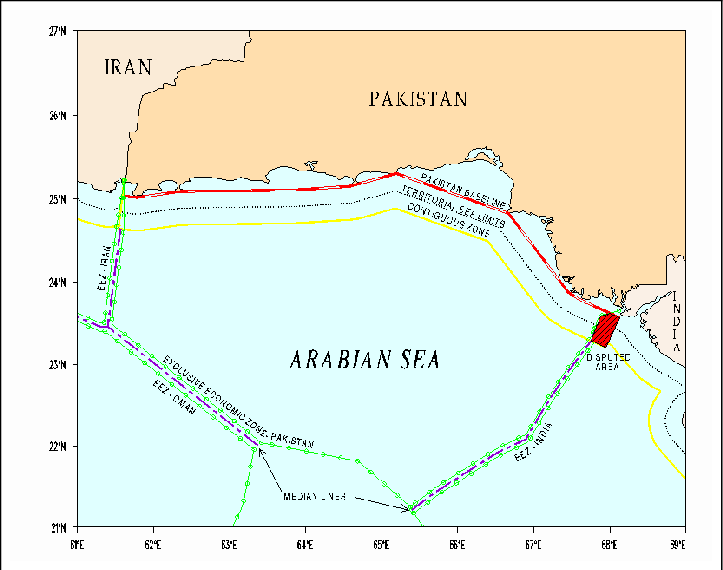 Map depicting Pakistan's maritime claims for drawing straight baselines in the Arabian Sea (Research Gate)
Talking to Pakistan TV Digital, the maritime experts said the Indian vessel appeared to have intentionally moved closer to the Pakistani ship, describing the maneuver as provocative.
“They were adamant to come closer to our ship,” Rear Admiral (Retd) Faisal Ali Shah told Pakistan TV Digital.
He added that the Indian vessel made the move despite efforts by the Pakistani side to maintain a reasonable distance between the two vessels.
The incident has also revived memories of a 2011 encounter involving Pakistani warship PNS Babur and Indian Navy frigate INS Godavari in the Gulf of Aden. The two vessels came into contact during anti-piracy operations, with India saying at the time that PNS Babur approached INS Godavari at high speed and brushed against it, causing minor damage to its helicopter-deck safety net. India subsequently lodged a protest over the incident.
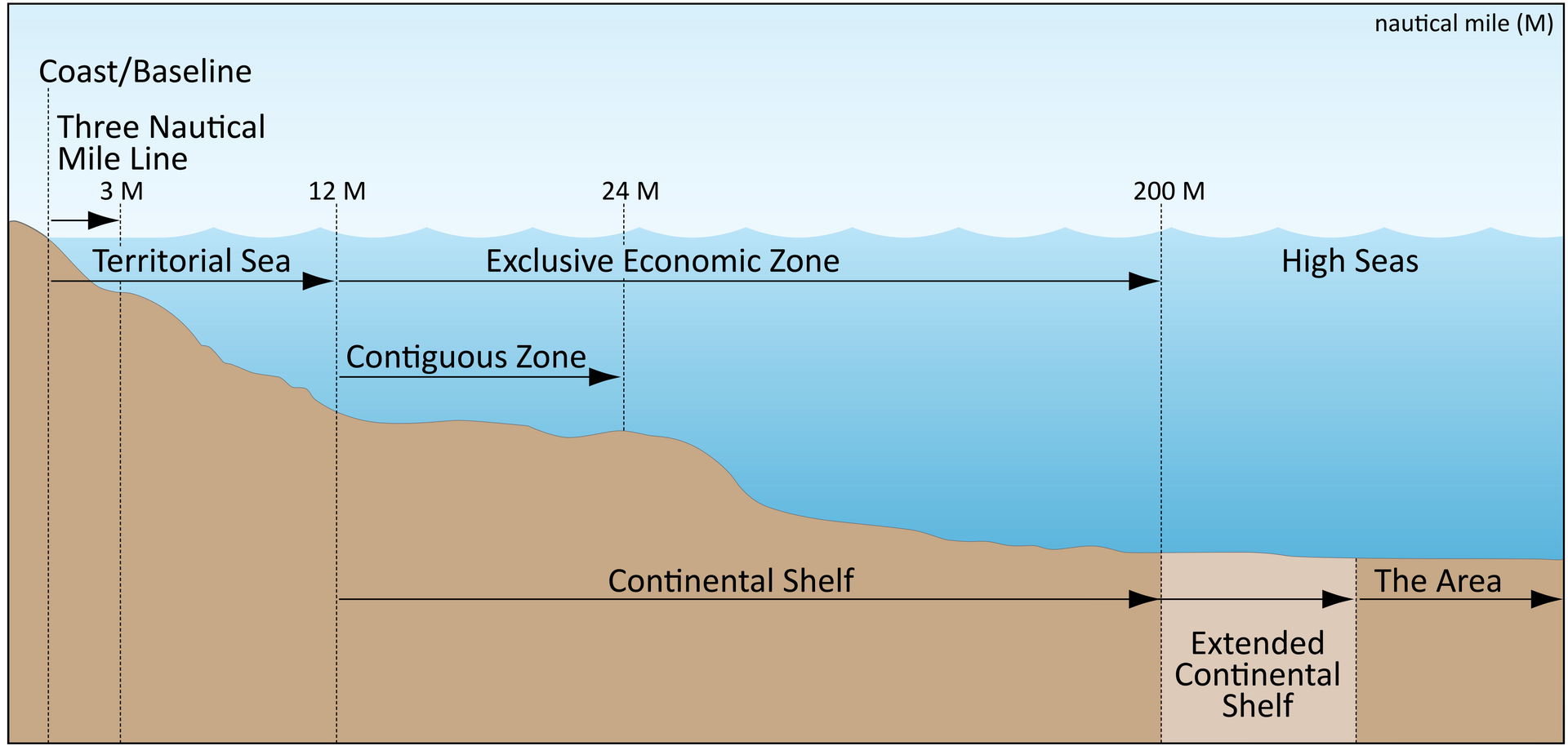 Maritime zones under international law (US State Department)
Brig (Retd) Harris Nawaz said that, given past experiences with India, it’s easy to say that the recent mishap was intentional.
“It was definitely meant to provoke the Pakistani side, and they have always behaved this way,” he said.
Dangerous proximity
During a weekly press briefing, Pakistan’s Foreign Office spokesperson Sajjad Haider Khan said the Indian ship conducted “aggressive maneuvers in dangerously close proximity” to a Pakistani vessel during the Sea Spark-26 exercise, resulting in contact between the two ships.
He further said the incident violated “international law and the bilateral agreement.”
“Pakistan called the conduct reckless, and it raised questions about India’s commitment to maritime protocols in the region,” the spokesperson added.
India, however, has disputed Pakistan’s account, saying the incident occurred in international waters and attributing the collision to the Pakistani vessel’s maneuvering. The competing accounts have not been independently reconciled.
1991 agreement between India and Pakistan
The Pakistani vessel involved in the incident, PNS Hunain, is a Yarmook-class offshore patrol vessel participating in the Pakistan Navy’s biennial Sea Spark-26 exercise.
Related Articles
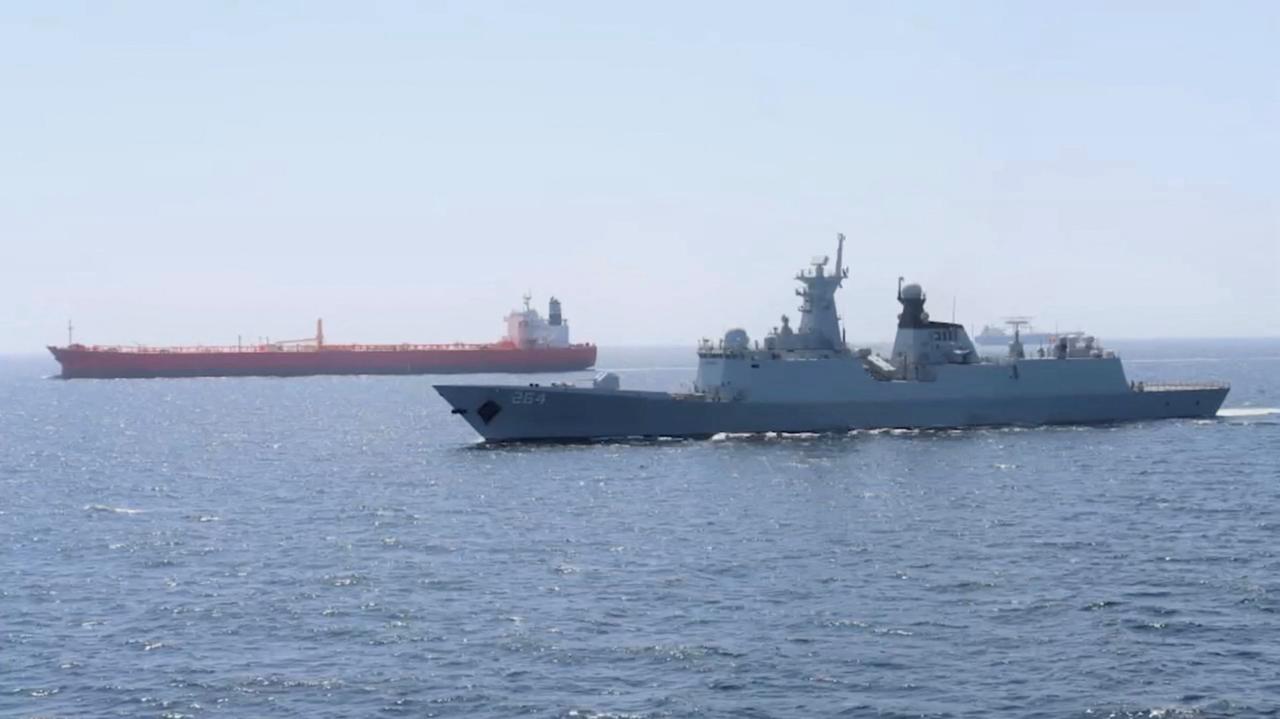

Rear Admiral (Retd) Faisal Ali Shah said Sea Spark-26 is a major exercise involving the Pakistan Navy and designed to simulate a war-like operational environment.
He further said advance notice of military exercises, maneuvers and troop movements was provided to concerned parties before the exercise, including India.
The 1991 India-Pakistan Agreement on Advance Notice on Military Exercises, Manoeuvres and Troop Movements was established in part to reduce the risk of military miscalculation and prevent incidents arising from misunderstandings between the two countries.
Article 10 of the agreement states that naval ships and submarines belonging to the two countries should not come within three nautical miles of each other while operating in international waters, a provision intended to help prevent accidents and dangerous encounters.
“Strangely, Pakistan Navy is undertaking such a big exercise and the ships coming from next door have no knowledge of this activity,” he commented, adding that, in his view, claims of being unaware of the exercise raised questions about the Indian vessel’s intentions.
He said all necessary information under the 1991 agreement had been shared with concerned parties before the commencement of Sea Spark-26.
The former Pakistan Navy officer said the Indian ship was adamant about coming closer to the Pakistani vessel and that, in his assessment, the maneuver led to the collision.
PNS Hunain is approximately 91 meters long, while INS Kolkata, a Kolkata-class destroyer, is approximately 163 meters long.
Explaining the difference in the sizes of the two ships, Rear Admiral (Retd) Faisal Ali Shah compared the collision to one involving a smaller car and a larger SUV.
“It’s illogical to imagine that a ship will dare to go closer or hit a vessel double its size,” he remarked, adding that, in his view, the Pakistani ship had no reason to brush past a significantly larger vessel.
Where did it happen?
Pakistan said the incident took place within its maritime Exclusive Economic Zone, where the Sea Spark-26 exercise was being conducted.
On the other hand, India has said the incident occurred in international waters.
The dispute over the location is significant because the 1991 agreement’s three-nautical-mile provision specifically concerns naval ships and submarines operating in international waters.
Rear Admiral (Retd) Faisal Ali Shah questioned how Pakistan could undertake a naval exercise outside its maritime boundaries.
“Our ship was well inside the international maritime borders,” he said.