


ISLAMABAD: Afghanistan remains gripped by one of the world's most serious human rights and humanitarian crises, nearly five years after the Taliban returned to power, according to a new Human Rights Watch report.
The report, released Monday to mark the fifth anniversary of the Taliban's return to power, says that sweeping restrictions on fundamental freedoms, particularly those targeting women and girls, continue to deepen the country's social and humanitarian challenges.
Women and girls face restrictions
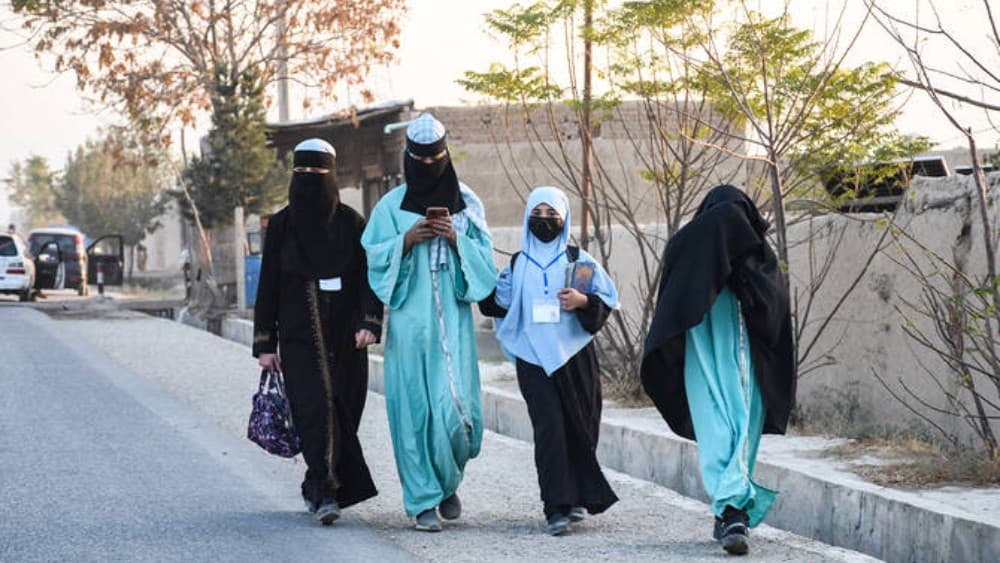
Human Rights Watch said that women and girls remain the primary targets of Taliban policies, with continued bans on secondary and university education.
According to the report, "Women also face extensive restrictions on employment opportunities, freedom of movement, freedom of expression, and participation in public life, effectively excluding them from many aspects of Afghan society."
The rights organization said that these policies have had devastating long-term consequences for education, livelihoods, and the country's overall development.
Journalists, activists face intimidation
The report also highlighted the continuing crackdown on journalists, civil society activists, and individuals perceived as critics of the Taliban.
Human Rights Watch said that arbitrary arrests, intimidation, torture, and other forms of abuse remain common against those expressing dissent.
It further stated that hundreds of former members of Afghanistan's previous security forces have reportedly been subjected to revenge attacks and extrajudicial killings despite earlier assurances of amnesty following the Taliban's takeover.
Humanitarian situation worsening
In its report, Human Rights Watch described Afghanistan's humanitarian situation as critical, warning that reductions in international assistance have left millions struggling to meet basic needs.
According to the report, around half of Afghanistan's population now requires food assistance and access to essential healthcare.
The organization said that more than 3.7 million Afghan children are suffering from acute malnutrition, while the country's healthcare system continues to face severe shortages of funding, medicines, and other essential resources.
Refugee returns add to challenges
The report further said that the large-scale return of Afghan migrants from Pakistan and Iran further aggravated the crisis.
"Many of those returning lack adequate shelter, employment opportunities, and reliable sources of income, increasing pressure on already limited humanitarian services," the report said.
Human Rights Watch also pointed to ongoing security concerns, saying that armed clashes between the Taliban and a neighboring country, besides attacks carried out by the Islamic State Khorasan, have resulted in civilian casualties in recent years.
Call for international pressure
The organization welcomed recent international accountability measures, including arrest warrants issued by the International Criminal Court for senior Taliban leaders and the establishment of an independent United Nations accountability mechanism for Afghanistan in 2025.
However, Human Rights Watch said that these developments should be accompanied by stronger international action.
The organization urged governments to increase pressure on the Taliban to remove all restrictions imposed on women and girls, support international accountability efforts, and expand funding for humanitarian programs.
Human Rights Watch concluded that condemnation of Taliban policies alone would not be sufficient, calling for sustained international engagement to address Afghanistan's deepening human rights and humanitarian crises.