


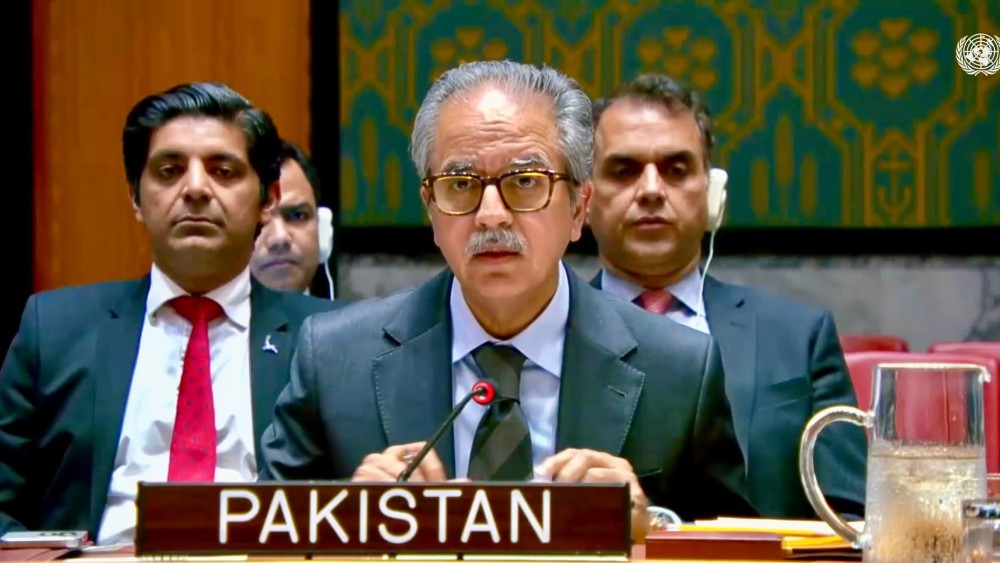
ISLAMABAD: Pakistan’s Permanent Representative to the UN Asim Iftikhar stated that the situation in Indian Illegally Occupied Jammu and Kashmir (IIOJK) remains an enduring test of the authority of international law and the credibility of the United Nations Security Council (UNSC).
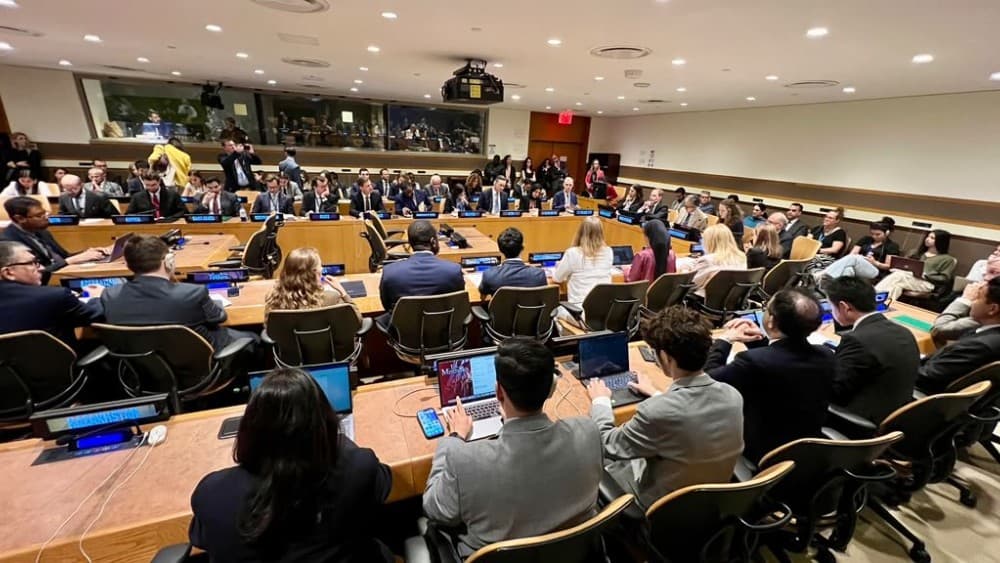
Speaking at the Pakistan-hosted Arria-Formula meeting “Call for Consistent Application of International Law” on Wednesday, the ambassador said that nearly eight decades ago, the UN Security Council established a pathway towards a peaceful settlement of Jammu and Kashmir dispute. He stated that under "the auspices of the UN," the "will of the Kashmiri people" can be ascertained through a "free and impartial plebiscite."
He mentioned that more than a dozen resolutions on the issue have been passed in the UNSC.
"That promise remains unfulfilled while atrocities by the Indian occupation forces intensified," he said while delivering the country’s statement at the forum.
The Call for Consistent Application of International Law called for consistent and universal application of international law in situations of armed conflict around the world.
Arria-Formula meeting is an informal, flexible gathering that allows members of the UN Security Council to hold frank, private discussions with individuals, non-governmental organizations, and non-member states.
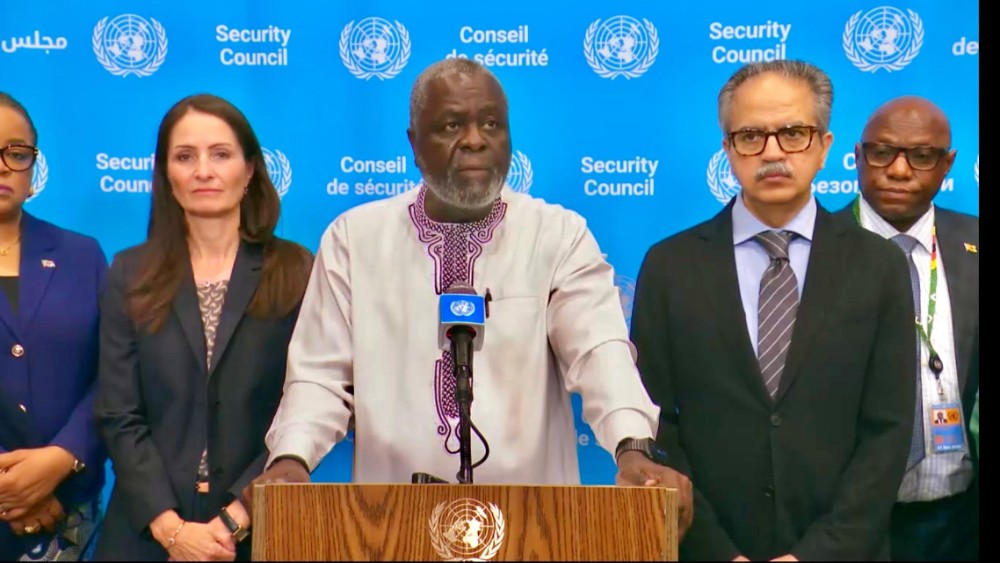
Wednesday’s Arria-Formula meeting was attended by representatives from several countries, including the United Kingdom, France, Russia, China, among others.
Asim Iftikhar stated that the persistent gap between international legal obligations and their implementation needed to close.
"The first casualty of war must never be international law itself," the ambassador said. He said that the true measure of the international legal order is whether its rules protect people when war begins, constrain the powerful, and are applied consistently, "irrespective of geography, politics or identity."
He described the situation in the Occupied Palestinian Territories and IIOJK as "an enduring test" of the authority of international law and the "credibility of the UN Security Council."
He said that nowhere has the credibility of the international legal order been tested more painfully than in Gaza, where "immense destruction, displacement, and deprivation have devastated an entire society." He went on to say that Gaza is a test case of whether the fundamental principles of international humanitarian law apply equally and without exception.
Demanding that Israeli occupation must end, the Pakistani envoy said that the Palestinian people must be able to live in freedom and dignity by exercising their right to self-determination.
Asim Iftikhar also drew attention to a Joint Communication by UN Special Procedures dated October 16, 2025, which, he noted, expressed serious concern over the arrest and detention of around 2,800 people in the occupied territory. This included journalists and human rights defenders. He also highlighted demolition of homes, the blocking of around 8,000 social media accounts, and incidents of hate speech, intimidation and dehumanization targeting Kashmiris and Muslims.
The Pakistan UN envoy further highlighted the consequences of India's unilateral measures of August 5, 2019, affecting domicile, land ownership and political representation. He stated that these measures had enabled illegal demographic changes alongside restrictions on political activity, freedom of expression and religious freedom.
He talked about the risks posed by the continued failure to resolve the Jammu and Kashmir dispute, particularly in the context of tensions between two nuclear-armed South Asian countries.
"We must remember that unresolved disputes do not disappear with time; they become more dangerous when left unaddressed," he said. He brought up the May 2025 conflict, which he said demonstrated "the grave risks of allowing a dispute between two nuclear-armed states to fester."
Setting out broader principles for strengthening compliance with international law, Ambassador Asim Iftikhar called for its application "consistently and without selectivity."
He urged the Security Council and the UN system to make greater use of existing monitoring, reporting and investigative mechanisms to identify serious violations of international humanitarian law, demand corrective action, ensure humanitarian access and promote accountability.
The ambassador also stated that the UNSC must consistently uphold and implement its own decisions, particularly with respect to protracted disputes and situations of foreign occupation. "A resolution cannot be indispensable in one situation and expendable in another," he said.
He called for greater focus on resolving the underlying causes of conflicts through the peaceful-settlement mechanisms provided under the UN Charter, "including negotiation, inquiry, mediation, conciliation, arbitration, judicial settlement and the Secretary-General's good offices."