


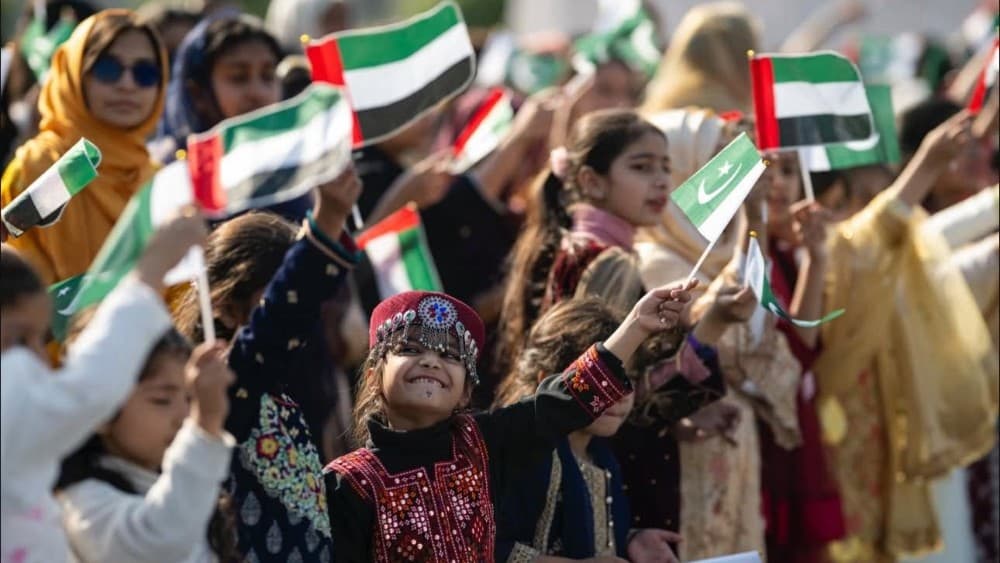
ISLAMABAD: Pakistan and the United Arab Emirates are building on more than five decades of close ties, with the relationship increasingly extending beyond traditional political and defense cooperation into trade, investment, technology, human capital and regional security.
The evolving partnership reflects a broader effort by both countries to translate longstanding political trust into practical economic opportunities, while preserving the people-to-people links that have remained central to bilateral relations.
The UAE has consistently supported Pakistan through difficult economic periods, while Pakistan has provided skilled human resources and maintained close defense and security cooperation with the Gulf state.
That relationship was reaffirmed repeatedly in 2026, with Pakistani and Emirati leaders emphasizing its strength and describing bilateral ties as brotherly, longstanding and strategically important.
Defense ties to wider cooperation
Pakistan was among the first countries to recognize the UAE following its formation in 1971, establishing a relationship that quickly developed a strong defense and human-resource dimension.
Pakistani military personnel, engineers and teachers contributed to the UAE's early institutional development. By April 1974, around 115 Pakistani officers were serving in the Abu Dhabi Defence Force, while Pakistani Air Force officers played a major role in developing the UAE Air Force.
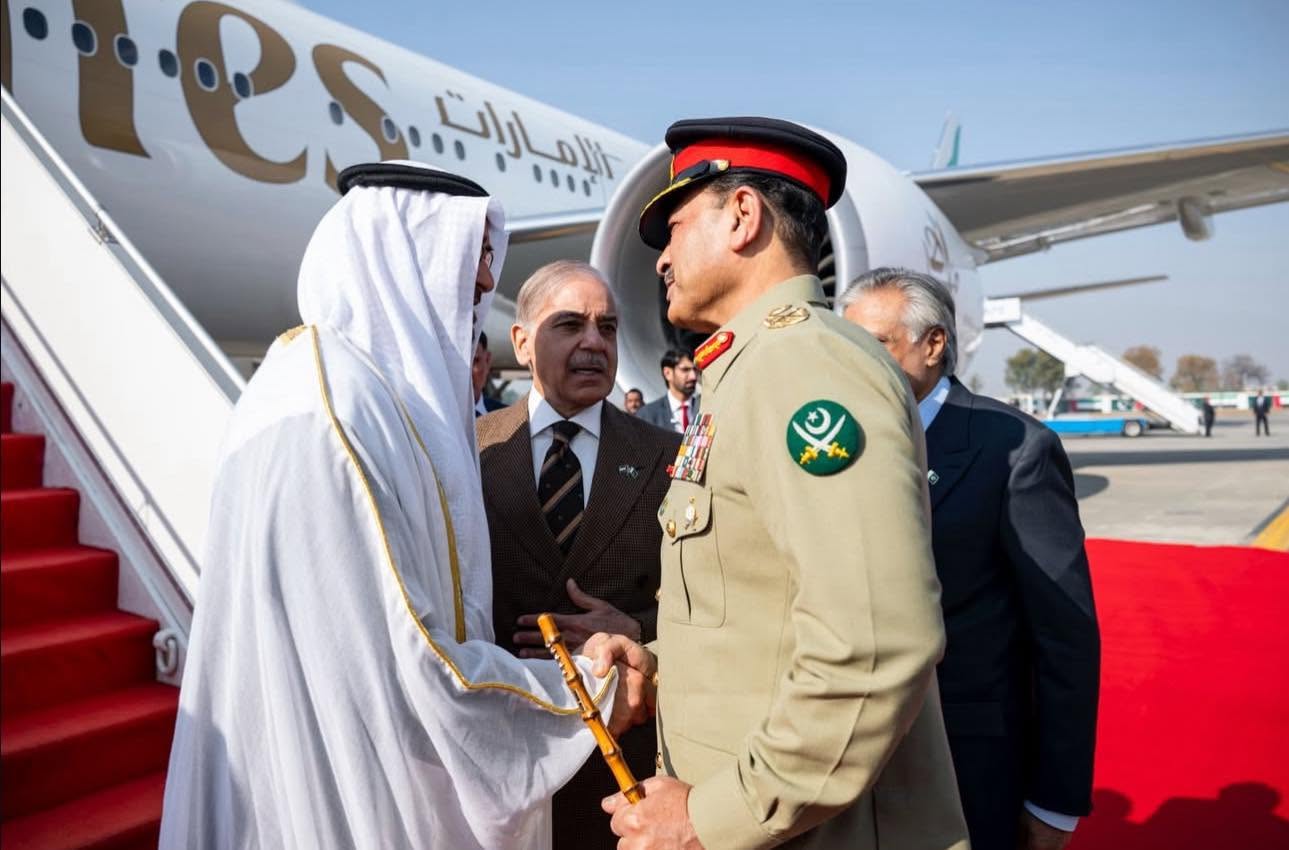 Pakistan Chief of Army Staff Field Marshal Syed Asim Munir welcomes UAE President Sheikh Mohamed bin Zayed Al Nahyan at Nur Khan Airbase in Rawalpindi on December 26, 2025, during the UAE president’s first official visit to Pakistan. (Handout/Government of Pakistan)
The defense relationship has since evolved into cooperation in training, exercises, technology and security.
Former Pakistani Ambassador Jamil Ahmed Khan said the UAE's interests in Pakistan now extend particularly to “energy,” “infrastructure” and “agriculture,” while Pakistan's human resources and export commodities remain important to the UAE.
The new centerpiece
Economic cooperation is increasingly at the heart of the relationship. Pakistan and the UAE are working to expand trade, investment and market access, with bilateral trade discussed in the context of a potential $20 billion target.
The UAE has shown interest in sectors including technology, fintech, artificial intelligence, digital infrastructure, agriculture, energy, minerals, logistics, ports and manufacturing.
The proposed Pakistan-UAE Comprehensive Economic Partnership Agreement could provide a broader framework for increasing market access and encouraging investment, while ongoing discussions have focused on improving trade facilitation and logistical coordination.
UAE companies and institutions are also positioned to contribute expertise in ports, infrastructure, financial services and digital sectors.
Pakistan's substantial mineral potential provides another emerging area of cooperation. With projects such as Reko Diq attracting international attention, opportunities are expanding around mining technology, processing, infrastructure and related services.
People-to-people bridge
The strongest link between the two countries remains their people.
More than 2.2 million Pakistanis live and work in the UAE, contributing across construction, aviation, healthcare, engineering, finance, information technology and logistics.
Their economic contribution extends well beyond the UAE labor market. Pakistan's Consulate General in Dubai said remittances from the UAE exceeded $1 billion in May 2026 alone.
Consul General Hussain Muhammad described remittances as “far more than financial transfers,” saying they provide “essential support to millions of families in Pakistan” while contributing significantly to economic stability and growth.
The figures underline why the Pakistani diaspora is frequently described by officials as a bridge between the two economies.
Security, regional diplomacy
Security cooperation remains another important pillar, covering counterterrorism, illicit financing, online recruitment and other emerging threats.
The two countries have also increasingly coordinated positions on regional crises.
In September 2026, Pakistan joined the UAE and several other countries in rejecting proposals for the displacement of Palestinians from Gaza and reaffirming support for a two-state solution.
This diplomatic coordination reflects a relationship that extends beyond bilateral economics into broader regional and international issues.
Trust tested
Recent discussion over UAE financial deposits in Pakistan also highlighted the sensitivity of the relationship.
Pakistan's Foreign Office rejected reports portraying the return of matured UAE deposits as a deterioration in bilateral ties, saying the funds had been placed under bilateral commercial agreements and were being returned according to mutually agreed terms.
The Foreign Office subsequently stressed that the transaction had been under discussion since the previous year and predated the Iran-US conflict, rejecting attempts to link the financial matter to subsequent regional tensions.
Foreign Office spokespersons have repeatedly emphasized that there is “absolutely no question” of negative aspersions on bilateral relations and that Pakistan's ties with the UAE are “immune from any external relations that UAE may have.”
Broader phase
Recent leadership engagement, from President Asif Ali Zardari's meetings in Abu Dhabi to Prime Minister Muhammad Shehbaz Sharif's discussions with Sheikh Mohamed bin Zayed Al Nahyan, points toward continued expansion of the relationship.
The next phase is therefore less about establishing the friendship and more about converting its longstanding political foundation into investment, trade, technology, human-resource and security partnerships.