


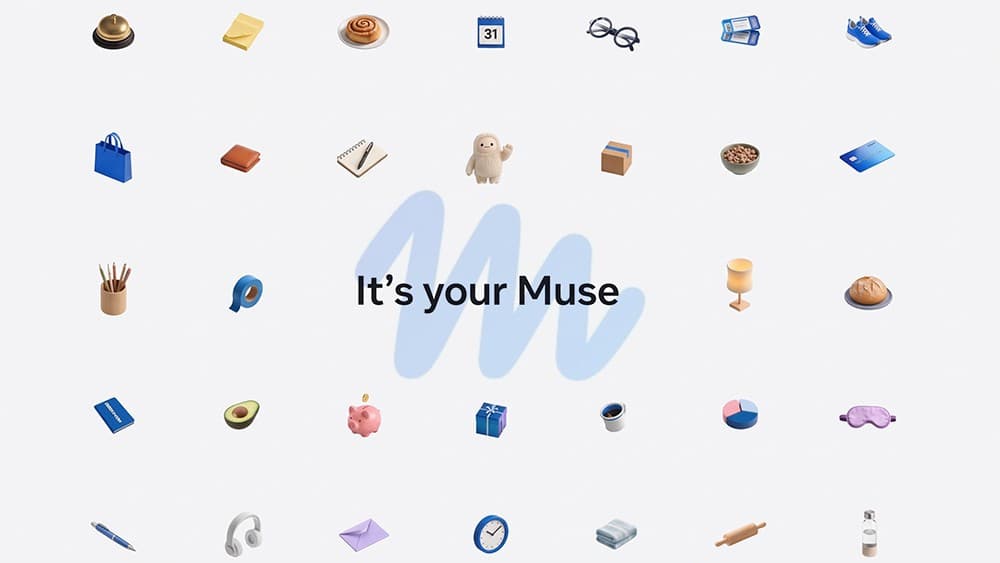
ISLAMABAD: Meta has launched Muse, a personal artificial intelligence agent designed to go beyond answering questions and independently perform tasks on behalf of users, marking a major push into the rapidly developing AI-agent market.
“Muse can manage everyday activities such as sending emails, booking travel, making online purchases and planning projects, while continuing to work in the background after users close the application,” the tech giant said in a statement.
AI agent that takes action
Unlike conventional chatbots, Muse is designed to act on a user's instructions rather than simply provide information.
Meta said that users can communicate with Muse through a dedicated app or WhatsApp and ask it to accomplish a task or pursue a broader goal.
For longer assignments, Muse can continue working after the user leaves the app and return when it needs approval or when circumstances change.


Meta's personal AI push
Muse represents a significant component of Meta's broader effort to compete with leading AI companies including OpenAI, Google and Anthropic.
Meta CEO Mark Zuckerberg has promoted the concept of “personal superintelligence”, AI systems capable of continuously assisting individuals across different aspects of their lives.
The company said that Muse is powered by Muse Spark, its most capable model for agentic work, and is designed for users without technical expertise.
The service is initially rolling out in the United States on iOS, Android and the web. Meta says it will be free for most basic needs, while subscription plans will be offered for users who want additional capabilities. The company also plans to bring Muse to its AI-powered glasses.
Privacy and security concerns
The launch comes with a major challenge: convincing users to trust an AI system with access to highly personal information.
Because an agent such as Muse can potentially interact with email, shopping, payments, calendars and other services, the technology requires substantially more access than a conventional chatbot.
Meta says it has therefore built Muse around a dedicated Muse Secure VM, a cloud-based virtual computer designed to isolate each user's agent and data.
A separate security system called Sentinel monitors Muse's actions and determines whether it can access the internet.
Meta said that Muse cannot directly see users' passwords or payment information, while users can decide which applications the agent can access and what permissions it receives.
Trust remains the biggest test
Despite Meta's emphasis on safeguards, the launch is likely to intensify debate over whether consumers are ready to give autonomous AI systems control over sensitive aspects of their digital lives.
Reuters reported that internal testing had identified security and reliability problems, including concerns involving private data and inconsistent performance. Meta delayed Muse's original launch as it worked to strengthen its security measures.
That makes consumer trust potentially as important as technical capability.
Meta said that it will introduce a Confidential VM later this year, designed to encrypt a user's data and conversations with a key held only by the user, meaning even Meta would not be able to access them.