


This live blog follows the latest developments across the Middle East crisis, including regional diplomacy, maritime security, ceasefire negotiations, and economic fallout.
Catch up on Saturday's top developments here:
- Iran, Saudi Arabia discuss regional tensions as Araghchi warns against aggression.
- US renews Middle East travel warning amid fears of broader regional escalation.
- Saudi Arabia, Kuwait stress diplomacy and freedom of navigation in Gulf waters.
- Tanker struck off Oman as maritime security concerns persist across region.
- GCC condemns reported Iranian attacks on civilian facilities and infrastructure in Kuwait.
Trump says new talks with Iran to begin Monday after calling off strikes
Published: Aug 2, 2026 | 22:20 GMT | by AFP
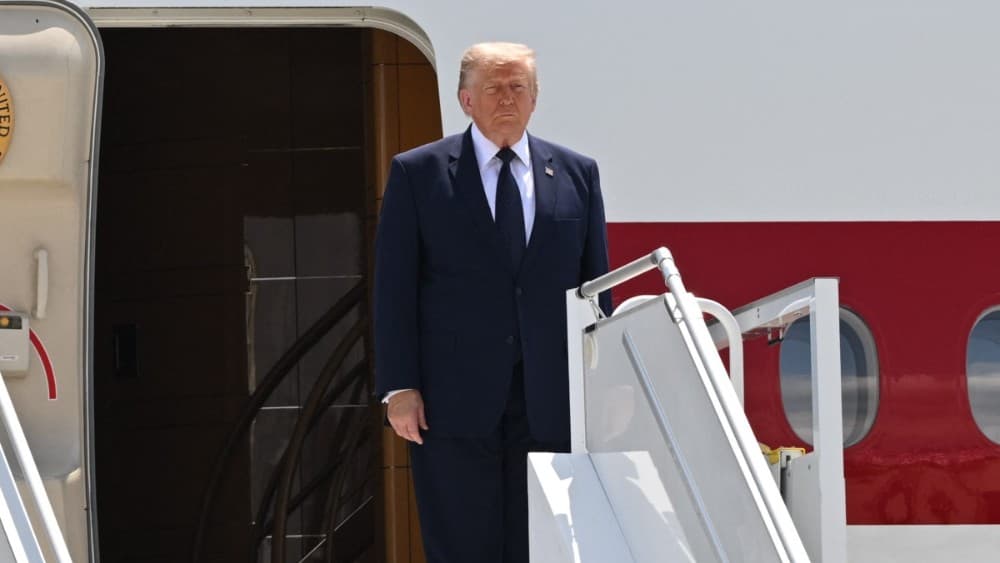
US President Donald Trump said that negotiations with Iran will begin Monday after he decided to hold off on new strikes against the Islamic republic to pursue a deal.
"Obviously, they don't want to be attacked. They knew the extent of the attack because they saw it forming," Trump told reporters on Sunday aboard Air Force One. "Now what we're doing is we're talking to them in the form of a negotiation. It begins tomorrow afternoon."
Israeli strikes kill 13 in Gaza
Published: Aug 2, 2026 | 20:48 GMT | by AFP
Israeli strikes on Gaza hit multiple residential buildings and killed at least 13 people, authorities said Sunday, despite Hamas saying it agreed to the latest stage of a deal to end the war.
Hamas said Friday it had agreed to a plan championed by US President Donald Trump that includes provisions for handing over its weapons and the gradual withdrawal of Israeli forces from the Gaza Strip.
Israel has yet to officially comment on the agreement, but a political source has told AFP "that there will be no withdrawal whatsoever" without Hamas's "genuine disarmament."
Pezeshkian says memorandum will shape Iran’s future foreign relations
Published: Aug 2, 2026 | 18:22 GMT | by Web Desk
Iranian President Masoud Pezeshkian said the recently signed memorandum is the result of the "collective wisdom of the members of the Shura Council" and that all members are in agreement with it.
In a post on X, Pezeshkian said he believes the memorandum will become the “center of gravity” of Iran’s foreign relations in the future.
He added that efforts must be made to compel “the enemy” to remain committed to what it has signed.
Pezeshkian also said the memorandum will enhance the security of Iran, the region, and its allies.
Gaza latest death toll rises to at least 18 as Israeli attacks continue
Published: Aug 2, 2026 | 16:35 GMT | by Web Desk
The death toll in Gaza rose to at least 18 as Israeli attacks continue in the besieged territory, Al Jazeera reported.
The toll included four Palestinians who were killed in an Israeli air attack on a car in the Saraya area in central Gaza City.
Araghchi says Iran-Oman negotiations enter final stages
Published: Aug 2, 2026 | 16:33 GMT | by Web Desk
Iranian Foreign Minister Abbas Araghchi said negotiations between the Islamic Republic of Iran and Oman are on the path to finalization and have entered their final stages.
According to a statement posted on his Telegram channel, Araghchi briefed the Cabinet at the beginning of its meeting on the latest status of the negotiations between Iran and Oman.
Referring to the progress of the talks, he said the negotiations are moving toward finalization and are going through their final stages.
Iran, Pakistan ties reach as high as Damavand, K2: Reza Amiri-Moghaddam
Published: Aug 2, 2026 | 15:40 GMT | by Web Desk
Iran’s Ambassador to Pakistan Reza Amiri-Moghaddam said that ties between Iran and Pakistan have reached a level “where no challenge, phenomenon or external factor can weaken the love, friendship, and brotherhood” between the two countries.
“The stature and reputation of the relations stand as high as the majestic peaks of Damavand and K2,” the ambassador said in a statement on X, adding that he firmly believed that “the friendship and brotherhood between Iran and Pakistan can serve as a role model of mutual respect, sincere brotherhood, good neighborliness, and the spirit of "We Can Do It" for the entire region.”
He prayed for the day when all Muslim and neighboring countries of the region would work together to build a “future of development, prosperity, and lasting welfare for our peoples.”
Iran sees every threat from adversaries as ‘real and credible’: Minister
Published: Aug 2, 2026 | 12:50 GMT | by Web Desk
Majid Ibn al-Reza, Iran’s acting defense minister, says threats are taken seriously “even if made as part of psychological warfare.”
“We will neither be caught off guard nor remain passive,” he was quoted as saying by Iran’s Mehr news agency. Tehran would use threats as a basis to increase its military readiness, strengthen deterrence and enhance its military capabilities, he added.
Gaza death toll increases to 73,356
Published: Aug 2, 2026 | 12:08 GMT | by Web Desk
Israel’s genocidal war on Gaza has killed 73,356 people, with 174,185 others wounded, since October 2023, Al Jazeera reported according to the Health Ministry of the enclave.
Six Palestinians were killed and 23 injured in Israeli attacks on Gaza over the latest 24-hour reporting period as Israel’s military continues to violate a “ceasefire” signed in October.
Another Palestinian died from wounds sustained in a previous attack.
Israel has killed at least 1,230 people and wounded 4,076 since the “ceasefire” went into effect in October last year, the ministry said.
Iran says it will strengthen military readiness
Published: Aug 2, 2026 | 9:52 GMT | by Web Desk
Iran's acting Defense Minister Brig Gen Seyed Majid Ibn al-Reza said Sunday that Tehran would strengthen its military readiness and deterrence in response to what he described as ‘credible threats’ from its adversaries, Iran's ISNA news agency reported.
Ibn al-Reza said in a post on X that Iran would not be "surprised or passive," as per ISNA. He added that recent statements by its opponents, though presented as psychological operations, were being treated as genuine threats.
Iran media denies Trump claim that Tehran asked US not to strike
Published: Aug 2, 2026 | 9:50 GMT | by Web Desk
Iran's Mehr news agency on Sunday denied President Donald Trump's claim that the Middle Eastern country asked the United States to refrain from conducting new strikes.
Citing military officials, the agency said the allegation "was nothing but a new lie" and that the Iranian armed forces were "on high alert and ready for any eventuality".
Israeli forces seize Palestinian newspaper copies near West Bank checkpoint
Published: Aug 2, 2026 | 9:05 GMT | by Web Desk
Israeli forces seized copies of the Palestinian newspaper Al-Hayat Al-Jadida while they were being transported to the northern occupied-West Bank on Sunday, according to Palestinian news agency WAFA.
The newspaper’s Tulkarm office director, Murad Yassin, said forces stopped the vehicle at a temporary military checkpoint near eastern Tulkarm, searched it and confiscated bundles of newspapers intended for Tulkarm and Jenin.
The incident comes amid heightened tensions in the occupied West Bank, where Israeli military operations and restrictions on movement have increased in recent months. Press freedom groups have repeatedly raised concerns about restrictions affecting Palestinian journalists and media outlets operating in the territory.
Israeli forces detain two Palestinians during Nablus raid: Palestinian news agency
Published: Aug 2, 2026 | 8:22 GMT | by Web Desk
Israeli forces detained two Palestinians during a predawn raid in eastern Nablus on Sunday, Palestinian news agency WAFA reported, citing security sources.
Israeli forces raided and searched several homes in eastern Nablus, as per the Palestinian news agency. They detained Ahmad Hussein Dweikat, director of the Madid Charitable Society in Askar al-Balad, and Fadel al-Kurdi from Jerusalem Street.
The agency also reported that Israeli forces carried out raids in the town of Tell, southwest of Nablus, where no detentions were reported.
Saudi crown prince, Trump hold call on Mideast tensions
Published: Aug 2, 2026 | 7:48 GMT | by AFP
Saudi Arabia's Crown Prince Mohammed Bin Salman and US President Donald Trump held a call aimed at reducing regional tensions, the kingdom's official SPA press agency reported Sunday.
"His Royal Highness emphasized the necessity of prioritizing dialogue to reduce tensions and the importance of exerting all possible efforts to achieve a truce that paves the way for diplomatic solutions," SPA reported after Trump said he had decided to hold off on renewed attacks on Iran after requests from Gulf countries.
Iran warns of possible closure of additional straits and chokepoints
Published: Aug 2, 2026 | 5:44 GMT | by Web Desk
Iran’s Supreme National Security Council Secretary Mohammad Bagher Zolghadr said Tehran could expand restrictions beyond the Strait of Hormuz by closing additional straits and chokepoints, according to Iran’s IRNA news agency on Sunday.
The secretary stated that Iran will tighten its closure of the Strait of Hormuz if “threats” and “a naval blockade against Iran” continued. He warned that such disruptions could affect global energy markets and the wider economy.
OPEC+ tipped to raise production again but new quotas loom
Published: Aug 2, 2026 | 2:34 GMT | by AFP
Saudi Arabia, Russia and five other members of OPEC+ are expected to raise their oil production quotas for September when they meet online Sunday as the Middle East war continues to disrupt global energy supplies.
The enlarged Organization of the Petroleum Exporting Countries will likely increase production by 188,000 barrels per day, following several months of similar hikes, said Jorge Leon, an analyst at Rystad Energy.
However, the September increase is likely to be the last in the current series of production adjustments, he said.
Between late 2022 and 2023, OPEC+ became concerned that oil prices were falling, and agreed to cut oil production in three separate rounds, reducing total output by nearly six million barrels per day.
But Saudi Arabia, Russia, Iraq, Kuwait, Kazakhstan, Algeria, Oman and the United Arab Emirates – before their exit from the group on May 1 – then changed their strategy by gradually upping production starting in 2025.
A September increase would complete the unwinding of the second of the three production-cut packages introduced by OPEC+.
The Gulf countries have struggled to increase exports due to the near-paralysis of the Strait of Hormuz during the war in the Middle East.
Trump pauses planned strikes on Iran
Published: Aug 2, 2026 | 02:11 GMT | by Web Desk
US President Donald Trump said on Sunday he had agreed to cancel a planned military strike against Iran after receiving what he described as a request from Tehran and other Middle Eastern countries to allow more time for diplomacy.
In a post on Truth Social, Trump said the United States was "locked and loaded and ready to go against the Islamic Republic of Iran" with military capabilities "not seen since World War II."
He added that Iran and regional countries had asked Washington to delay military action because "the perimeters of a deal has been agreed to."
Trump said the proposed understanding would include the "Immediate, Complete, and Total OPENING OF THE HORMUZ STRAIT, and an end to Iran's nuclear threat."
The US president added that, "Based on this request, I have agreed... to cancel the attack, subject to being able to rapidly make a DEAL."
"The Country of Israel joins me in this commitment," Trump wrote, urging all parties to finalize an agreement. "Get to work, everybody, and get it DONE."
Saudi Arabia urges restraint
Published: Aug 2, 2026 | 00:33 GMT | by Web Desk
According to Axios, Saudi Crown Prince Mohammed bin Salman urged US President Donald Trump to avoid launching large-scale strikes on Iran during a telephone conversation on Saturday, expressing concern over the prospect of further military escalation in the region.
Citing two US officials and a third source familiar with the call, Axios reported that the Saudi crown prince sought clarification on Washington's plans and pressed for de-escalation.
"The Saudis expressed concern and asked for clarity about the plan of action," one US official told Axios. A second source said Mohammed bin Salman urged Trump to refrain from ordering the strikes.
Axios reported that Trump is weighing possible strikes on Iranian energy infrastructure following Tehran's missile attack on a US base in Jordan and continued disruptions to commercial shipping in the Strait of Hormuz.
The White House and the Saudi Embassy in Washington declined to comment on the reported conversation.
The report said Saudi Arabia has continued encouraging diplomacy despite recent military coordination with the United States.
Axios also reported that Qatar, the United Arab Emirates, Türkiye and Pakistan have been urging both Washington and Tehran to pursue de-escalation, while Qatari mediators held talks on Saturday with Iranian Foreign Minister Abbas Araghchi, US envoy Steve Witkoff and Omani officials aimed at reopening the Strait of Hormuz.
The discussions, report said, made progress, though it remained unclear whether they would be sufficient to ease the crisis.
For earlier developments, read our Aug 1 live blog here